
How to Source a Reliable Pencil Case and Avoid Costly Returns
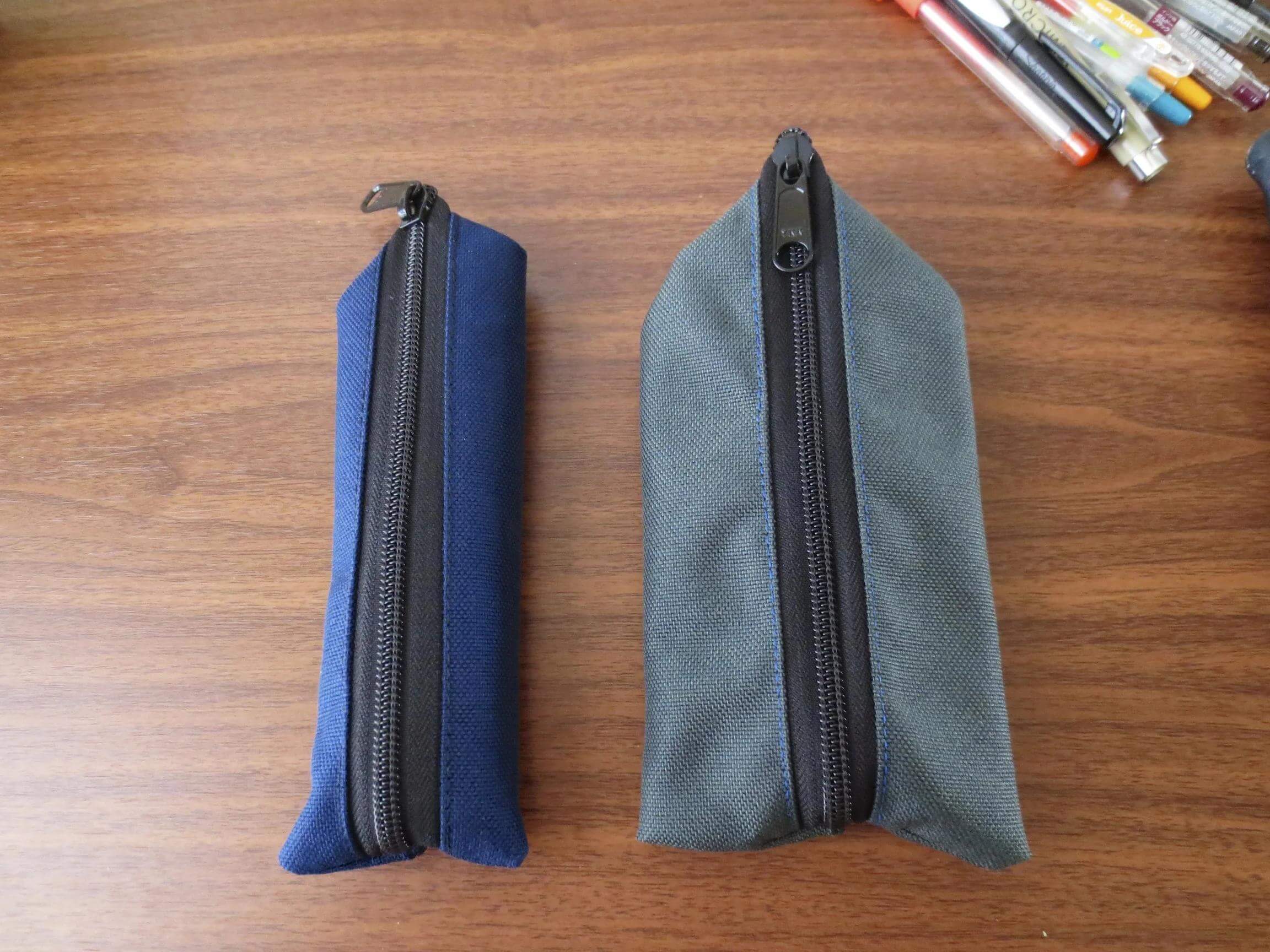
A buyer may approve a pencil case sample because its appearance and quoted price meet expectations, only to face a flood of customer complaints after bulk delivery. Dividers shift out of place, pencil tips puncture the lining, and after-sales costs eat into the entire profit margin.
Many buyers treat these products as ordinary stationery accessories and overlook the fact that they are essentially small storage bags. In reality, the stitching and fabric construction are the key factors that determine product durability and return rates.
Choosing a pencil case based on appearance alone is a mistake. Small pencil case designs are typically made to fit inside backpacks, handbags, or totes, so the edge binding directly affects the usable interior space. Some factories use neat, flat binding on samples but switch to thicker folded binding during mass production. This reduces the finished interior dimensions and can leave end customers unable to fit their stationery inside.
A special pencil pouch is more than a standard pouch with upgraded printing. Its improvements should focus on the body fabric and stress points along the seams, especially for products that must withstand repeated compression and frequent opening and closing.
A pencil case with compartments is one of the most structurally complex types of small storage bags. Its internal dividers require additional fabric pieces. If a divider is secured at only two points, at the top and bottom, prolonged compression inside a backpack can cause it to wrinkle or shift, disrupting the internal layout.
Design checks for a small pencil case
During sample evaluation, pay close attention to stitching at points under stress. For a pencil case with compartments, the base of each internal divider is one of the most failure-prone areas. A simple compression test can help identify problems: repeatedly press the pouch and check whether the dividers move out of position.
For a small pencil case, verify the fabric weight carefully. Lightweight fabric is easier to compress, but it may offer less puncture resistance. Sharp pencil tips can pierce the lining and leave graphite stains inside the bag.
Testing a pencil case with compartments
When inspecting a pencil case with compartments, pay particular attention to how the internal dividers are attached. Dividers should be secured well enough to withstand repeated pressure without wrinkling, shifting, or losing their shape. These details may seem minor on a sample, but they can become widespread defects in bulk production.
Simple compression tests are a practical way to identify weak construction before placing a large order. Check the divider seams, press the pouch from different directions, and confirm that each section retains its intended position.
Specifications for a special pencil pouch
When sourcing a special pencil pouch, include fabric specifications and zipper cycle-testing requirements in the PI (pro forma invoice). A common zipper durability benchmark is 5,000 opening-and-closing cycles. For orders targeting the student market, it is advisable to specify this requirement clearly before production begins.
The fabric, stitching, and zipper should all be assessed against the intended use of the product. A pouch designed for frequent daily use needs to withstand repeated opening, closing, and compression rather than simply look good when new.
Pre-Production Compliance for a pencil case
A bag factory with a BSCI audit history may offer greater consistency in production processes, delivery performance, and quality control. For orders targeting the EU market, materials must comply with applicable REACH requirements. Products intended for the North American children's market may also need to undergo relevant CPSIA testing, including checks for restricted substances such as phthalates.
Obtain the necessary compliance documents before production starts. Waiting until the entire order is finished to collect the paperwork can result in customs delays, shipment holds, or rejection by brand customers.
Once the sample specifications are agreed upon, approving a pre-production sample is essential. Never place an order based on photos alone. Even when the same pattern is used, changes in fabric weight can affect the pouch's thickness and capacity. If the fabric supplier changes, request a new sample and recheck the dimensions before approving bulk production.
Following these construction and compliance checks can significantly reduce the risk of returns and shipment rejection. However, inspection requirements vary by target market, so the acceptance criteria for each order should be tailored to the specific requirements of the brand customer.
XINHUI Quality Controls for a pencil case
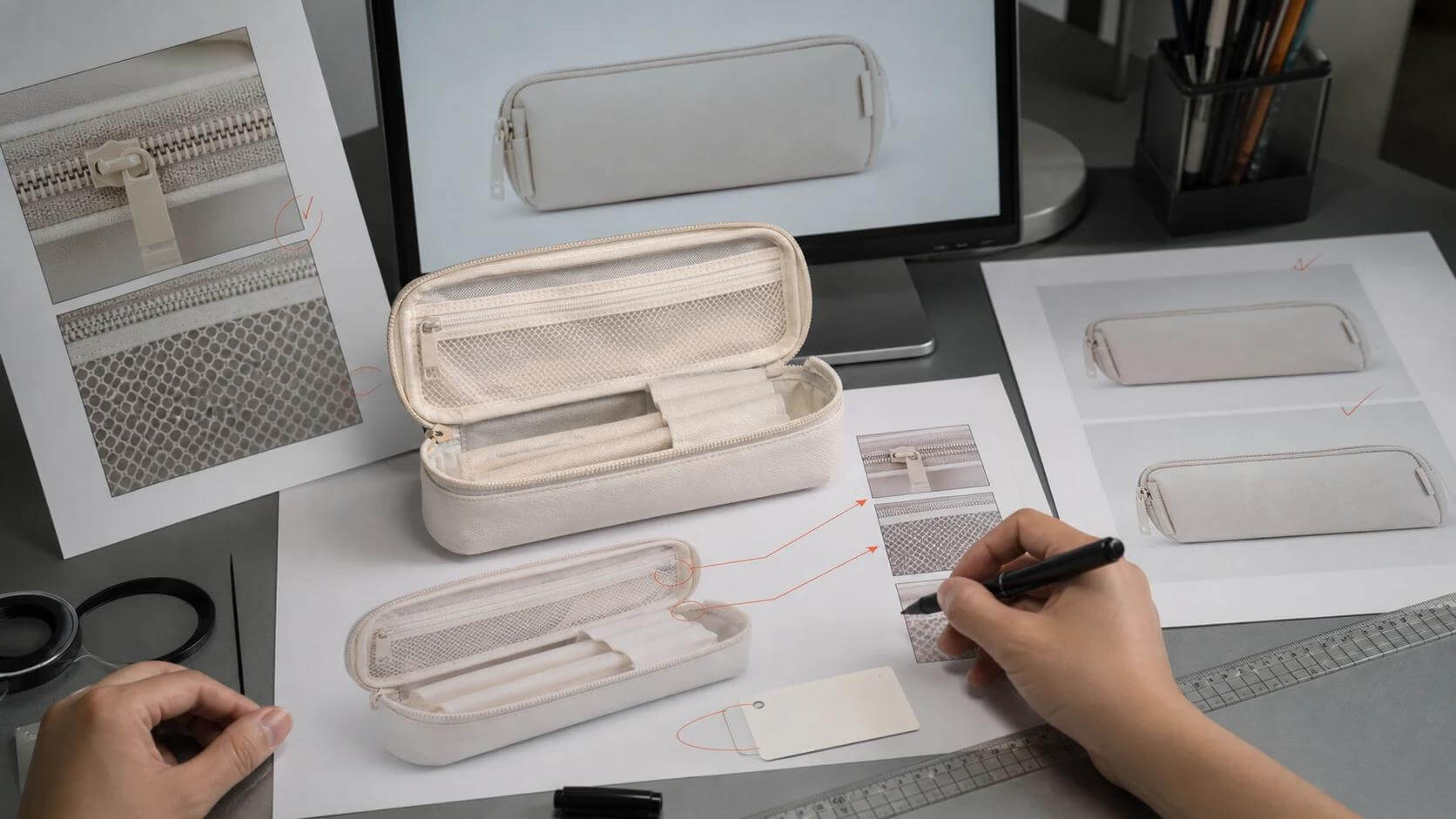
With years of experience manufacturing a wide range of small storage bags, XINHUI understands the structural challenges that commonly affect these products.
Our internal QC process focuses on the stitching of internal dividers, edge-binding thickness, and fabric puncture resistance. We also support customers in preparing the documentation required for BSCI, REACH, and CPSIA compliance.
Depending on the target market, our team can adjust the construction and stitching methods during pre-production sampling to help prevent common bulk-production defects, including shifting dividers and reduced interior dimensions. For a special pencil pouch, these checks help ensure that design details translate into reliable performance in the finished product.
If you are planning an order for this type of storage bag, submit your product requirements to request a sample evaluation.
FAQ
Q1: When buying a pencil case with compartments in bulk, would making all the dividers from elastic fabric improve durability?
A: Elastic fabric dividers can handle compression better, but stationery may shift when the material stretches. Elastic fabrics also generate more cutting waste, which can slightly increase the unit cost. This option is better suited to specific premium orders than to high-volume products.
Q2: For a small pencil case order, how should the products be arranged in cartons to reduce deformation during shipping?
A: Stack the pouches flat rather than packing them upright under pressure. Leave some cushioning space inside the cartons and control the number of units packed in each carton. This helps prevent the weight of the upper layers from continually compressing and deforming the pouches below.
Q3: During AQL inspection of a bulk order of special pencil pouch products, which bag-related defect should be checked first?
A: Prioritize the seam where the zipper tape is attached to the pouch body. Problems at this point can be difficult to spot during visual sample inspection, but broken threads and loose or incomplete stitching are among the most common defects in mass production.
Why dog harnesses Fail When Backpack Design Is Copied
Related Article


