
Why dog harnesses Fail When Backpack Design Is Copied
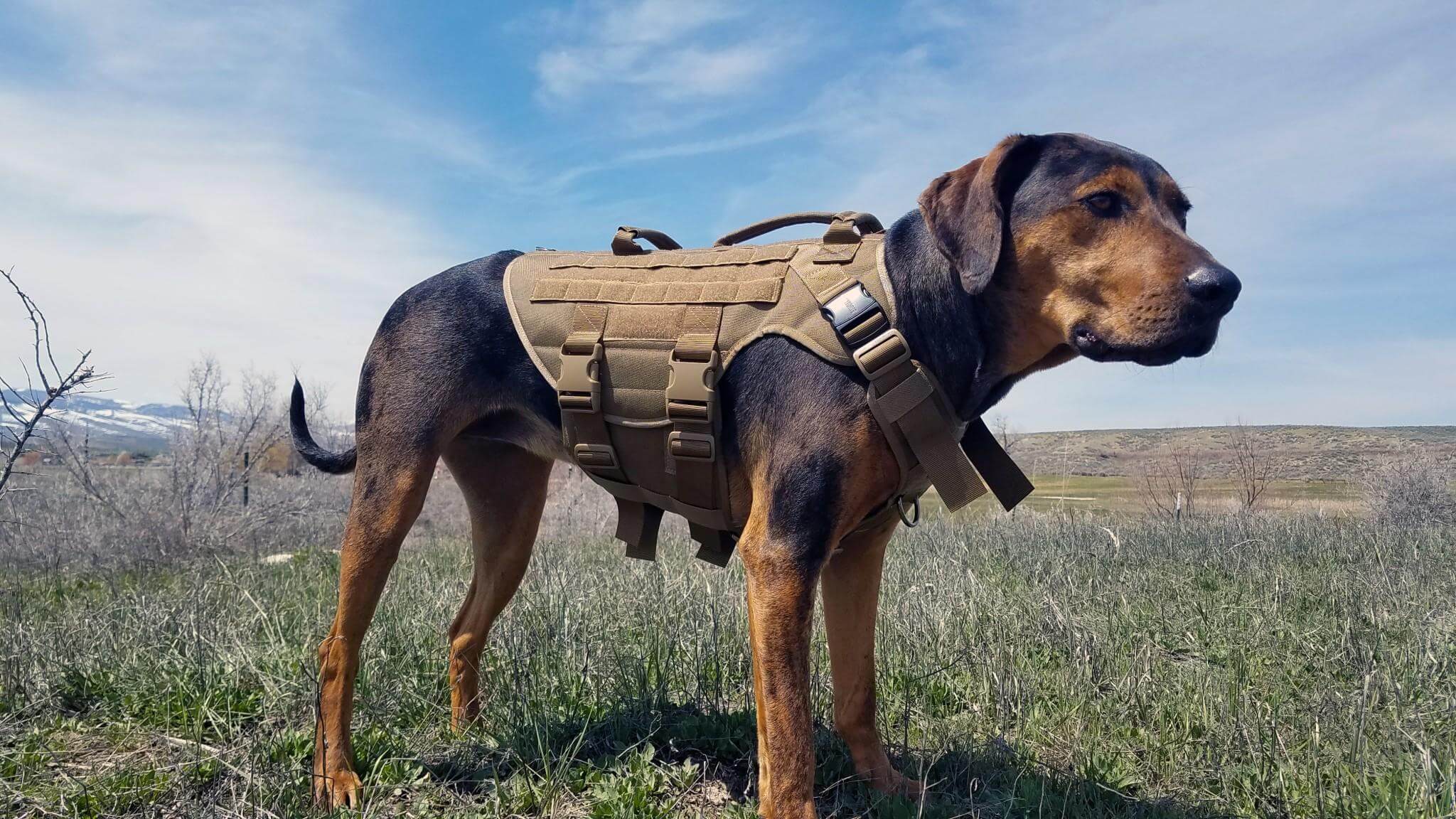
Many dog owners have old outdoor backpacks lying around. Seeing the thick, abrasion-resistant webbing and sturdy hardware, they get the idea of taking these parts apart and reusing them to reinforce their large dogs’ dog harnesses. They often finish the DIY project full of confidence, only to find loose threads and failing seams after taking their dogs on just one or two short hikes. The same components can last for years on a backpack but fail quickly when transferred to pet gear. This is a surprisingly common problem.
Choosing a durable dog harness
When shopping for a durable dog harness, many buyers compare it directly with outdoor backpack specifications. Backpack webbing and hardware have a proven track record, and their substantial feel and abrasion resistance make it easy to assume that copying the same components will produce a reliable durable dog harness.
The problem is that backpacks are designed to carry loads on a relatively stationary human body, with predictable pulling directions. Dogs move differently. They lunge forward, stop abruptly, twist, and turn, generating significant lateral forces. The loading conditions are completely different, so materials that work well on a backpack may not perform the same way on a dog harness.
What Makes a heavy duty dog harness Strong?
When choosing a heavy duty dog harness, it is important to distinguish between tough-looking materials and a genuinely strong load-bearing structure.
Many products marketed as a heavy duty dog harness use high-denier nylon fabric and imitate the look of tactical backpacks, sometimes with MOLLE webbing panels on the sides. However, the webbing may be stitched only to the outer fabric rather than connected to the main load-bearing straps. Once small pouches are attached, their weight and movement put pressure on seams in the thin outer fabric. After repeated pulling, those seams can split or tear.
The handle design used on a backpack also cannot simply be copied for a pet harness. A backpack handle is designed to withstand an upward lifting force. A harness handle must handle both upward lifting and sudden forward pulling when a dog lunges. Even with thick fabric, copying the backpack's stitching pattern can lead to gradually failing seams when a large dog struggles.
Why Weight Distribution Matters for dog harnesses
Weight distribution matters when attaching small accessory pouches. Outdoor backpacks are designed to keep heavy items close to the wearer's center of gravity, reducing unwanted movement.
A dog's center of gravity is closer to the shoulder area. When pouches are attached to the harness, weight hanging off either side can create a twisting force. If the loads on the two sides are uneven, the harness may shift continuously and rub against the dog's armpits. The repeated movement can irritate the skin while also accelerating wear on the seams.
Many owners also replace broken harness components with buckles salvaged from old backpacks. However, backpack hardware is designed around the demands of carrying loads on the human body and may not have been tested for repeated impact loading. The sudden force generated when a dog lunges can far exceed the forces encountered during ordinary backpack use. Matching dimensions and appearance does not mean two components are interchangeable.
Care Tips for a durable dog harness
Backpack maintenance also offers a useful lesson for pet gear. After using an outdoor backpack, people often clear dirt and grit from gaps in the webbing. The same approach should be used for a durable dog harness.
When sand and grit become trapped between layers of webbing, the friction created as a dog moves acts like continuous internal abrasion, gradually wearing down the fibers. The surface may still look fine even when irreversible damage has developed inside the webbing.
When assessing the durability of dog harnesses, focus first on the main load-bearing straps, reinforcement stitching at crossover points, and D-ring attachment points. Do not judge strength by the thickness of the outer fabric alone. The outer shell provides protection against scratches and abrasion, but the inner webbing system is what carries the actual pulling force.
Based on practical industry experience, the peak pulling force generated by medium-to-large dogs during a sudden lunge can reach the equivalent of 45–65 kg of force. The hardware, webbing, and stitching must all have an adequate safety margin. A single strong component cannot guarantee the safety of the entire system.
How to Inspect a heavy duty dog harness
You can carry out a simple check on a new heavy duty dog harness at home. Hold the D-ring securely and pull firmly in different directions. Watch to see whether the adjustment sliders move out of position or whether the stitching at reinforced crossover points begins to shift.
This simple test can help reveal some potential problems before the harness is put into regular use, although it cannot replace professional strength testing.
Using this type of equipment safely involves more than choosing strong materials. The design must also suit the dog's movement patterns and the conditions in which the harness will be used. No single design works for every dog. Some outdoor gear design ideas are worth adapting, but copying an entire backpack structure is not the answer.
Developing a Better durable dog harness
Many pet brands run into the same trap when developing heavy-duty harness products: copying backpack construction without accounting for the different forces involved.
With years of experience in bag manufacturing, XINHUI bag factory applies its expertise in webbing, stitching, and load distribution to the development of pet gear. Familiar with the bag manufacturing supply chain, the factory distinguishes between static loads on backpacks and the dynamic impact forces generated by dogs.
Rather than simply reusing existing backpack designs, the team optimizes the structure during prototyping to address lateral twisting and repeated pulling. The factory holds ILS and Disney-related factory audit certifications and conducts basic tensile checks on webbing, hardware, and stitching in-house.
It also supports small-batch trial orders, with a sample lead time of 3–7 days. This makes it suitable for brands testing new products in the market. Custom development is available for MOLLE-compatible designs and heavy-duty harnesses with handles.
Brands planning a new product line can contact the factory for advice on material selection and structural optimization. However, even a factory-optimized heavy duty dog harness must still be properly fitted to the dog's body shape and activity level. No product is universally suitable for every dog.
FAQ
Q1: Will attaching an empty storage pouch to the MOLLE webbing damage the harness faster?
A: An empty pouch adds very little weight, so its direct impact on the load is minimal. The main concern is loose movement. If the pouch swings and repeatedly strikes the webbing and stitching while the dog runs, long-term friction can still accelerate fabric wear. Keep the pouch secured and close to the harness when it is not in use.
Q2: If the webbing on a pet harness and a backpack has the same denier rating, does that mean they have the same abrasion resistance?
A: No. Denier (D) indicates the thickness of the yarn, not the weaving method or fiber composition. Even at the same denier rating, webbing from different manufacturers can vary significantly in its resistance to lateral tearing and fatigue from repeated loading. Denier alone is not enough to establish equivalent performance.
Q3: If the harness webbing feels stiff after several washes, should I throw it away?
A: Not necessarily. First, check whether detergent residue or embedded dirt and sand are causing the stiffness. Rinse the webbing thoroughly and let it dry completely. If it regains its flexibility, it may still be suitable for use. However, if you notice fraying or broken fibers in localized areas, stop using the harness and replace it.
How to Source a Reliable Pencil Case and Avoid Costly Returns
Is a firefighter equipment bag Worth Customizing?
Related Article


