
Is a firefighter equipment bag Worth Customizing?
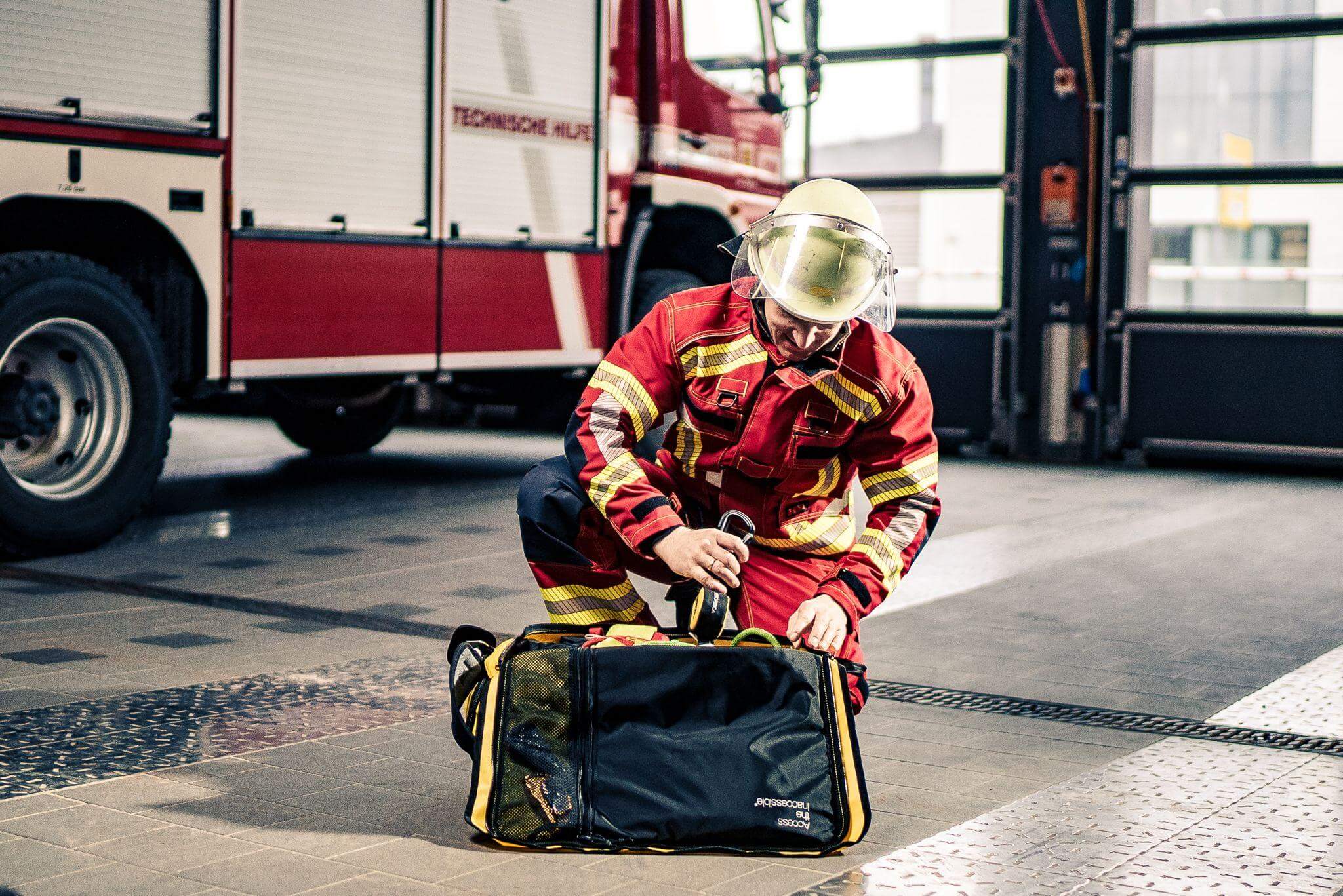
Many fire departments receive a supplier's proposal and immediately move forward with a fully customized firefighter equipment bag project. Only after delivery do they discover that many of the changes offer little practical benefit to frontline crews, while a large portion of the budget has already been spent.
Many purchasing teams assume that customization is always better than buying an off-the-shelf firefighter duffle bag. In reality, some departments spend more on a completely redesigned product, only to find that its performance in daily use is no better than that of an established, ready-made model.
Not every requirement calls for developing a bag from scratch. Some modifications address genuine operational problems, while others improve appearance without making equipment easier or safer to use in the field.
When Is Customizing a Firefighter Equipment Bag Worth It?
When an existing standard firefighter equipment bag does not fit a team's internal workflows, targeted modifications may be worth considering.
1. Improving Contamination Control
If a department has strict procedures for separating clean and contaminated equipment, a standard bag may lack removable, washable liners or dedicated clean-and-dirty compartments. In this case, custom modifications can be a practical solution.
However, requirements should be documented in writing rather than communicated verbally. Specify the lining and coating materials, along with the requirements for sealed seams.
Once a sample is ready, load it with the complete set of operational protective equipment and test it under realistic conditions. Confirm that the additional compartments do not reduce the usable capacity of the main compartment.
2. Accommodating Oversized Protective Equipment
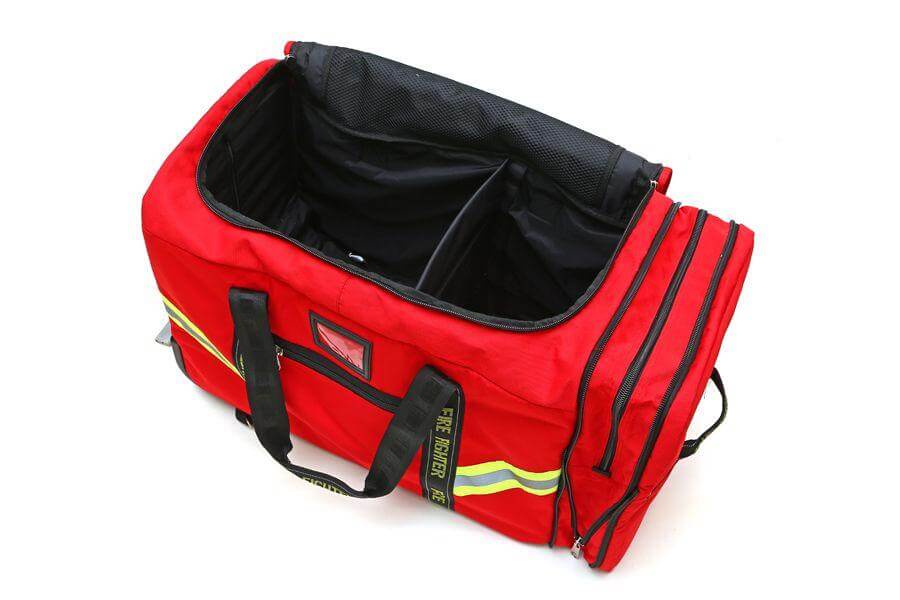
Some departments use specialized equipment configurations, including larger helmets and breathing apparatus accessories. These items may not fit in the compartments of a standard firefighter duffle bag.
Instead of redesigning the entire outer shell, ask the manufacturer to adjust specific dimensions or internal dividers. In many cases, modifying the internal layout is enough to solve the problem without the added cost of developing a completely new bag pattern.
3. Adding Identification and Department Branding
Departments that require consistent branding and clear personnel identification can consider custom embroidery or modifications to hook-and-loop panels.
These changes typically require a relatively small investment and can deliver practical benefits. Many manufacturers can add them directly to an existing bag design without creating an entirely new product.
Small carry bags, including fireman handbags, can also benefit from targeted modifications. For personnel working in the field or during training, changing the internal pocket layout can make room for radios, compact inspection tools, and other small essentials.
When should you buy a standard firefighter duffle bag?
When a department's equipment configuration follows common industry practices and its storage and transportation needs are typical for routine duties and training, an established ready-made product will often be sufficient. There is no need to launch a custom development project simply for the sake of customization.
Changing the main bag color without a functional reason is another situation in which customization may not be worthwhile. Prioritize existing color options rather than paying for new color sampling and development. Custom color matching can increase the unit price and extend lead times without improving storage capacity or protective performance.
Be equally cautious about adding large numbers of extra pockets and external webbing loops. Too many compartments can reduce main-compartment capacity. Once a bag is loaded with a complete set of protective clothing, many of those extra pockets may go unused. These modifications often deliver little real-world value.
The Limitations of Low-Volume Custom Orders
Small-batch customization with low minimum order quantities comes with several practical limitations.
First, the unit cost can rise significantly when order volumes are low. Fixed costs associated with changing production materials, preparing samples, and setting up the manufacturing process must be spread across fewer units. As a result, the price per bag may be higher than that of a standard ready-made product.
Second, for complex structural changes, a factory may not be willing to modify its tooling for a small order. Some components may need to be sewn by hand instead. Handwork can introduce variations between individual bags, reducing manufacturing consistency.
Approving a sample does not guarantee that every unit in a small production run will reproduce every detail exactly. Buyers should clarify acceptable tolerances and quality expectations before placing an order.
Three Checks Before Customizing a Firefighter Equipment Bag
Before starting any customization project, a department should complete three checks.
First, identify the actual operational problems. Separate issues that frontline personnel genuinely experience from improvements that are merely hypothetical or based on personal preference.
Second, confirm the order quantity and total unit cost. Include sampling, transportation, and other relevant expenses in the calculation rather than comparing the product price alone.
Third, evaluate partial modifications before considering a complete redesign. Changes to existing patterns and internal structures are often more economical than developing new tooling and rebuilding the entire bag.
Most fire departments do not need to customize every bag they purchase. A more practical approach is to make targeted improvements to the equipment carried by personnel in critical roles while continuing to use proven, ready-made products for other positions. Many departments already take this approach to balance operational needs and purchasing budgets.
There is no single answer to whether customization is worthwhile. Purchasing teams need to weigh three factors together: operational constraints, available budget, and delivery timelines.
If a limited modification resolves the main problem, prioritize that option. If an existing product already meets all operational requirements, buy it as is. A complete redesign of an established bag should only move forward after its costs and risks have been carefully assessed.
Ultimately, the decision depends on your department's equipment inventory and operational procedures. Testing samples under realistic working conditions is the best way to determine which problems genuinely require customization.
How XINHUI Supports Firefighter Duffle Bag and Fireman Handbags Projects
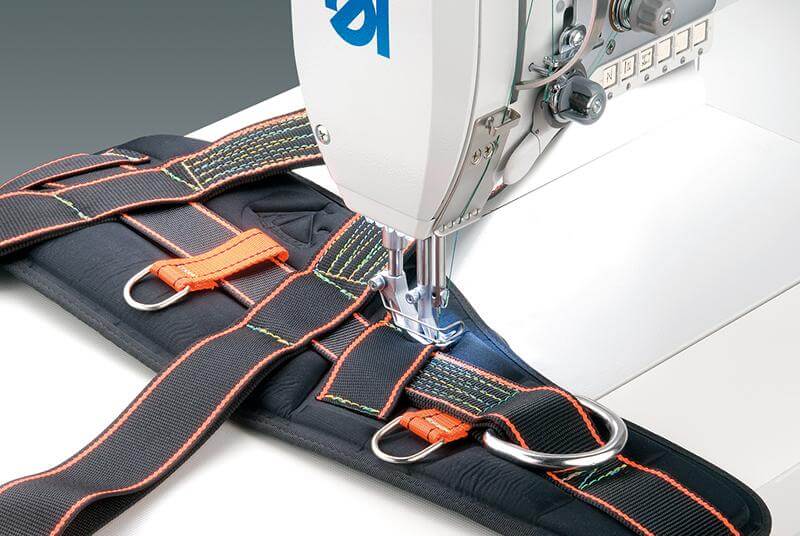
For departments evaluating product options, partial modifications, or small-batch samples, XINHUI Bag Factory offers OEM customization of existing firefighter carry equipment, along with standard products for direct supply.
The factory has experience with practical requirements such as contamination separation and load reinforcement for firefighting equipment. It follows the AQL 2.5 outgoing inspection standard and maintains incoming inspection records for fabrics and hardware.
Rather than automatically recommending a complete redesign, XINHUI compares two approaches based on the department's budget and order volume. It first evaluates whether the existing pattern can be modified to meet the requirements. Only when the current design cannot deliver the necessary functionality does it recommend assessing a completely new development.
The factory also supports coordinated sampling across multiple product categories, including the firefighter duffle bag and fireman handbags. During sample development, it simulates loading a complete set of protective equipment and conducts practical tests involving dragging and abrasion. These tests help identify potential problems with liners, dividers, and stitching before mass production begins.
For smaller carry kits, fireman handbags can be assessed alongside larger equipment bags to ensure that pocket layouts and storage arrangements suit the intended role. The same principle applies regardless of bag size: validate the design against actual operational needs before committing to a production run.
Departments currently evaluating suppliers can request a free project assessment and a quotation for the sample development timeline. This makes it easier to compare options before committing substantial funds and helps reduce the cost of trial and error.
FAQ
Q1: What field tests should be performed on a customized firefighter equipment bag?
A: After receiving the sample, load it with the complete set of protective equipment and test it under realistic conditions. Simulate routine dragging, placement on the ground, and storage in low-temperature environments.
Conduct simulated operational use over 7–14 consecutive days. Inspect the lining, stitching, and internal dividers for tears, seam failure, or coating delamination before deciding whether to place a bulk order.
Q2: What problems can arise when reordering a partially customized bag?
A: When a repeat order is placed six months or a year later, fabric batches and manufacturing processes may have changed. Bags from the new batch may show minor differences in workmanship compared with the original customized products.
Before reordering, confirm with the supplier how the original materials, construction methods, and quality requirements will be maintained across subsequent production runs.
Q3: If the customized lining and dividers do not provide adequate contamination separation, can we add components ourselves later?
A: Self-installing additional compartments or sewing in a new liner after production is not recommended. Unauthorized modifications can damage the original fabric coating and create gaps that allow contaminants to penetrate or spread through the bag.
If the sample does not meet the required contamination-control standards, return it to the supplier for adjustment and further testing before approving mass production.
Why hockey bags May Fail the Rink Locker Fit Test
Related Article


