
Why hockey bags May Fail the Rink Locker Fit Test
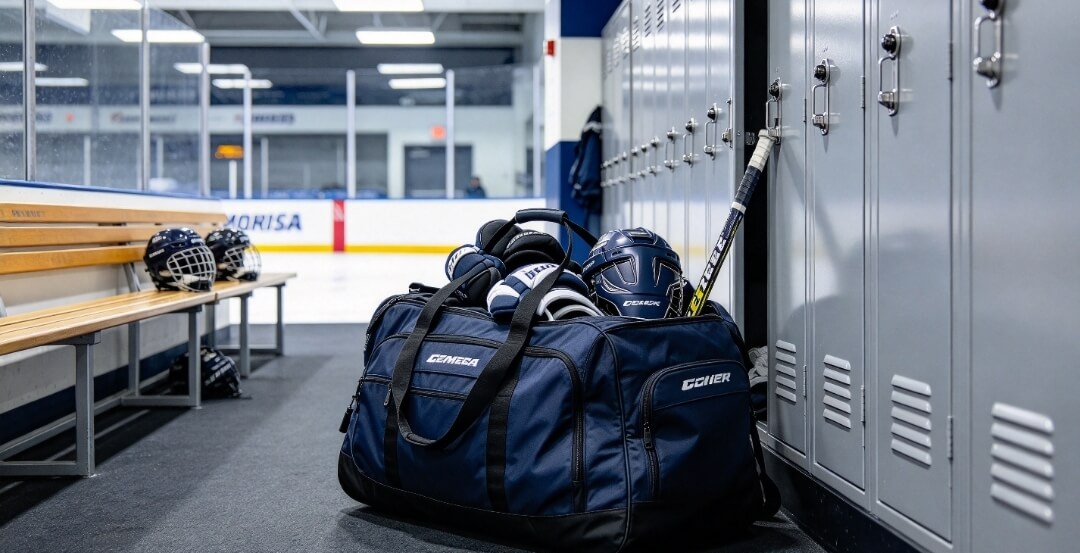
Parents often buy hockey bags based on the dimensions listed on the product page, only to arrive at the rink and discover that the empty bag fits in the locker, but the door won’t close once a full hockey in a bag kit is packed inside. Most people check their protective gear and hockey stick sizes, but overlook how much hockey bags can bulge when fully loaded.
Many people choose a helmet and chest protector first, then pick a bag almost as an afterthought. When buying a secondhand hockey in a bag kit, this approach can create problems. The bag’s fabric, webbing, and zippers may have deteriorated over time, even if the damage isn’t obvious at first glance. Once the entire set of protective gear is packed and carried, the seams around load-bearing areas may tear, potentially damaging the equipment inside.
How to Check hockey bags for Locker Fit
When checking whether a bag fits in a rink locker, don’t rely on its external dimensions alone. Measure the locker’s internal clearance and check the narrowest opening at the door frame. Wheels, extended handles, and external side pockets for sticks all take up extra space. Even if a bag’s listed dimensions match the locker’s stated specifications, these protruding parts can still prevent the door from closing.
Reference Dimensions for Youth Ice Rink Lockers (inches/cm)
The ranges below are common reference points for youth rink lockers in North America and Europe. Actual dimensions vary by club and community rink.
| Measurement | Internal locker dimensions | Empty bag dimensions | Estimated dimensions when fully packed (hockey in a bag) | Compatible hockey stick sizes (reference) |
|---|---|---|---|---|
| Length | 24–30 in / 61–76 cm | 22–28 in / 56–71 cm | 23–29 in / 58–74 cm | Youth: 114 cm / 122 cm |
| Depth | 18–24 in / 46–61 cm | 16–20 in / 41–51 cm | 17–22 in / 43–56 cm | Junior: 127 cm / 132 cm |
| Height | 72–84 in / 183–213 cm | Not applicable; the bag lies flat, so height is not a limiting factor | — | Junior: 137 cm |
Important: Locker depth is the dimension most likely to cause problems. Soft-sided bags can bulge noticeably in depth once they are packed with a full set of protective gear. External wheels and handles also reduce the available space. Even if the length and width appear to match, the locker door may not close. Always measure the narrowest usable depth at the locker opening.
When choosing a bag, also check hockey stick sizes against the side stick compartment. For youth players, overall stick length is not the only consideration; the blade width must fit the pocket, too. If the stick moves around inside the bag, it can wear through the lining or scratch the stick’s finish.
Test the Fit with a Full hockey in a bag Kit
The most reliable way to check compatibility is to pack the entire hockey in a bag setup as you would for a typical training session, then place it inside the locker. Testing the bag in its fully loaded state helps you confirm the fit before arriving at the rink with equipment that cannot be stored properly.
Inspect Used hockey bags Before Buying
When buying a secondhand equipment set, inspect the bag first. Check the load-bearing fabric on the bottom, the stitching, and the ventilation mesh. Open and close the zippers several times, and inspect the inside corners for hidden mold.
If the ventilation system no longer works properly, moisture trapped in a damp locker can gradually damage the entire set of protective gear. A thorough inspection helps you identify these problems before buying.
Following this checklist helps you choose a bag that fits your rink’s lockers while checking the condition of a secondhand kit and confirming that the stick compartment is suitable. You can print the checklist and take it to the rink, but remember that locker dimensions vary. Always verify the actual internal clearance at your rink before making a purchase.
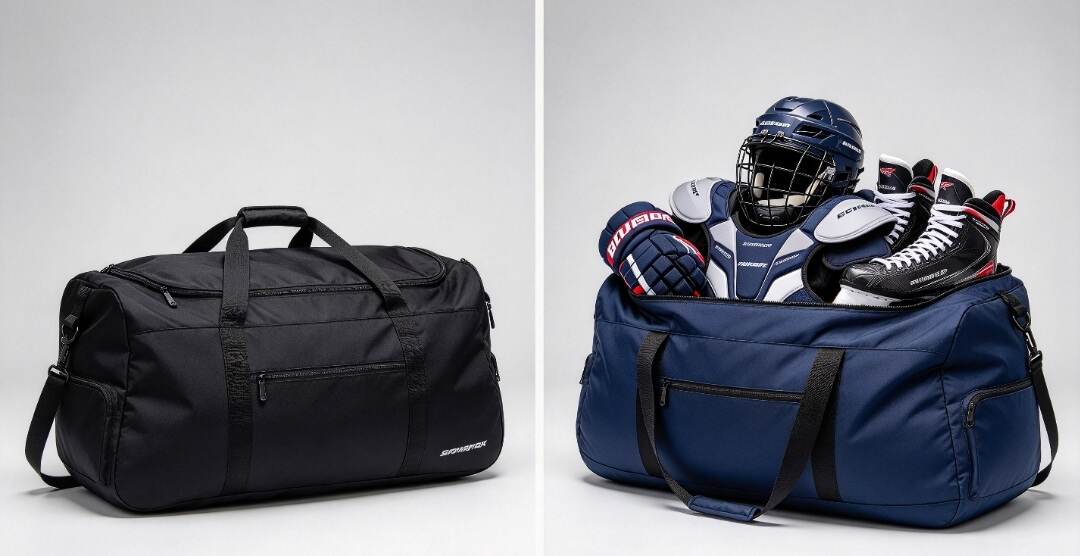
For ongoing purchases or custom orders of hockey bags designed to fit lockers at North American and European ice rinks, contact XINHUI Bag Factory directly. With years of experience in bag manufacturing, the factory understands the storage challenges faced by hockey clubs across North America and Europe. Designs can include additional room for expansion when fully packed, while the side stick compartment can be customized for different hockey stick sizes and a complete hockey in a bag setup.
Products undergo load-bearing and ventilation tests before shipment. Small-batch samples are available, and QC inspections can be coordinated during production. The factory can also assess the bag’s external dimensions and the space taken up by protruding components before production, helping reduce the risk of bags that cannot fit into rink lockers after delivery.
If you are looking for a reliable hockey equipment bag supplier, submit your target locker dimensions and requirements to receive a suitable product proposal.
FAQ
1. Why do hockey equipment bags with the same listed capacity vary so much in thickness when fully packed?
The difference often comes down to fabric stiffness, the thickness of the internal support panels, and the design of the side pockets. Soft-sided bags tend to bulge more when filled with protective gear, while bags with a rigid structure are less likely to change shape.
2. How can long-term pressure on a stick blade inside a bag’s side pocket cause hidden damage?
Constant pressure can gradually alter the blade’s curve and create tiny, difficult-to-see cracks in the shaft’s coating. After repeated stress, the stick may become more likely to break.
3. Can a secondhand equipment bag still be used to store protective gear if it smells slightly musty after cleaning?
A lingering musty smell may indicate that mold or mold spores remain in the bag’s fibers. It is best not to use the bag to store protective gear, as remaining spores may transfer to the foam padding and continue to grow under damp conditions.
Is a firefighter equipment bag Worth Customizing?
How to Choose a youth hockey bag That Fits Your Child’s Needs
Related Article


