
How to Choose a youth hockey bag That Fits Your Child’s Needs
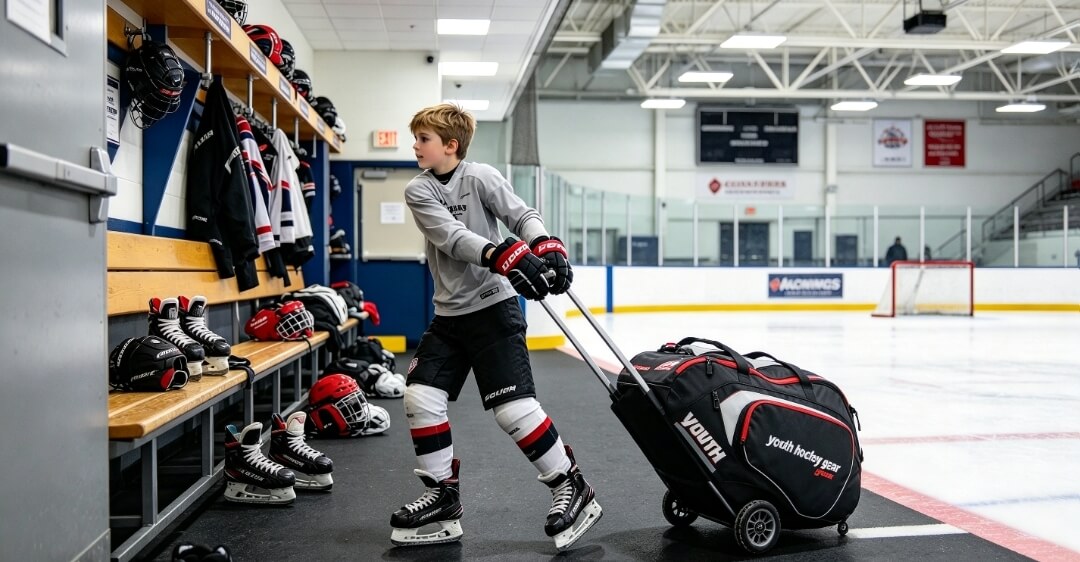
At rink locker-room entrances, parents are often seen dragging oversized bags while their children stand nearby, unable to pull the bags themselves. When buying a youth hockey bag, many parents instinctively choose a larger size to accommodate their child’s growing collection of ice hockey youth equipment, hoping one bag will last for several seasons.
But a bigger bag doesn’t automatically mean better value.
Too much extra space allows protective gear to slide around inside the bag, causing repeated friction against the lining and seams. When a child drags an overloaded bag between the parking lot and the locker room, the handle can be pulled off-axis, putting extra strain on the frame and causing the wheels to wear out prematurely. Excess space also allows wet gear to shift around, spreading moisture throughout the bag and accelerating odor buildup.
Why a Larger hockey bag May Not Be Better
When choosing a youth hockey bag, start by checking the empty weight. For children under 10, aim for a bag that weighs no more than 3 pounds when empty. If the bag is already too heavy before any protective gear is packed, a child may struggle to move it independently.
Some youth models from major brands have a surprisingly high empty weight. Looking only at capacity specifications can make it easy to overlook this important factor.
Check the Fit for ice hockey youth equipment
Once the bag arrives, run two simple tests.
Test 1: Check the fit with a full set of gear.
Pack the complete set of ice hockey youth equipment and zip the main compartment closed. The outer shell should not bulge noticeably or compress the gear, but the equipment should not slide around excessively inside the bag either. This indicates that the bag has an appropriate amount of extra space.
Avoid leaving more than 2 inches of unnecessary length. Extra room does not extend the bag’s service life.
Test 2: Let your child handle the bag.
Have your child pull and carry the bag independently. For a wheeled model, adjust the handle so your child can grip it comfortably at a natural wrist height. They should not have to bend over or strain to pull the handle.
If your child can move the fully loaded bag without assistance, it is much more suitable for everyday practices and trips to the rink.
Keep Your youth hockey bag as Your Child Grows
Children’s equipment often changes from season to season, but that does not mean you need to replace the entire bag every year.
Instead, use separate mesh bags or small organizer pouches for items such as skates and gloves. Adding simple compartments inside your existing youth hockey bag helps keep smaller pieces organized without requiring a larger bag.
Check Locker Space Before Buying a hockey bag
Many families overlook the dimensions of rink lockers. Some facilities have narrow locker compartments, meaning that even a vertical, tower-style bag that meets all the equipment-size requirements may not fit inside.
Before placing an order, measure the interior length and width of the lockers at your local rink. Use those measurements to determine which bag style will fit comfortably.
What to Check in a Used hockey bag
The secondhand market offers plenty of youth gear bags that look almost new, but a clean exterior does not guarantee that the inside is in good condition.
When shopping for a used bag, pay particular attention to the bottom lining, seams, and stitching. These areas can trap hidden moisture and harbor bacteria. Even when the outside looks clean, residual dampness inside the bag can affect the rest of the equipment.
By evaluating three key factors—empty weight, practical packing space, and how easily your child can handle the bag—you can avoid many common buying mistakes.
Every family has different training schedules and travel requirements, so no single bag will suit every young player. Teams making bulk purchases should also consider group travel arrangements and luggage handling on buses.
Custom youth hockey bag Orders for Teams
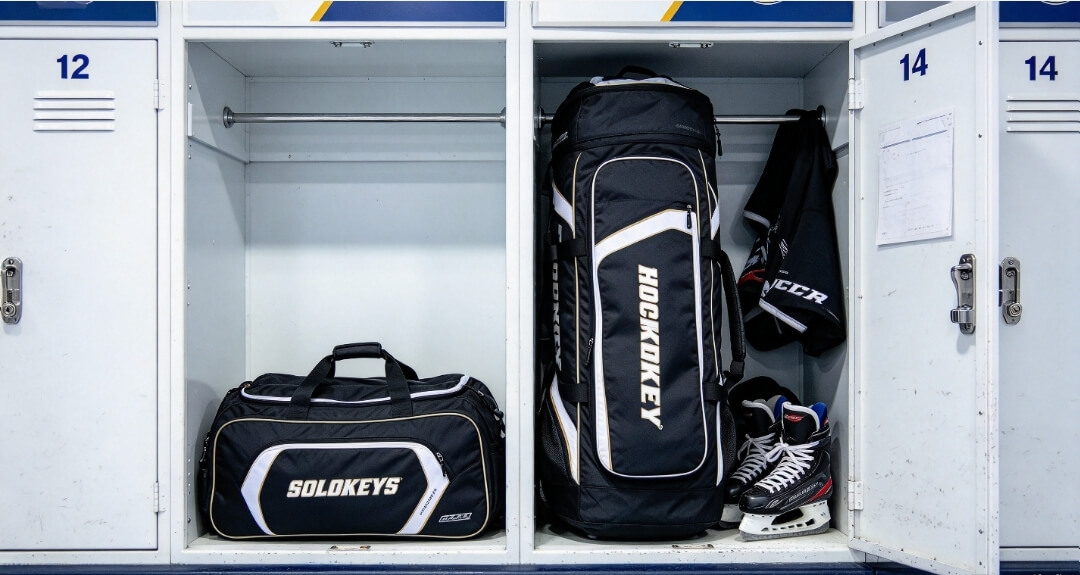
When teams order gear bags in bulk, finding an off-the-shelf model that balances empty weight, reinforced stitching, and ventilation can be difficult.
XINHUI bag factory has years of experience in end-to-end sports bag manufacturing and can tailor designs to the needs of young hockey players. Options include reinforced stitching in high-wear areas, abrasion-resistant 900D fabric, controlled empty weight for youth models, team logo printing, and minor size adjustments.
Sample development typically takes 5–7 days. Mass production can begin after the sample has been reviewed and approved.
Whether a club is placing a bulk order or a brand is developing a storage product for ice hockey youth equipment, requesting a sample provides an opportunity to evaluate the workmanship and determine whether the design suits actual usage requirements.
There are also other manufacturers worth comparing in the market. Reviewing physical samples before making a final decision is a practical way to assess which supplier best meets your needs.
FAQ
Q1: For a young player’s gear bag, is a webbing stick strap or an elastic strap more durable?
A: A reinforced webbing strap is generally the better choice. Repeated stretching can cause elastic straps to lose their tension relatively quickly, making it easier for a hockey stick to slip out during bumpy trips to away games. Webbing straps secured with buckles provide a more consistent hold over time.
Q2: Does a youth gear bag need a rigid base panel?
A: For younger beginners who travel to the rink by car, a soft base with reinforced construction is usually sufficient. A rigid base is worth considering if the child frequently climbs stairs or drags the bag over long distances. However, a rigid base also adds to the bag’s empty weight.
Q3: If we alternate between two gear bags, how should we store the unused one to prevent fabric damage?
A: Leave all the zippers open and store the unused bag flat or hanging, where possible. Avoid compressing and stacking bags for extended periods. Prolonged pressure can damage the bottom coating and seams, making the material more likely to crack during future use.
Why hockey bags May Fail the Rink Locker Fit Test
How to Maintain a rucksack camera and Extend Its Protective Life
Related Article


