
7 Nurse Bag Features That Waste Your Money

You can spend a good amount of money on popular tote bags for nurses, yet still find that some nurses love theirs while yours makes every 12-hour shift feel like a struggle. So, what makes the difference?
You move between patient rooms, only to find your medical trauma shears buried at the bottom of your bag. The product listing for your nursing work bags promised everything: 22 storage pockets, a built-in USB port, an advertised antimicrobial lining, and a prominent embroidered RN logo. You paid extra for these supposedly nurse-specific upgrades. But halfway through your shift, with patient call bells going off nonstop, you're still frantically searching for your penlight.
Many popular tote bags for nurses are loaded with add-ons that sound helpful but offer little practical value. When shopping for a nurse bag, it's easy to get caught up in marketing claims and spend more on features you rarely use. This guide covers seven common marketing gimmicks to avoid when choosing nursing work bags. Based on real-world feedback from nursing communities and practical hospital infection control guidelines, it focuses on what actually matters in a clinical setting.
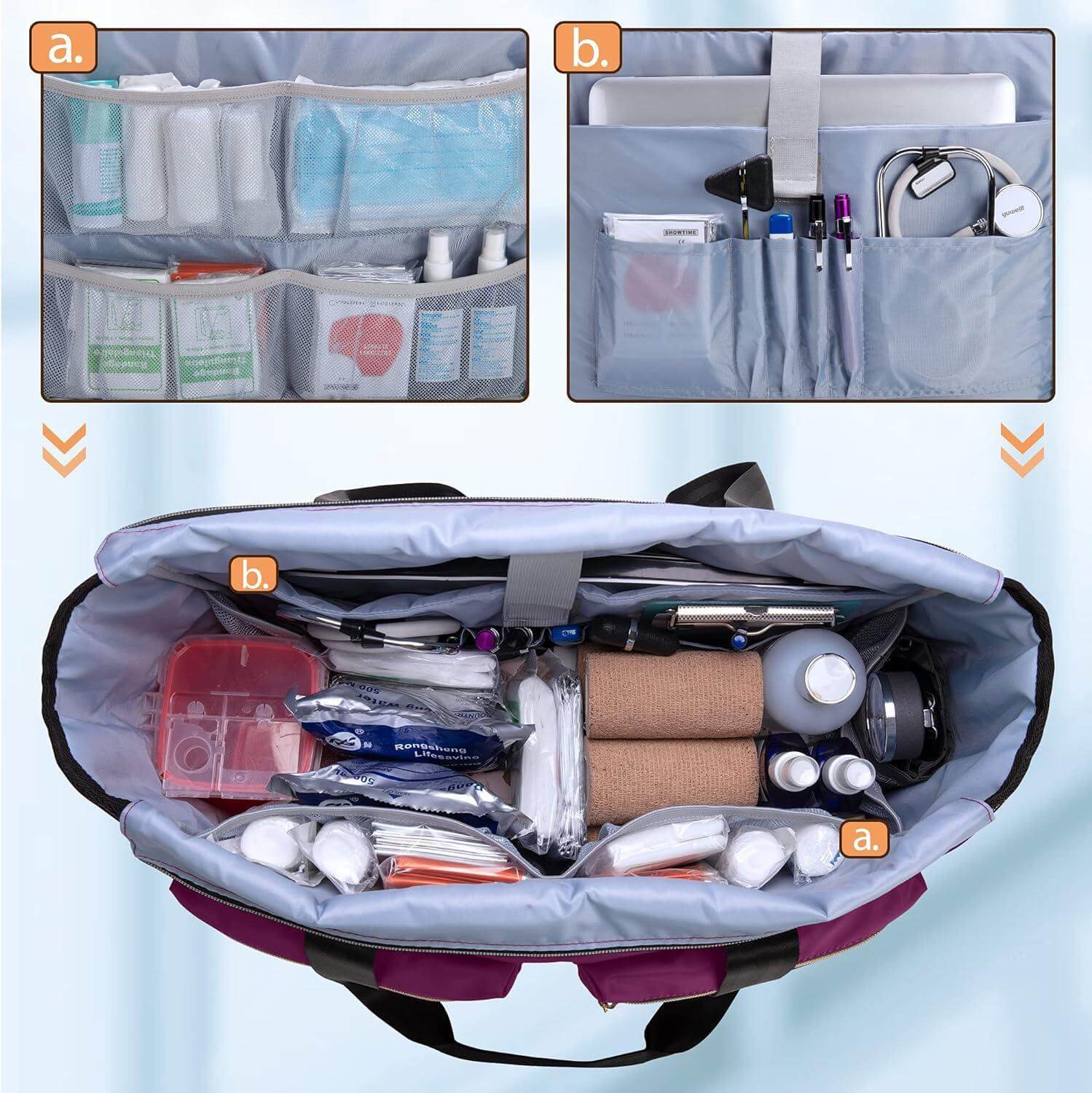
1. Too Many Pockets (20 or More Compartments)
More pockets don't necessarily mean better organization.
Product photos of popular nurse totes often showcase dozens of tiny compartments that look neat and convenient. In practice, however, too many small pockets can become hiding places for your essentials. You put alcohol prep pads in one compartment and trauma shears in another. Halfway through your shift, you can't remember where anything is.
Extra stitching and narrow pocket seams can also trap crumbs, debris, and small amounts of spilled liquid. After every shift, you'll spend more time wiping down all those hard-to-reach corners.
A few well-designed pockets with clearly defined purposes are usually enough. Pay extra only for compartments that hold the items you reach for regularly. Don't increase your budget simply because a bag has more pockets.
2. Built-In USB Charging Ports
A built-in USB port might seem useful for long shifts, but its practical value in a clinical environment is limited.
You still need to keep a separate power bank inside the bag to use it. The built-in cable is tucked between layers of fabric, while the port opening can collect moisture, lint, and dirt when you wipe down the bag with disinfectant wipes.
Many nurses find themselves using their own charging cables throughout the day, leaving the built-in port completely untouched. There's no reason to pay extra for permanently installed hardware you may never use.
3. Advertised Antimicrobial Linings
Many manufacturers promote antimicrobial linings as a major selling point for nursing work bags. But it's important to understand one thing: no antimicrobial coating on a bag can replace the manual cleaning procedures required by hospital policies.
Even if the lining has received antimicrobial treatment, you'll still need to wipe down the bag after it enters a patient care area. Repeated cleaning with alcohol-based wipes may also gradually reduce the effectiveness of certain surface treatments.
The practical benefit is often limited, yet you're paying more for a marketing label. Instead of chasing antimicrobial claims, prioritize smooth, easy-to-clean materials that can withstand regular disinfecting.
4. RFID-Blocking Pockets
RFID-blocking technology may sound like a worthwhile security feature at first.
During a typical hospital shift, most nurses keep their wallets and ID cards inside a zipped compartment in their work bags. Their bags rarely come close to external card readers while they're working.
For most nurses working inside a hospital, RFID-blocking pockets simply add material, weight, and cost without providing much everyday value. This feature makes more sense in travel bags than in a daily clinical work tote.
5. Oversized Embroidery and Nurse-Themed Prints (RN Logos and Medical Patterns)
Large embroidered designs, raised prints, and fabric appliqués can increase the price of a bag while creating uneven surfaces that are harder to clean.
The gaps between embroidery stitches can trap splashes, hand sanitizer residue, and dust. These areas are difficult to wipe thoroughly during short breaks between shifts, making them less suitable for environments with basic infection control requirements.
A small, understated print is perfectly fine if you like a little personality in your bag. Just don't pay a significant premium for oversized, raised nurse-themed decorations.
6. Decorative Metal Hardware and Fabric Trim
Shiny decorative studs, oversized ornamental snaps, and fabric ruffles often stand out in photos of trendy nurse totes on social media.
In an actual clinical setting, however, protruding hardware can snag on scrubs, stethoscope tubing, and supply carts. Repeated wiping with alcohol-based disinfectant can also cause metal plating to deteriorate or peel.
It's worth investing in durable, corrosion-resistant functional zippers and simple hardware. Decorative metal accents that serve no practical purpose aren't worth the extra money.
7. Oversized Expandable Compartments
Expandable zippers promise to dramatically increase bag capacity, making them sound ideal for busy shifts.
But once you unzip the expansion panel, the bag may lose its original structural support. It can become floppy and collapse when placed on the nurses' station counter.
When the bag loses its shape, items inside are more likely to tip over and spill out. Cleaning and disinfecting all its surfaces can also become more difficult.
Most nurses don't need that much extra temporary storage for their everyday shift essentials.
Features Worth Spending More On
Instead of paying for unnecessary extras, put your money toward basic features that have proven practical value:
-
Wipeable coated nylon or polyester: Choose materials that can withstand regular cleaning.
-
A fully zippered main compartment: Helps keep belongings contained and may meet infection control requirements in many departments.
-
Wide, padded shoulder straps: Provide better comfort when carrying the bag for extended periods.
-
A reinforced, structured base: Allows the bag to stand upright when set down.
-
Reinforced stitching at handle and strap attachment points: Helps the bag withstand everyday loads.
Keep in mind that your department's internal policies may change your shopping priorities. Some units restrict bag sizes, prohibit open-top bags, or place specific limits on personal belongings in patient care areas. Always check your department's current guidelines before purchasing.
Choosing a reliable clinical work bag doesn't mean buying the most expensive trendy nurse tote. Focus on avoiding features that look impressive in product photos but offer little practical value in a hospital setting. Make your final decision based on your role, the weight of the supplies you carry, and your hospital's policies.
FAQ: Choosing Popular Tote Bags for Nurses
Q1: Can I use a regular, unbranded tote bag as a clinical nursing work bag?
Yes. A regular tote bag can work for clinical use as long as it meets your department's requirements.
Look for wipeable coated nylon or polyester with a fully zippered main compartment. Avoid untreated canvas and genuine leather. You can also use smaller organizer pouches to keep medical tools sorted without paying extra for products marketed exclusively to nurses.
Q2: What's a reasonable price range for a practical nursing bag without unnecessary extras?
A practical nurse bag without excessive marketing add-ons typically costs around $35–$75.
Higher prices are more justifiable when they reflect genuine hardware improvements, such as thicker materials, reinforced stitching, or padded shoulder straps designed for heavier loads. Decorative prints and external accessories alone don't justify a higher price.
Q3: How can I tell whether an online nursing bag will hold up during actual shifts?
Look for recent reviews from verified buyers, especially feedback from currently practicing nurses.
Pay particular attention to comments about:
-
How well the material holds up to repeated cleaning.
-
Whether the shoulder straps remain comfortable when the bag is fully loaded.
-
Whether small items are easy to organize or frequently get lost inside.
Ignore reviews that focus exclusively on appearance and decorative details. Real feedback about everyday clinical use will tell you much more about whether a bag is worth buying.
Related Article


