
How to Choose a Quilted Bag That Lasts Beyond Autumn
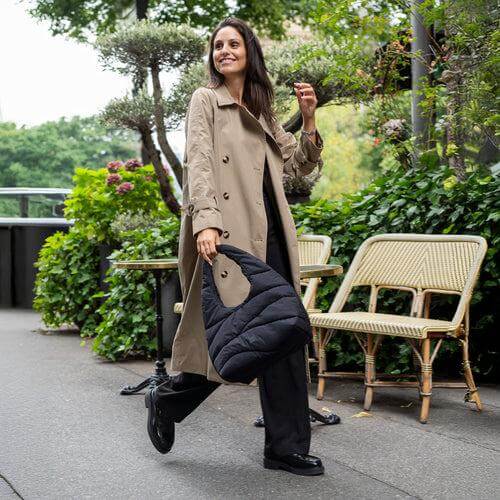
Lately, I've noticed more and more women carrying quilted bags to work, on weekend shopping trips, and everywhere in between. They're becoming a popular everyday accessory, but there's one common problem: many shoppers buy a bag after seeing an attractive online recommendation, only to find that the actual product falls short of expectations.
The market for quilted bags for women offers plenty of different styles and quality levels. Two bags may look almost identical, yet their performance can be completely different. Some lose their padded shape and definition after just two or three weeks of use, while others have narrow shoulder straps that dig into thick winter coats and create uncomfortable pressure.
Many women prefer a quilted tote bag for women because of its generous storage capacity. It offers plenty of room for the extra personal items that tend to come with the autumn season.
However, appearance isn't everything. Autumn weather and everyday conditions can have a real impact on how comfortable and practical a quilted bag is.
How Autumn Weather Affects Your Quilted Bag
Fallen leaves are common in autumn, and tiny pieces of dried leaves, dirt, and sand can easily collect in the grooves of quilted stitching.
With a regular smooth-surface bag, a quick wipe is usually enough to remove dirt. However, debris can become trapped in the recessed stitching of a quilted design, making it difficult to clean with a simple wipe.
Rainy weather also becomes more frequent during autumn. Small amounts of moisture can remain trapped in the fabric seams, creating another maintenance challenge that smooth, plain-weave bags generally don't have.
Quilted Tote Bag for Women: Check the Stitching First
When choosing a quilted tote bag for women, pay close attention to two important details.
The first is stitching density.
Bags with widely spaced stitches are more likely to develop seam damage when repeatedly carrying heavy items. The internal padding may also shift out of position over time.
Even, closely spaced stitching helps keep the filling in place, reducing the risk of uneven padding, clumping, and flattened areas.
If you're shopping online and can't inspect the bag in person, look through customer photos. Pay particular attention to the stitching around the bottom panel and where the shoulder straps connect to the bag. Avoid products with uneven or crooked stitching.
Which Quilted Bag Material Works Best in Autumn
The second thing to consider is how different materials perform in autumn conditions.
- Nylon quilted bags: Lightweight and easy to maintain. Surface water marks can usually be removed with a damp cloth. However, nylon isn't necessarily waterproof. During prolonged exposure to rain, water can still seep through the stitching into the bag.
- PU leather quilted bags: Soft to the touch and attractive in appearance. However, some low-cost PU materials can become stiff in cold temperatures.
- Canvas quilted bags: Breathable and comfortable to carry, but canvas absorbs moisture easily and takes longer to dry. This makes it a less practical choice for rainy-day commuting.
Choosing the right material depends on your daily routine and the weather conditions you regularly encounter.
Can Your Quilted Bag Carry a Laptop Safely?
Many people simply place their laptops inside a quilted bag, but not every quilted design is suitable for carrying heavy items regularly.
Without a reinforced bottom or a dedicated laptop compartment, the weight of a laptop can cause the bottom of the bag to sag over time. Continuous pressure also compresses the internal padding, gradually reducing its original fullness and shape.
If you regularly carry a laptop, look for a design with a separately padded device compartment and a reinforced bottom panel.
These features help distribute the weight more evenly, reduce pressure on the bag's structure, and minimize the risk of deformation.
Choose Comfortable Shoulder Straps
Shoulder strap width becomes particularly important when the weather turns cold and you start wearing thicker clothing.
Thin metal chain straps may work well with lightweight spring and summer outfits. However, when worn over thick winter coats or chunky knitwear, the fabric underneath can push the chain higher, concentrating pressure on a smaller area of your shoulder.
Carrying the bag on one shoulder for extended periods can quickly become uncomfortable.
When shopping for quilted bags for women, consider these details:
-
Choose shoulder straps at least 2 cm wide for better weight distribution.
-
If you prefer chain straps, look for adjustable designs.
-
Make sure the strap length works comfortably over thicker autumn and winter clothing.
A well-designed strap makes a noticeable difference in everyday comfort.
How to Style a Quilted Tote Bag for Women
You don't need complicated styling to make a quilted tote work with different outfits.
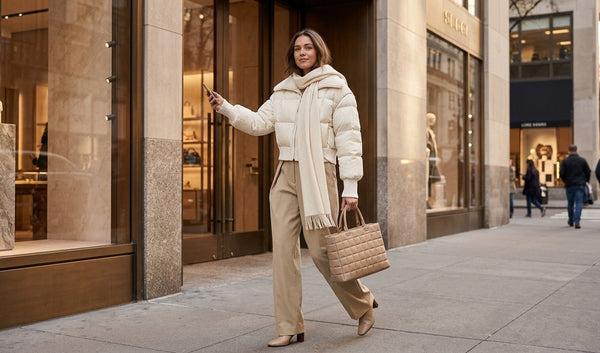
For weekday commuting, a quilted tote in a neutral color pairs easily with tailored suits and long trench coats. The textured surface adds visual interest against the smooth fabric of a coat without getting lost under heavier outerwear.
For weekend outings, you can switch to shorter handles and pair the same bag with a denim jacket or knitted cardigan.
This makes it easy to transition from a professional workday look to a relaxed weekend outfit without buying multiple bags for different occasions.
How to Store Your Quilted Bag After Autumn
When autumn comes to an end, don't simply toss your bag into the back of a wardrobe.
Small pieces of leaves, dirt, and other debris can remain trapped in the quilted stitching. Storing the bag in a closed space without cleaning it first can lead to dust buildup and trapped moisture over time.
Before putting it away:
-
Use a soft brush to remove debris from the stitching.
-
Make sure the bag is completely dry.
-
Store it in a breathable dust bag.
-
Avoid placing heavy items on top of it, as this can flatten the padding.
Proper storage helps maintain the bag's shape and extends its usable life.
How to Choose Quilted Bags for Women for Daily Use
No single bag can meet everyone's needs. The best choice depends on how you actually use it every day.
-
For rainy-day practicality: Choose nylon, which is lightweight and easy to clean.
-
For a softer feel: Consider higher-quality PU leather.
-
For a limited budget: Focus on stitching quality, padding construction, and shoulder strap workmanship rather than appearance alone.
Instead of relying entirely on influencer recommendations or attractive product photos, think about your actual commuting habits, daily belongings, and travel needs.
A bag that looks good online isn't necessarily the one that will work best in your everyday life.
Choosing a Quilted Bag Manufacturer for Custom Production
Finding a well-made quilted bag can be difficult when shopping online. It's not easy for ordinary buyers to judge stitching quality, internal padding, or bottom reinforcement from product photos alone.
XINHUI Bag Factory has extensive experience developing and manufacturing quilted bags, with particular attention to the construction details that matter during autumn and everyday use.
Our production process includes several quality checks:
-
Stitching control: We monitor the spacing between quilted stitches to help keep the internal padding evenly distributed and prevent shifting or clumping.
-
Material testing: Incoming fabrics undergo basic testing under different temperature and moisture conditions to identify materials that may become stiff or crack in cold weather.
-
Reinforced construction: The bottom panel and shoulder strap attachment points receive reinforced stitching to better withstand everyday commuting and the weight of laptops and other personal belongings.
Whether your brand is developing a new collection, planning a small-batch trial order, or simply needs a physical sample to check the workmanship, XINHUI Bag Factory can provide support.
If you're developing an autumn accessories collection, contact our team to request samples and discuss suitable construction options. Addressing common problems such as flattened padding and split seams at the development stage can help avoid quality issues later.
Frequently Asked Questions
Q1: What household tools can I use to remove small leaves and dirt trapped in quilted stitching?
A: A soft makeup brush or a small keyboard cleaning brush works well for removing debris. Gently brush along the stitching lines to loosen dirt trapped in the grooves.
Avoid soaking the bag in water. Moisture can seep into the inner layers, and the padding may take a long time to dry completely, leaving residual dampness inside.
Q2: How much weight can a quilted tote reasonably carry when used for a laptop?
A: Ideally, keep the total weight of the laptop and its accessories below 3 kg.
Even if the bag has a reinforced bottom, regularly carrying more than this amount can accelerate stitching wear and cause the bag to sag or lose its shape over time.
Q3: How do wave quilting and traditional diamond quilting look different on petite women?
A: Large wave patterns tend to create a stronger visual expansion effect. Petite women choosing larger bags may want to avoid oversized wave quilting, as it can make the bag appear more visually dominant.
Fine diamond quilting creates smaller, more defined sections and generally has a less bulky visual effect. This makes it a more flattering option for petite women.
Related Article


