How to Control Color Accuracy for trade show bags

You confirm the brand Pantone color on your computer screen, approve the final artwork, and place your trade show bags order. When the full shipment arrives at your office, there are only 12 days left before the show opens. You unpack the tradeshow tote bags, only to find that the brand logo printed on the bags looks noticeably different from the color you saw on your screen.
Many buyers immediately assume the printer made a mistake when mixing the ink. In reality, the problem usually starts elsewhere. The RGB color gamut on a screen is fundamentally different from the way color appears when printed on fabric, and the base color of the material can directly affect how a Pantone color looks on the finished product.
When placing a trade show bag wholesale order, providing only a digital PDF proof without a physical fabric sample is one of the biggest causes of color disputes for trade show bags. The same PMS color can look noticeably different when printed on off-white canvas versus light gray non-woven fabric. Canvas has larger fiber gaps and tends to absorb more ink, which can reduce color saturation. Non-woven fabric often has a cooler-toned base, which can make the same Pantone color appear cooler after printing. Even when a supplier mixes the ink strictly according to the Pantone color guide, the finished product will not look exactly the same as it does on a monitor.
Many exhibitors use a screenshot from their screen as the color standard. But monitor brightness, screen model, and office lighting can all change the color you see. Using a digital screen preview to control fabric printing simply does not provide an objective, workable standard for acceptance.
Physical Proofs for trade show bags
A physical proof should not be printed only on ordinary coated paper. The proof must be produced on the same fabric confirmed for the order. If your trade show bags options include both canvas and non-woven fabric, Pantone color samples should be produced separately on each material. Comparing a paper color swatch with a fabric sample has limited value because paper and textile absorb ink differently.
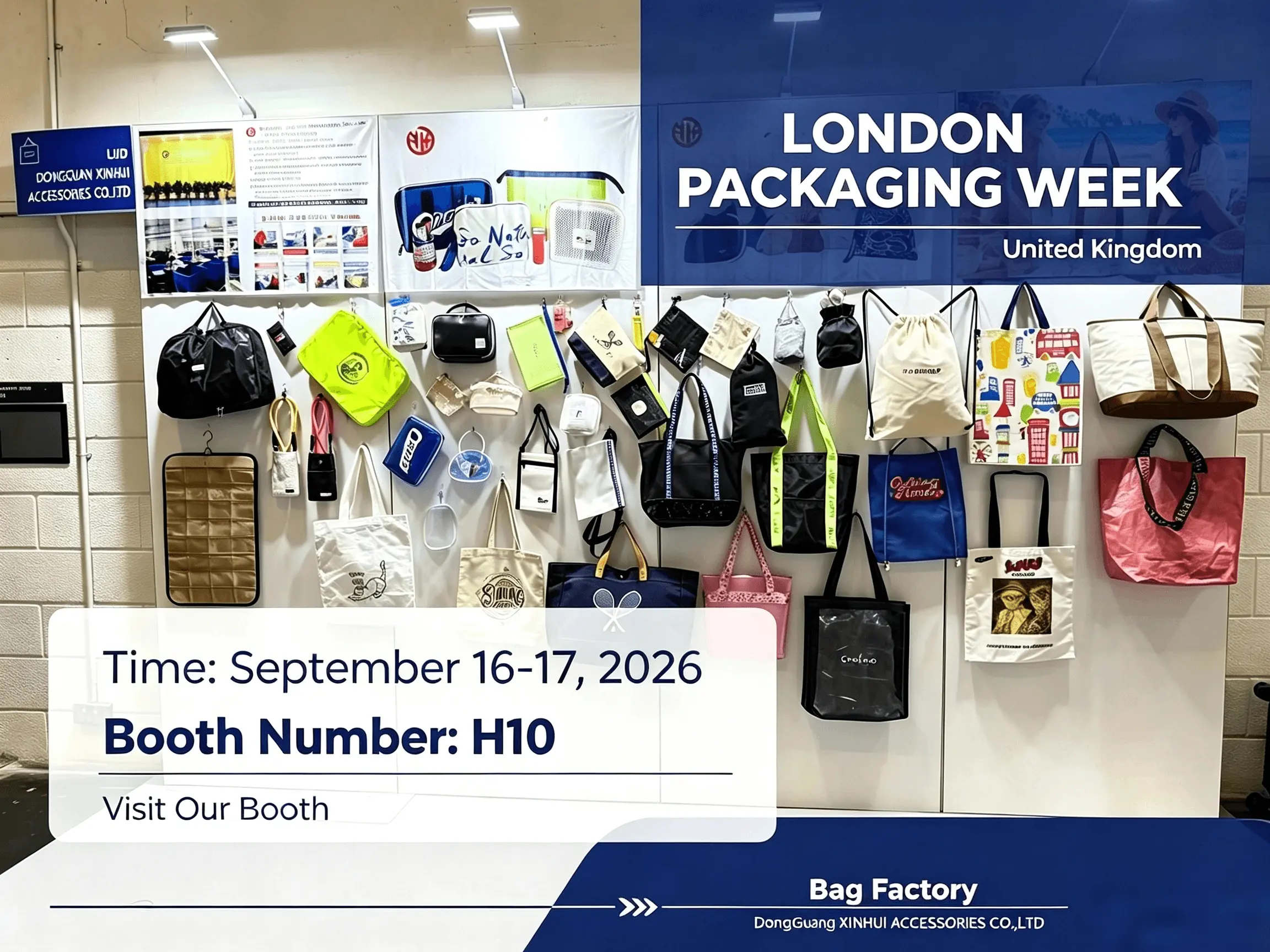
When color control is critical, a reliable supplier's sampling speed can directly affect the entire project timeline. XINHUI Bag Factory has nearly 20 years of hands-on experience in custom bag manufacturing and supports end-to-end OEM and ODM development. Customer samples can be completed within 3–5 working days, while quotations and digital mockups are provided within 24 hours of receiving the request, allowing buyers to move quickly into physical fabric color matching.
The factory holds CE, ISO, and BSCI-related certifications. Factory inspections are available, and customers can also conduct on-site production inspections. Fabric and accessory sourcing, sewing, screen printing, embossing, hot stamping, digital printing, embroidery, reactive printing, and full-surface printing are all handled in-house. This avoids unnecessary outsourcing and multiple handoffs, reducing variables that can affect color consistency.
For tradeshow tote bags, compare physical samples under a standard D65 daylight source whenever possible. Avoid checking samples under office fluorescent lighting or direct sunlight near windows. Different lighting conditions can change how the human eye perceives the same printed color.
Once the sample has been approved, keep a signed and confirmed physical sample bag. When the bulk shipment arrives, use this approved sample as the acceptance standard rather than the computer file. This can significantly reduce unnecessary color disputes between production batches when purchasing large quantities of tradeshow tote bags.
When the schedule is tight, confirm the bulk production lead time before selecting a supplier. XINHUI Bag Factory can complete standard bulk orders in as little as 30 days, giving buyers more time for sampling, color checking, corrections, and other pre-show preparations.
Color Standards for trade show bag wholesale
The process above can reduce color variation, but it cannot make the screen and physical product look 100% identical. Differences in fabric composition and subtle variations in the base color of different fabric batches can still cause color shifts within a controllable range.
Before placing a trade show bag wholesale order, buyers can agree with the supplier on an industry-standard Delta E tolerance range and use it as a reference during inspection.
Proper color control helps prevent a distorted brand color from being discovered just before the show. It also ensures that the promotional tote bags handed out at the event present a consistent and recognizable brand image.
FAQ
Q1: Which Pantone colors are less likely to shift significantly when printed on natural recycled canvas with a slightly gray base?
A: Recycled canvas naturally has a gray-toned base, so highly saturated neon colors can be difficult to reproduce at their original brightness. Medium-saturation colors such as deep blue, dark green, and burgundy are generally safer choices. If your brand requires bright yellow, bright orange, or another highly saturated color, ask the supplier to produce a physical sample on the actual fabric in advance and approve the real-world result before confirming bulk production of your trade show bags.
Q2: What is the best compromise when the budget does not allow physical samples for every fabric option?
A: First, select the fabric that will actually be used for the order, then produce a Pantone physical proof specifically on that material. Do not use a sample printed on Fabric A to predict how the same color will look on Fabric B.
At the same time, clearly state in the contract that color acceptance for trade show bag wholesale orders will be based on the physical Pantone color card plus the approved physical sample on the specified fabric. Do not use the digital screen proof as the acceptance standard.
Q3: What should we do if the bulk production of tradeshow tote bags is already finished and a small portion has a slight color variation, but there is no time for re-production?
A: A batch with a minor color variation can be distributed consistently to general visitors, while bags that match the approved sample more closely can be reserved for VIP or business-meeting customers. Avoid mixing different color batches during distribution to reduce the chance of visitors comparing them side by side.
Keep the affected physical samples as a reference for future orders and supplier discussions.
Related Article