
Choose the Best Teacher Tote Bags for Everyday Classroom Use
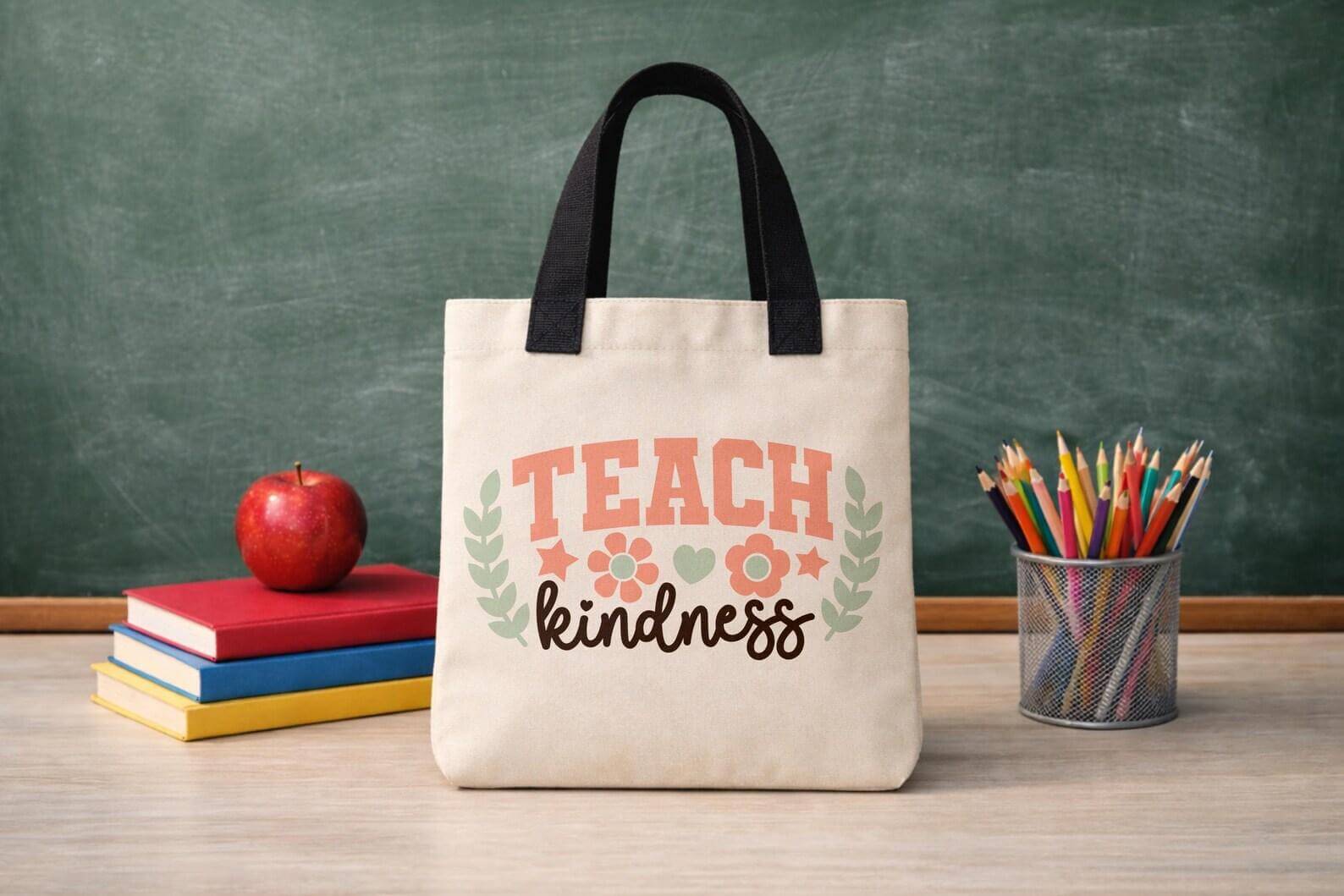
Many people assume that the thicker the fabric, the better it is for teachers who use their bags every day.
However, many buyers and gift shoppers focus too much on the printed design when placing an order, overlooking whether the fabric can actually withstand the demands of a classroom environment. Fabric weight (measured in ounces) and fiber properties directly affect how long teacher tote bags last and whether a particular customization technique will work well.
12 oz Cotton Canvas for Durable Teacher Tote Bags
12 oz cotton canvas is one of the most reliable fabric choices in the industry for embroidery. Even with dense stitching, it is less likely to stretch, pucker, or lose its shape. This makes it an excellent option for personalized teacher tote bags featuring names, subject labels, or embroidered designs.
However, cotton fibers naturally have a porous structure. Permanent marker ink and spilled coffee can seep into the fabric, making stains difficult to remove completely. Cotton canvas also has a normal shrinkage rate of up to 3% after washing. This is an inherent characteristic of natural cotton that cannot be completely eliminated.
When sourcing a custom tote bag for teacher, cotton canvas is also one of the first materials many buyers request samples of.
Polyester for Easy-Care Teacher Tote Bags
Standard polyester fabric offers reliable colorfastness and does not readily absorb water. Small liquid spills can usually be wiped away with a wet wipe, making everyday cleaning much easier.
Its main limitation is its smooth surface. Large embroidered designs require proper stabilizer backing to reinforce the fabric. Without it, the stitching tension can pull and distort the material, affecting the finished bag's appearance.
Many customers ordering teacher tote bags also request polyester fabric samples so they can compare how easy each material is to maintain against cotton canvas.
Lightweight Nylon Teacher Tote Bags for Daily Use
Nylon is the lightest of these three fabric options and offers excellent tear resistance. It is particularly suitable for teachers who move between classrooms and school buildings throughout the day and want to avoid carrying unnecessary extra weight.
Water-repellent nylon can provide temporary protection against clean water splashes. However, prolonged exposure to direct sunlight can gradually break down the surface water-repellent coating. It should not be considered permanently waterproof.
For personalized teacher tote bags, teachers who prioritize lightweight everyday carrying often choose nylon.
Why Choose a Tote Bag Over a Backpack or Briefcase?
Why are tote bags often more practical for teachers than backpacks or structured briefcases?
Backpacks usually need to be taken off before you can reach documents in the inner compartments. Briefcases, on the other hand, often have narrow openings that make it difficult to slide out stacks of worksheets, folders, and other teaching materials.
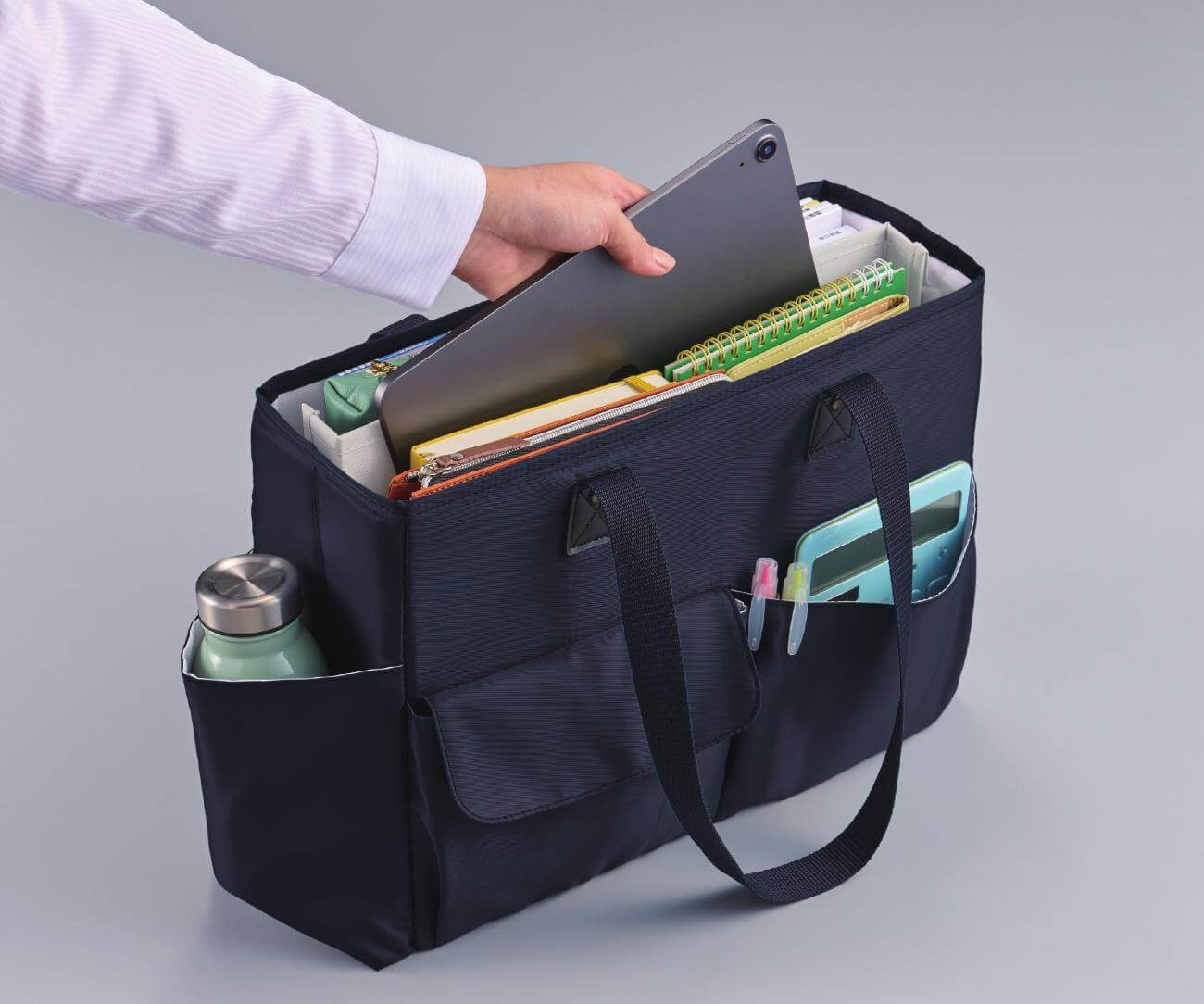
Tote bags offer a wide opening, allowing teachers to reach in and retrieve what they need while standing, without having to put the bag down.
They also lack rigid internal dividers, giving them more flexible storage capacity. When carrying lots of worksheets and books, the bag can expand to accommodate them. When carrying fewer items, there are no rigid compartments to create unnecessary movement or rattling.
When evaluating a custom tote bag for teacher, many buyers include opening width and internal storage space on their inspection checklist.
How to Choose Fabric for Teacher Tote Bags
There is no universally best fabric. The right choice depends entirely on how the bag will be used.
-
For embroidery quality and long-term personal use: Choose 12 oz cotton canvas.
-
For stain resistance and easy maintenance: Choose polyester.
-
For lightweight carrying and reduced shoulder strain: Choose nylon.
If you are currently sourcing teacher tote bags or planning to order personalized teacher tote bags, we can provide fabric samples first. You can check the texture, printing quality, and embroidery results before moving forward with a custom tote bag for teacher sample.
Check These Details Before Placing Your Order
Once the fabric has been selected, there are a few more details worth checking, including shoulder strap stitching and the layout of small internal pockets.
These seemingly minor features can directly affect the bag's overall service life and everyday usability.
Even when producing the same teacher tote bag design, changing the fabric may require adjustments to embroidery and heat-transfer printing parameters. Fabric samples allow you to examine the surface texture up close and test the material's resistance to pulling and stretching by hand.
XINHUI Bag Factory has extensive experience producing customized tote bags of this type. We understand the printing and embroidery limitations of different materials, including cotton canvas, polyester, and nylon.
Our factory follows AQL 2.5 quality inspection standards and can provide SGS fabric testing reports. We also support pre-production sample approval before proceeding with bulk production.
Based on how teachers actually use their bags, we proactively recommend practical details that are easy to overlook, such as reinforced shoulder straps and well-planned inner pocket layouts.
Simply send us your fabric preferences, customization requirements, and desired dimensions. We can prepare suitable samples so you can evaluate the results before deciding whether to place a bulk order.
Frequently Asked Questions
Q1: Does Higher Fabric Weight Mean the Shoulder Straps Are Less Likely to Break?
A: Not necessarily. Shoulder strap durability mainly depends on how the straps are attached to the bag body and whether the connection points have reinforced stitching. Fabric weight only determines the weight and thickness of the main bag material.
Even a heavy-duty fabric can tear under a heavy load if the shoulder straps are attached using only a single layer of fabric and one line of stitching.
Q2: Will Polyester Tote Bags Have Visible Needle Holes After Embroidery?
A: Not if the correct stabilizer backing is used and the stitch spacing is properly controlled. The needle holes should be barely noticeable on the finished product.
However, if the stabilizer is removed after embroidery and the fabric is pulled aggressively, the needle holes may become more visible. For this reason, embroidered polyester bags should not be subjected to excessive pulling or rough handling.
Q3: Are Dark or Light Fabrics More Practical for Custom Teacher Gifts?
A: Dark fabrics are generally better at hiding light stains from coffee and permanent markers.
Light-colored fabrics, however, provide better visual contrast for printed and embroidered designs, making the artwork stand out more clearly.
The best choice depends on your priority: easier stain concealment or better design visibility.
Find the Right Waist Pack for Running and Cycling
Related Article


