
Can an xxl tote bag Really Handle Winter Use?
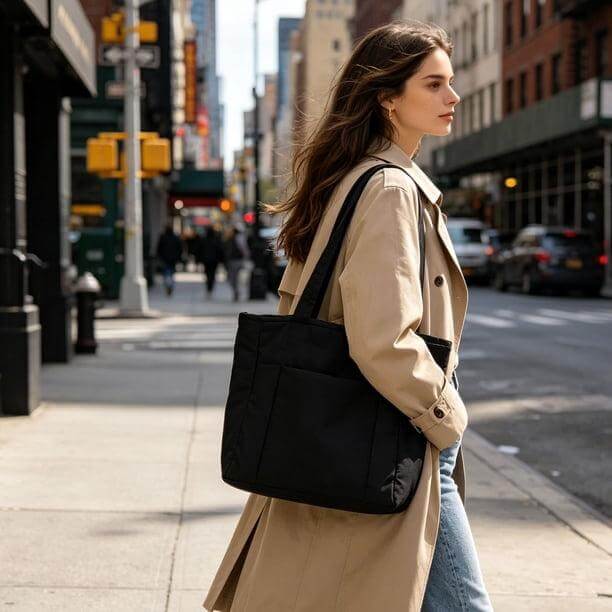
Many oversized bags look spacious enough, but once winter arrives, they may not be as practical as they seem.
Whether an xxl tote bag works well in winter depends less on its advertised capacity and more on details such as fabric, handle length, and structural support. When choosing a large womens tote bag, fabric weather resistance should be one of the first things to check. Standard big canvas tote bags are usually made from untreated canvas, which naturally absorbs water. Winter-ready versions generally feature a PU coating on the back of the fabric. This treatment can handle road splashes and light, brief snowfall, but it is not designed for prolonged exposure to rain or snow.
Don't rely solely on a product title that claims a bag is waterproof. Instead, check where the coating is applied and whether the creases and seams are properly sealed. Needle holes along the stitching are among the most common places for water to seep through.
1. Check the xxl tote bag Handle Length
Handle length matters more than you might think. In winter, thick down jackets and long coats take up extra room around your arms. Short handles can press uncomfortably against your upper arms and become uncomfortable to carry for extended periods.
When choosing a large womens tote bag, look for handles with a usable drop of more than 28 cm and light foam padding. Make sure the padding runs along the entire handle rather than being concentrated in just one small section.
Many basic big canvas tote bags come with narrow handles. Once the bag is fully loaded, carrying it for long periods can leave noticeable pressure marks on your hands and arms.
2. Choose an xxl tote bag with a Sturdy Base
A well-supported base is essential for a large winter tote. Once you fill it with scarves, a thermos, and a laptop, a bag without proper bottom support can sag, cause the top opening to fold outward, and allow your belongings to shift or slip out.
Budget large womens tote bag options often use thin cardboard inserts for the base. These can quickly lose their shape when exposed to moisture. Better-designed bags use rigid PE inserts or double-layer fabric reinforced with bar-tack stitching to help maintain their shape even in damp conditions.
When comparing big canvas tote bags, press down on the base insert by hand to see whether it bends too easily. A firm, stable base will make a noticeable difference in everyday use.
3. Choose Practical Closures and Pockets
Closures and internal compartments are especially useful during winter. Open-top totes are convenient in spring and summer, but they can be less practical when you're wearing thick gloves. Small items are harder to retrieve, and rain, snow, and road debris can easily get inside.
A magnetic snap or zipper is usually enough. Too many buckles and fasteners can make everyday use unnecessarily complicated.
At least one interior slip pocket is also worth having. It gives you a convenient place to keep your keys and access cards, so you don't have to rummage through layers of scarves, gloves, and other soft winter accessories.
4. Keep Your xxl tote bag Lightweight
Empty bag weight should also be part of your checklist. Some manufacturers use excessively thick fabric to make a bag feel more substantial. However, once the empty bag weighs more than 0.8 kg, adding a laptop, water bottle, and winter essentials can quickly make it uncomfortable to carry for extended periods.
For a good balance of durability and portability, aim for an empty weight of around 0.4–0.7 kg while still meeting your capacity requirements.
5. Choose an xxl tote bag for Winter Use
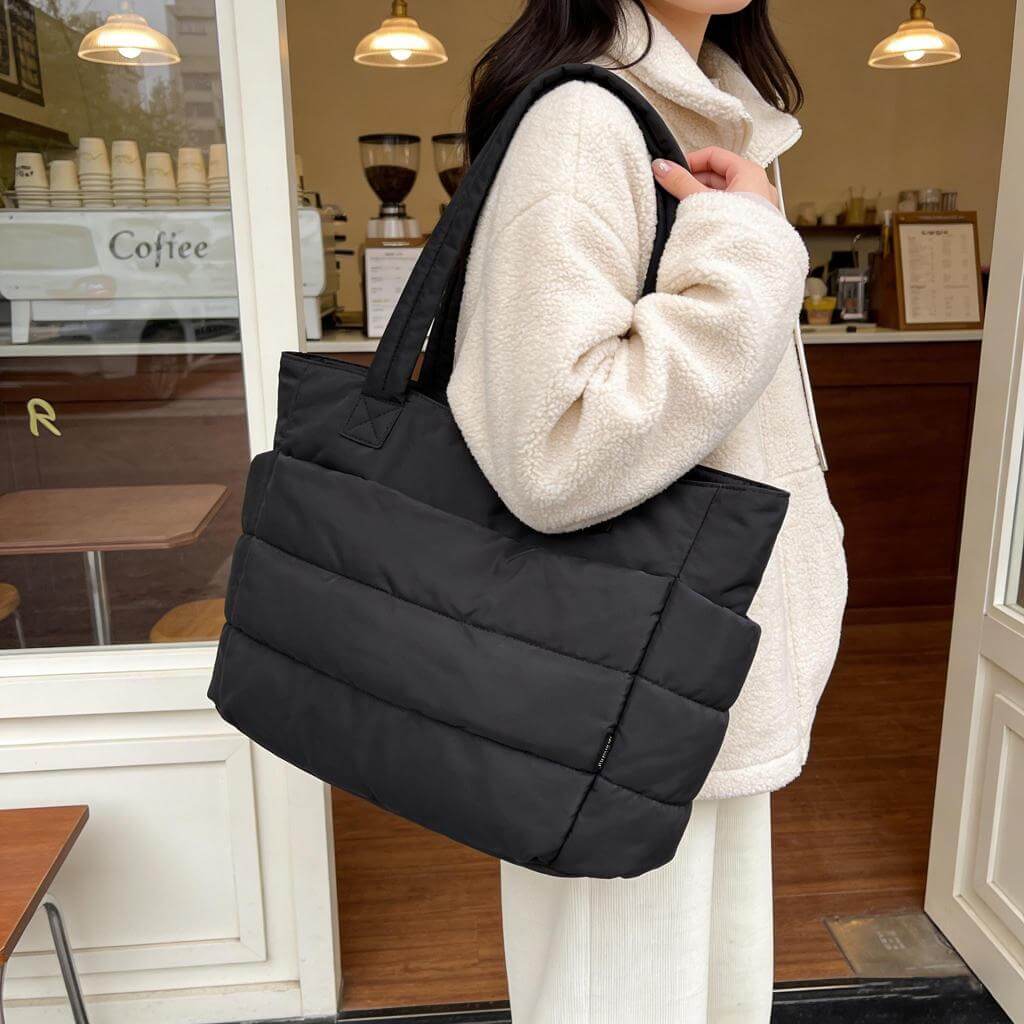
These five criteria can help you eliminate many oversized totes that are better suited to spring and summer.
Even when two bags have identical dimensions, their suitability can vary depending on the size, thickness, and weight of the items you carry every day. The best choice ultimately depends on your regular daily essentials.
If you're looking for a reliable manufacturing partner, XINHUI Bag Factory has extensive experience producing this type of tote. The team is familiar with important winter-specific details, including fabric edge sealing, reinforced base inserts, and padded handles.
The factory can provide SGS material testing reports for its raw materials, with materials meeting OEKO-TEX environmental standards. Customization is available for fabric specifications, handle length, and compartment layouts. During the sampling stage, the team also provides actual load-bearing and water-repellency test records.
You can share your preferred dimensions and fabric requirements with the team to receive samples that meet these winter selection criteria.
FAQ
Q1: How should I clean a canvas tote bag after it gets road de-icing salt stains in winter?
A1: Start by using a dry brush to remove loose salt crystals from the surface. Then gently spot-clean the affected area with cold water and a mild detergent. Avoid hot water, as high temperatures can cause salt stains to become more deeply embedded in the fibers. After cleaning, lay the bag flat and let it air-dry naturally. Do not tumble-dry it.
Q2: Can I add a shoulder strap to a tote that originally only has handles to make it easier to carry over thick winter coats?
A2: It depends on whether the bag has reinforced webbing loops on both sides. If reinforced attachment points are already in place, you can add a wider shoulder strap. However, sewing a strap directly onto ordinary canvas can cause the fabric to tear under heavy loads. Adding one yourself without proper reinforcement is not recommended.
Q3: Are there lightweight accessories I can put inside a large tote to keep small winter essentials organized?
A3: A lightweight bag organizer insert is a practical option. Look for one with separate slip pockets and a dedicated laptop compartment. It adds very little extra weight while helping the bag maintain its shape and preventing it from sagging.
Make Every Gift Count with the Right bag for canvas
Avoid Burlap Tote Bags Hidden Quality Issues
Related Article


