
Organza Bags Guide for Everyday Use
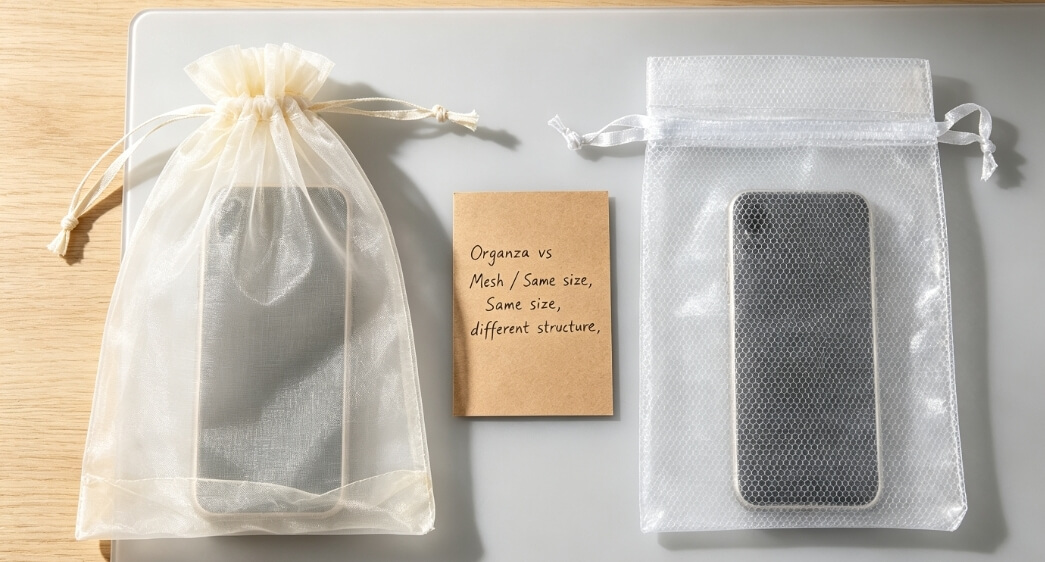
Organza bags are drawstring bags. This 22 × 30 cm plain-weave polyester version doesn’t shrink after one wash and is large enough to hold an iPhone 14.
Last summer, I tried turning two types of bags into crossbody bags. The organza bags held my phone and keys all day without losing their shape. The mesh bag held the same things, but by the afternoon it had started sagging, and the strap was pulling into the mesh so badly that I nearly tore it.
Why organza fabric bag Works for Crossbody Bags
The main advantage of an organza fabric bag is its structure. The plain weave keeps the bag from stretching out of shape under load, making it suitable for a phone, power bank, sunscreen, and similar items. For a crossbody bag, go with at least 22 × 30 cm; anything smaller may not fit a phone comfortably.
Mesh bags are much softer, so they’re better for lightweight items such as a swimsuit or silk scarf.
Transparency is another thing to consider. Organza is semi-transparent: you can see the outline of what’s inside, but not the details. Mesh is completely transparent, so everything is immediately visible. If you’d rather not show people exactly what you’re carrying, an organza fabric bag is the better choice.
Most organza bag gift ideas feature smaller sizes, but crossbody bags need a larger size.
The drawstring opening also makes a difference. An organza bag has a relatively sturdy opening, so you can reinforce it and thread through a leather cord or metal chain. A mesh bag has a soft opening, so you need to sew a cotton strip around the edge first. Otherwise, the mesh holes can stretch and tear when you attach the strap.
At bag-making factories in Dongguan, Dongguan XINHUI Accessories Co., Ltd. uses a similar process for these orders: they add a polyester reinforcement tape around the drawstring holes before stitching. It’s a standard step they also use for cosmetic bags, jewelry pouches, and shopping bags. Applying the same reinforcement to an organza fabric bag helps the shoulder strap handle a self-weight of up to about 500 g without the holes tearing after a couple of washes, unlike many DIY modifications.
organza bags Too Sheer? Try These 4 Linings
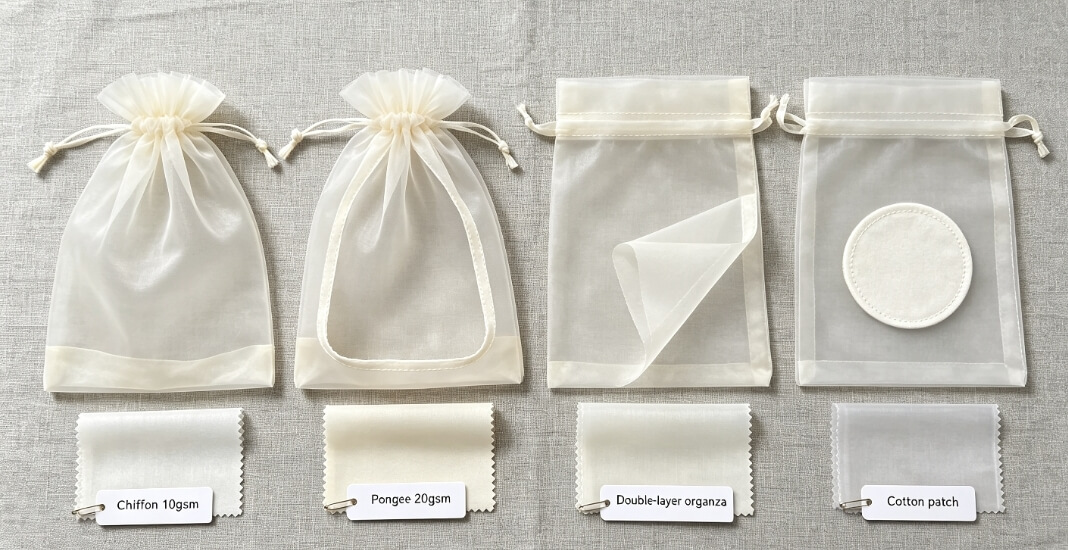
The semi-transparency of organza is both an advantage and a drawback. It looks great when you’re wrapping a gift, but it can feel too revealing when you carry it outdoors.
I’ve tried four lining options.
1. Matching Chiffon Liner
Cut a piece of chiffon about 2 cm smaller than the bag and make it into a removable liner. Let the drawstring close both layers together.
You still get that soft, hazy look while keeping the contents from being clearly visible. It’s also the cheapest option. A ¥10 piece of chiffon can make five or six liners.
The downside is static. Chiffon can cling to your legs in winter.
2. Solid Taffeta Inner Bag
Taffeta is thicker than chiffon, blocks more light, and has a smooth feel. Cut it about 1 cm smaller than the bag, then stitch it permanently to both sides of the bottom while leaving the top open.
When you put something inside, the liner opens up. When the bag is empty, it stays close to the sides and is barely noticeable.
This works especially well for wallets and ID documents.
3. Double-Layer Organza
Layer two pieces of organza fabric bag material and stitch them together. Use a colored outer layer with a white or light-colored inner layer.
This can reduce transparency to around 30% while still letting you see a vague outline of the colors inside.
The trade-off is weight. A small bag is fine, but a large bag can become noticeably heavier.
4. Partial Cover Patch
Sew a square or round piece of opaque fabric onto the center of the bag while leaving the rest transparent.
This works when you only want to hide the area around your phone or wallet. Done well, it looks like part of the design rather than a last-minute fix.
Choose the lining based on how you’ll use the bag. For everyday commuting, go with a taffeta liner for better coverage. For dates or parties, chiffon keeps the soft, sheer look. For photo props, a partial patch adds more visual interest.
One more thing: when XINHUI’s Dongguan factory makes custom bags, the lining options commonly include cotton, canvas, 210D polyester fabric, and PEVA, depending on the target price. If a brand wants to turn an organza drawstring bag into a product they can actually sell, the quotation typically breaks out four items: lining material, opening reinforcement, custom logo, and an additional zippered pocket. That kind of itemized quote is much more useful for sellers building their own bag line than a single price for an empty bag.
Can Organza Bags Be Washed?
Yes, organza bags can be washed. I’ve washed more than a dozen and haven’t damaged a single one.
The key is how you wash them. Use cold water and a mild detergent, soak for about five minutes, and gently press the fabric instead of rubbing it. Rinse thoroughly, then use a towel to absorb excess water and lay the bag flat to dry in the shade.
Don’t wring it, tumble-dry it, or leave it in direct sunlight.
The most common problem after washing is that the bag feels softer. Polyester organza is given its crisp structure with a finishing treatment during production. After repeated washing, some of that finish is lost, so the fabric becomes softer. That’s normal and doesn’t necessarily mean the material is defective.
How to Restore organza bags Shape
There are three simple ways to make an organza fabric bag crisp again.
1. Low-Temperature Steam
Once the organza is completely dry, set a steam iron to the synthetic-fabric setting, below 120°C, and iron through a dry cloth.
The steam helps relax the fibers and can restore roughly 70–80% of the original crispness.
Never put the iron directly on the organza—it can melt.
2. White Vinegar Rinse
Add about 10 ml of white vinegar per liter of water during the final rinse. Soak for three minutes and don’t rinse again.
The vinegar helps neutralize alkaline detergent residue and can help the fibers tighten back up. After drying, you may recover around 60% of the original stiffness. The vinegar smell disappears once the bag is dry.
3. Cornstarch Starch
Mix one tablespoon of cornstarch into one liter of cold water. Soak the clean organza bag in the mixture and gently work it through the fabric.
Take it out without wringing and lay it flat to dry in the shade.
Once completely dry, the bag can feel almost as crisp as when it was new. The starch washes out during the next wash, so it doesn’t permanently affect the bag.
Avoid machine washing. The plain-weave structure can be pulled and distorted in a washing machine, and once the yarns shift, the original shape may not come back.
Don’t scrub stains aggressively, either. Apply a little detergent directly to the spot and gently press it instead.
For storage, don’t fold the bag under heavy items. Lay it flat or roll it up in a drawer to prevent permanent creases. If a crease develops, lightly mist the area with water and use a low-temperature iron to smooth it out.
Turn organza bags Into a Clutch in 40 Minutes
A 22 × 30 cm, 30 gsm polyester organza drawstring bag can be turned into a phone-sized clutch in about 40 minutes: wash it once, remove the drawstring, add a leather cord, sew in a reinforcement strip, and you’re done. The only real extra cost is the leather cord.
There are only three changes to make.
First, reinforce the opening so the chain doesn’t tear through the fabric around the drawstring holes.
Second, replace the strap. For a leather cord, punch holes and use rivets. For a metal chain, connect it to sewn loops with key rings. For webbing, stitch it directly onto the bag.
Third, if the bag is too transparent, add a liner using one of the options above.
Can a small bag under 20 × 15 cm be turned into a coin purse? Yes, but if the drawstring holes sit too close to the top edge, attaching a chain can cause the fabric to tear. In that case, switch to a metal kiss-lock frame instead.
So, for a summer crossbody bag, organza bags are a better choice than mesh bags. They’re structured, semi-transparent, durable enough for everyday essentials, and easy to modify. Mesh is better suited to beach bags or decorative mini bags.
organza bags are washable, and some softening after washing is normal. Steam ironing, a white-vinegar rinse, or cornstarch can bring back much of the original crispness. With a little care after each wash, one bag can easily last for more than a year.
FAQ
Q: Will Organza Bags Collapse If They Get Wet in the Rain?
A: Polyester organza doesn’t absorb much water, so the bag should keep its shape when wet. However, the drawstring holes and seams can loosen if cotton thread is used. When modifying the bag, switch to polyester thread.
After getting wet, let it air-dry in the shade rather than wringing it out. XINHUI’s standard production process uses polyester reinforcement tape around the drawstring holes to help prevent this kind of damage.
Q: Can I Still Wash an Organza Bag After Adding a Liner?
A: Yes. Hand-wash the lining and organza together in cold water, then dry them in the shade.
Both taffeta and chiffon are generally stable enough for this use, so you shouldn’t have to worry about the liner and outer bag ending up with noticeably different dimensions. For factory production, 210D polyester lining generally offers better dimensional stability after washing than chiffon.
Q: What Are Good Organza Bag Gift Ideas If I Want to Use the Bag as a Small Purse?
A: Start with the size and intended use. Small organza bag gift ideas work well for jewelry, cosmetics, favors, and other lightweight gifts. For a wearable bag, choose a larger size, reinforce the drawstring openings, and add a suitable strap.
For a more polished result, an organza fabric bag with a lining, reinforced opening, and custom logo can look less like a repurposed gift pouch and more like a finished fashion accessory.
Is Your Laptop Bag Size Really Right for Your Laptop?
Stroller Bag Mistakes That Could Tip Your Pushchair
Related Article


