
Why Some Business Backpacks Last Longer Than Others
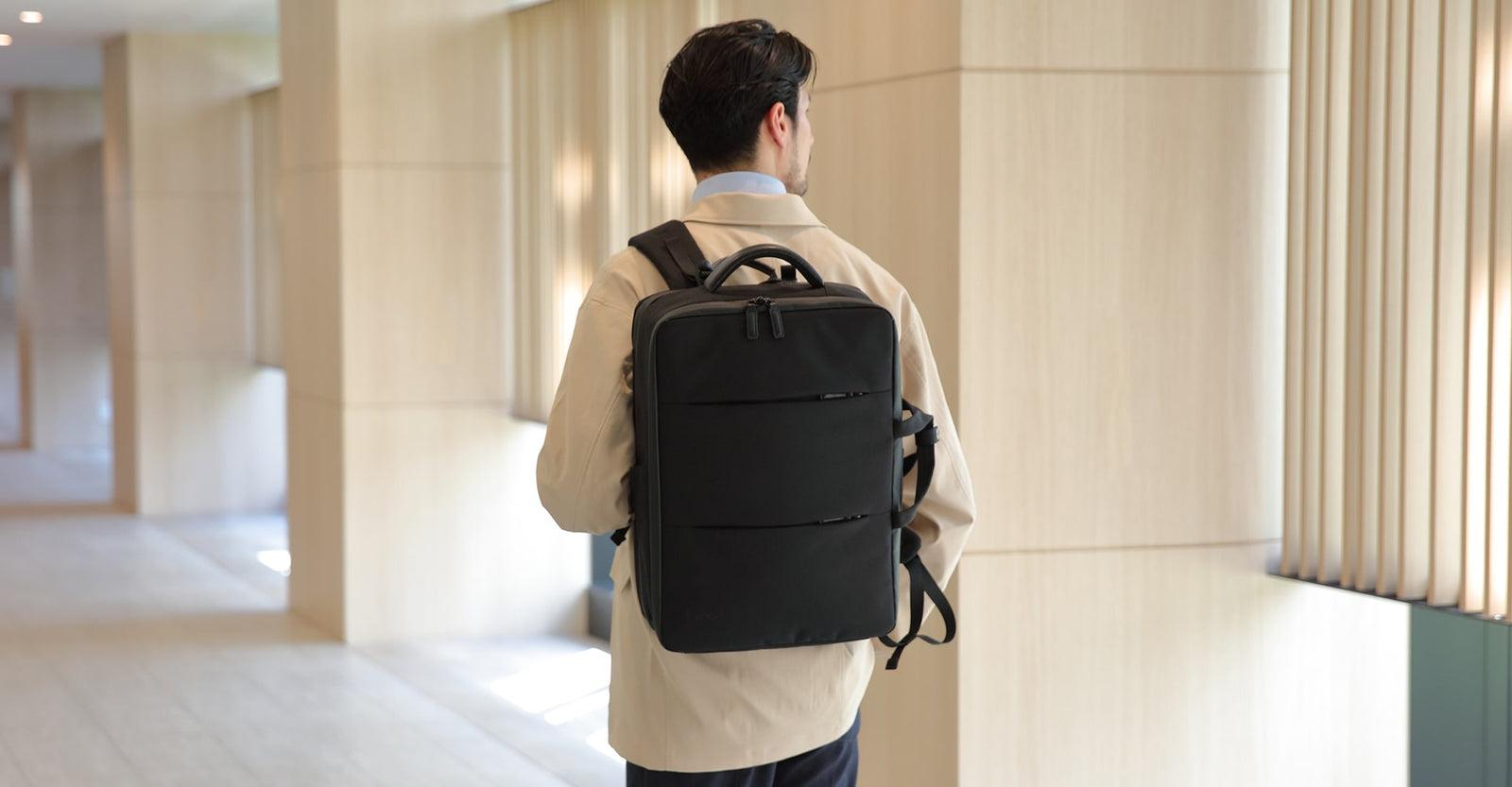
Two black backpacks with similar designs and nearly identical price tags can have very different lifespans. One may last two years without a single stitch coming loose at the shoulder straps, while the handle on the other may collapse after just three months.
The difference often comes down to the original design purpose: what kind of journey was the backpack actually designed for?
Business Backpacks for Work vs. Business Travel
Know the Difference Between Everyday Commuting and Overnight Trips
Let's start with the everyday office backpack, also known as a professional work backpack. It is designed for a fairly consistent routine: a short walk or public transit ride to the office, carrying essentials such as a laptop, documents, wallet, water bottle, and occasionally a light jacket.
The main priority is comfort throughout the workday and a polished appearance in professional settings. These backpacks typically have a slim profile, a reinforced base, and a structure that allows them to stand upright beside a desk, even when empty. The shoulder straps are padded for shorter commutes of around 30 to 60 minutes, while the overall design keeps things clean and understated.
However, there is one obvious limitation: most don't have a separate compartment for a change of clothes. Try squeezing in two days' worth of luggage, and the backpack will bulge, putting pressure on your documents and other belongings.
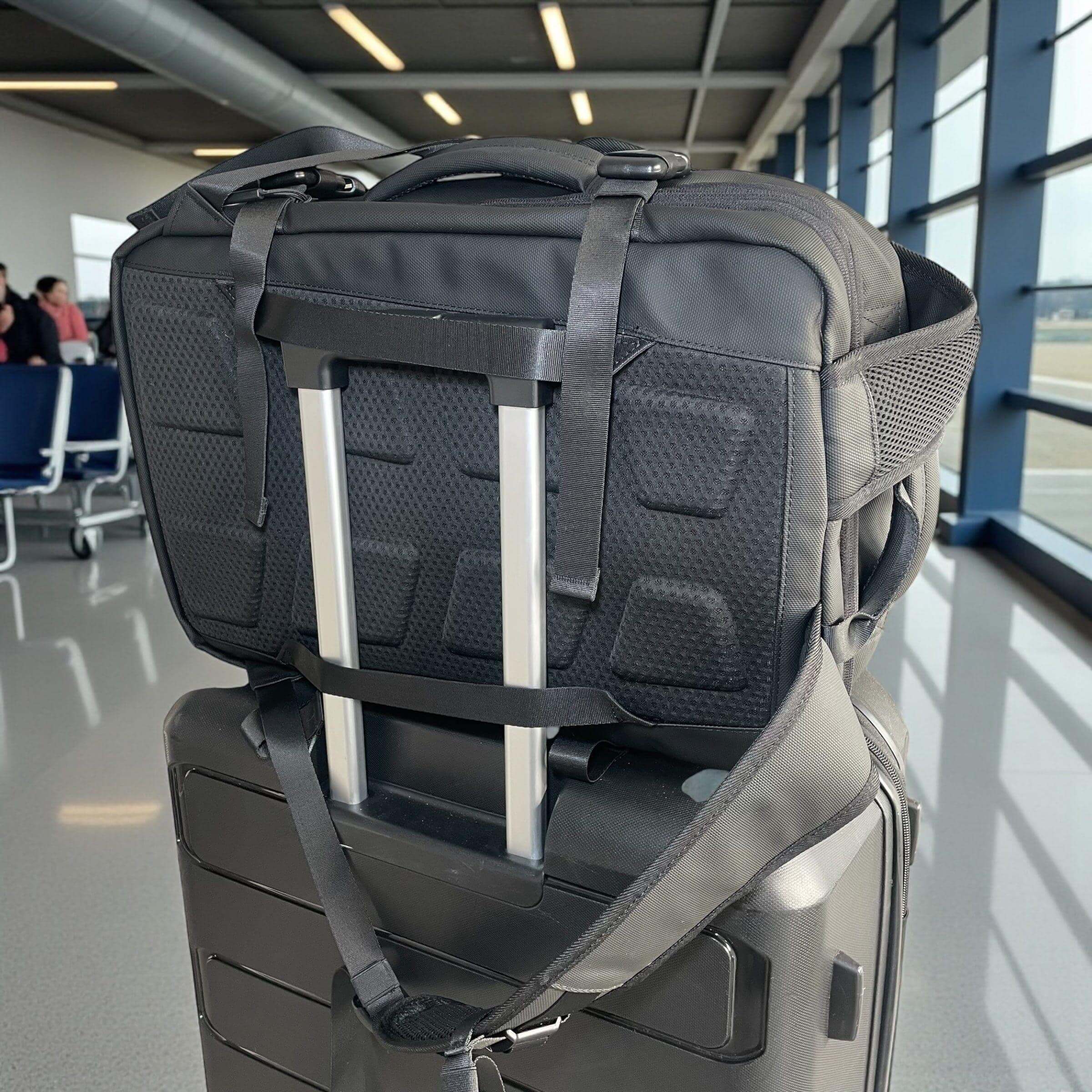
A business travel backpack, on the other hand, is designed for short business trips lasting one to three days. Its additional features are built around frequent transitions between locations. These often include a separate compartment for clothes, sometimes with a dedicated shoe compartment, a luggage trolley sleeve on the back panel, and a larger main opening for quick access to documents and other essentials.
The trade-off is a heavier empty weight, along with more exterior pockets and webbing straps. Before entering a meeting room, you'll need to organize loose items properly. Otherwise, rummaging around for documents can make the whole setup look messy.
Both styles fall under the broader category of business backpacks. However, product listings often use these names interchangeably. To figure out which type a backpack really belongs to, focus on three structural details.
3 Design Differences to Look for in Business Backpacks
1. Where the Weight Is Distributed
For an everyday commuter backpack, most of the weight is distributed across the two shoulder straps and back panel.
A travel backpack carries more weight once clothes and shoes are packed inside. This puts additional stress on the stitching at the shoulder strap attachment points and handle base. Reinforced stitching, including bar-tack stitching, becomes particularly important.
When inspecting a backpack, check these two areas carefully:
-
Where the shoulder straps connect to the main body: Is there just a single line of stitching, or is there additional reinforcement with backing fabric and bar-tack stitching?
-
Around the handle attachment points: Are there reinforced stitches securing the handle?
Areas held together by only a single line of stitching are often the first to come apart.
2. How the Laptop Compartment Is Designed
Check whether the bottom and sides of the laptop compartment have protective padding. A simple fabric sleeve alone may not provide enough protection.
Also, measure the actual width and depth of the compartment instead of relying solely on a product label that says "15.6 inches." Some compartments are too narrow to accommodate thicker laptops, making it difficult to close the zipper.
Documents should ideally have their own flat compartment, separate from cables and water bottles. Loose cables in the main compartment can scratch your laptop and push against papers, leaving unwanted creases.
3. How the Backpack Looks in a Meeting Room
Place the backpack on the floor and see whether it can stand upright on its own.
A soft backpack without a reinforced base may lean to one side when fully packed.
Next, inspect the edges of the shoulder straps and webbing. Are they neatly finished with binding? Rough edges or unfinished webbing rubbing against a suit jacket over time can cause pilling and fabric wear.
A clean, well-structured silhouette often has a greater impact on a backpack's professional appearance than the exact shade of black.
Business Backpacks: Materials and Wear
Look Beyond Claims Like "Heavy-Duty"
Common materials used in business bags include 600D and 840D polyester or nylon, while backpacks designed to carry heavier loads may use higher-density fabrics.
Denier (D) measures the thickness of individual fibers. Generally, a higher denier indicates thicker fibers and a heavier, more substantial fabric. Asking the seller for the exact denier rating is more useful than relying on vague descriptions such as "thickened nylon."
Water-repellent finishes are surface treatments that gradually wear away. Friction, dust, and repeated washing can all reduce their effectiveness.
There is a simple way to check whether the treatment is still working: sprinkle a little water onto the fabric. If the water forms beads and rolls off, the finish is still doing its job. If the water soaks in and darkens the fabric, the water-repellent treatment has likely worn away.
Some backpacks also use an internal PU coating to help prevent water from getting through. However, prolonged storage in hot, poorly ventilated conditions can cause the coating to become sticky or start peeling. This is a normal form of material deterioration that may not be visible in product photos.
Weight limits matter, too. According to guidance from the Ergonomics Center at North Carolina State University in the United States, the recommended upper limit for an adult's backpack load is 30% of body weight.
For everyday commuting, however, a lighter load is generally preferable. Many everyday carrying recommendations suggest keeping backpack weight within 10% to 15% of body weight.
If your shoulders start feeling compressed or turn red after just 20 minutes of carrying a backpack, it may be too heavy. Alternatively, the shoulder straps and back panel may not be fitting your body properly.
Choosing Business Backpacks for Your Work Routine
Match the Backpack to Your Daily Routine
Here are three straightforward ways to narrow down your options:
1. For daily commuting: If you carry only a laptop and documents and have a short walk to work, choose a slim commuter backpack that can stand upright on its own. There's no need to pay extra for an overnight compartment you rarely use.
2. For regular overnight business trips: If you travel overnight once or twice a month, look for a travel-oriented design with a separate clothing compartment and luggage trolley sleeve. Before ordering, check the backpack's external dimensions when fully packed and compare them with your airline's cabin baggage requirements.
3. For hybrid workers: If you work across different locations and your routine involves a mix of commuting and occasional travel, choose your main backpack based on the type of trip you make most often. For shorter trips when you need extra capacity, consider adding a compact, foldable bag. Don't expect one backpack to handle every situation perfectly.
Choosing Business Backpacks That Last
The selection process is straightforward: choose a slim, self-standing commuter design for everyday office use, and a travel-oriented backpack with separate compartments and a luggage trolley sleeve for overnight business trips.
Before placing an order, check the reinforcement around the shoulder strap attachments, the padding in the laptop compartment, and the support at the bottom. Paying attention to these details can significantly reduce the chances of choosing the wrong backpack.
Even the same backpack can have a very different lifespan depending on how it is used. Carrying an overloaded bag every day and repeatedly pulling on one shoulder strap will cause more wear than carrying a lighter load over short distances.
Fabric quality and construction determine the backpack's basic durability. What you pack every day and how you carry it ultimately determine how long it will last.
The right choice depends on the items you regularly carry and the distance of your daily commute.
Custom Business Backpacks: Get the Design Right
Turn Your Requirements Into a Production-Ready Backpack
The three inspection points above are enough to help individual buyers evaluate product listings. But if you already have a design in mind or want to modify certain structural details to meet your own specifications, the best time to make those decisions is during the sampling stage, not after mass production begins.
Details such as whether the shoulder strap attachments use single stitching or reinforced backing with bar-tack stitching, how many rows of reinforcement are added to the handle base, whether the laptop compartment needs bottom padding, and where the luggage trolley sleeve webbing is secured should all be finalized during sample development.
Getting these details right early helps maintain consistency throughout mass production.
For an everyday professional work backpack, reinforcement around the shoulder strap attachments and bottom panel deserves particular attention. A business travel backpack designed for overnight trips also requires careful checks of the separate clothing compartment and the attachment points of the luggage trolley sleeve.
This is exactly what XINHUI does every day.
XINHUI (Dongguan Xinhui Accessories Co., Ltd.) has more than 20 years of experience in bag manufacturing. Sewing, screen printing, digital printing, embroidery, and hot stamping are all handled in its own workshops. With fewer outsourcing steps and no unnecessary handoffs between suppliers, structural details such as shoulder strap reinforcement and bottom panel construction can be finalized during sampling and adjusted quickly when needed.
The factory holds a BSCI social compliance audit report and supports customer factory audits and third-party inspections.
The minimum order quantity for standard designs starts at 300 pieces, while customized samples are generally ready within 3 to 7 days.
Commuter and travel backpacks can be developed with two different structural designs. Alternatively, both styles can share the same fabric and hardware within one product series, helping reduce overall costs.
There's no need to rush into mass production before the sample has been approved.
Frequently Asked Questions
Q1: Will hanging a business backpack on one side of an office chair damage its shape over time?
A: Hanging a backpack occasionally is generally fine. However, leaving it hanging on one side of an office chair for extended periods can cause uneven tension on the bag. Over time, one side of the body, the shoulder strap attachments, and the top opening may gradually become misshapen.
When you get home after work or don't need the backpack over the weekend, it's best to remove its contents and store it upright on a shelf or inside a cabinet. This allows the backpack to return to its natural shape.
Q2: Is there a big difference in daily maintenance between light-colored and dark-colored business backpacks?
A: Yes, quite a noticeable one.
Light-colored fabrics show dust and water stains more easily, so localized stains need to be cleaned sooner. Dark-colored fabrics are generally better at hiding dirt, but wear marks and pilling around high-friction areas, such as the shoulder straps and bottom panel, tend to stand out more.
For both types, use a mild, neutral detergent to spot-clean dirty areas. Avoid soaking the entire backpack for extended periods, as this can damage the inner coating and water-repellent finish.
Q3: What should I do if my backpack gets soaked in the rain during a business trip?
A: Start by removing everything from the backpack. Use a dry towel to absorb excess surface water, then hang it in a cool, well-ventilated area and let it air-dry naturally.
Avoid direct sunlight and don't use a hair dryer or other source of hot air. Make sure the backpack is completely dry before folding it or packing it into a suitcase. Folding it while damp can cause the fabric coating to turn white and encourage mold growth inside.
If only the outer surface got splashed, check whether water still forms beads on the fabric after it has dried. This will give you a quick indication of whether the water-repellent finish is still working.
How to Choose a Duffel Bag That Fits Your Travel Needs
Related Article


