
How to Choose a Duffel Bag That Fits Your Travel Needs

When packing for a trip, many people face the same dilemma: should you choose an outdoor backpack or a duffel bag? Some simply follow other people's recommendations, only to find that the bag doesn't work well for them. Maybe it's hard to access their belongings, uncomfortable to carry, or too small for the gear they usually bring along.
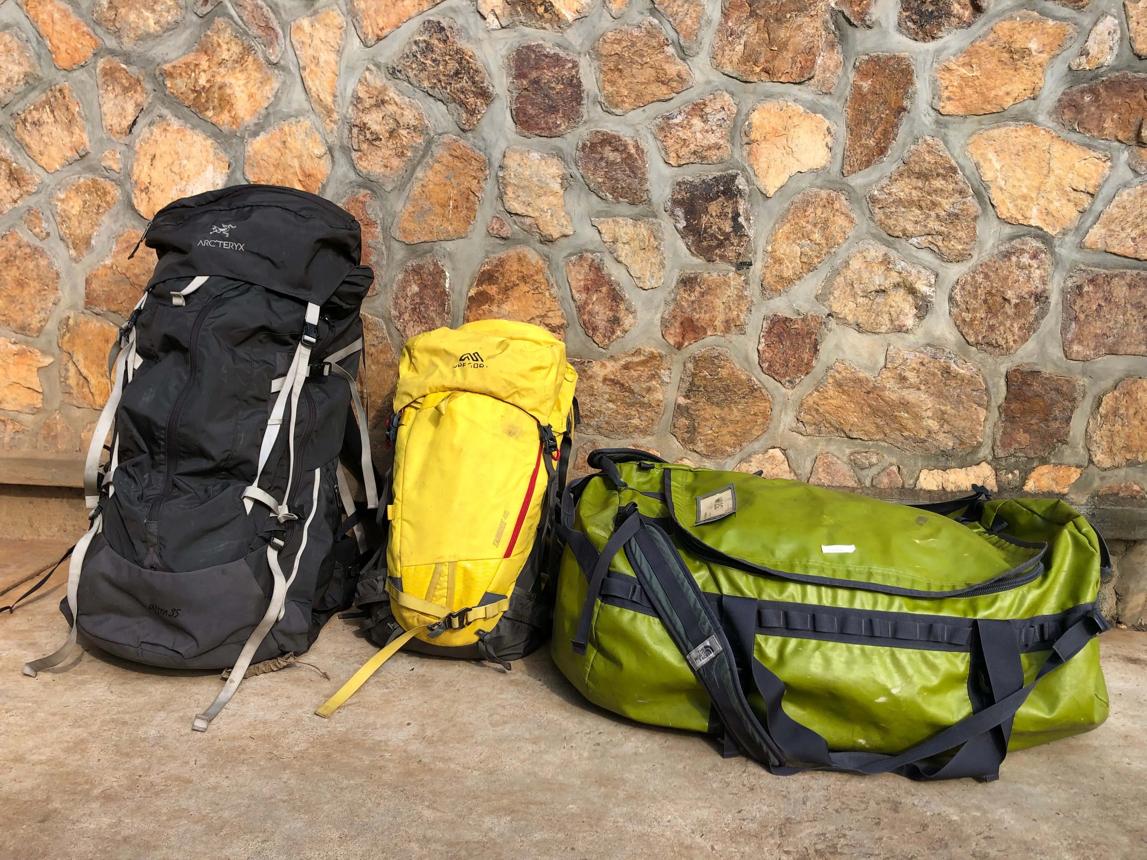
A duffel bag is a soft-sided cylindrical bag with a wide opening and no fixed internal compartments. Its biggest advantage is flexibility. You can easily fit bulky or oddly shaped items inside, such as helmets, sneakers, and folded camping gear. Most come with handles or a single shoulder strap rather than a structured carrying system, making them ideal for short-distance transport, car trips, and moving gear between locations.
An outdoor backpack features a structured back panel, sternum strap, hip belt, and fixed compartments. Smaller items, hydration bladders, and documents can be organized in side pockets and front compartments. The bag also stays more stable during long walks. However, its fixed shape limits what you can pack. Bulky or irregularly shaped gear can be difficult to fit, and items need to be arranged to match the bag's internal layout.
A travel duffel backpack combines features of both designs. It retains the wide opening and flexible storage space of a duffel bag, while adding a pair of stowable shoulder straps that can be tucked into a zippered compartment when not in use. Many manufacturers market this style as suitable for both hiking and travel. However, the reinforcement at the strap attachment points and the thickness of the padding can vary significantly between models and production batches.
Weight Distribution Makes the Difference
The key to telling these three styles apart isn't the name on the product label. It's how they distribute weight.
-
Outdoor backpack: Weight is distributed across the shoulder straps, back panel, and hip belt, allowing some of the load to transfer to your hips.
-
Duffel bag: The entire load is carried by your hands or concentrated on one shoulder.
-
Travel duffel backpack: The shoulder straps are sewn directly onto the bag body without an independent load-bearing frame. Once the load exceeds 8 kg, the center of gravity tends to pull backward, making the bag less comfortable to carry.
Choose Based on Your Travel Needs
You can narrow down your options by looking at how you plan to travel.
-
If your trip involves long walks and frequent access to small essentials, an outdoor backpack is the better choice.
-
If you're mainly traveling by car, taking public transportation, or checking your luggage, and need to carry irregularly shaped gear, choose a duffel bag.
-
If your trip involves a mix of transportation methods, frequent transfers, and relatively short walking distances, a travel duffel backpack may be the most practical option.
Duffel Bag Storage Space and Fabric Durability
At the same capacity, soft-sided bags are more likely to compress and change shape. This flexibility makes them easier to squeeze through security checkpoints or fit into tight spaces in a vehicle. Structured backpacks, on the other hand, take up a fixed amount of space when packed and cannot be compressed as easily.
As for materials, all three styles commonly use 600D or 840D nylon. The bottom panel is often reinforced with double-layer stitching. However, abrasion resistance depends heavily on the quality and placement of the bar-tack reinforcements, not just the fabric's denier rating.
Choosing the Right Duffel Bag for Your Needs
There is no single best choice for everyone. Once you know how you'll travel, what kind of gear you'll carry, and the maximum weight you'll need to handle in one trip, you can narrow down the right design.
One detail worth paying attention to is the shoulder strap stitching on a travel duffel backpack. Some manufacturers cut corners at these attachment points, but product listings rarely provide enough detail to reveal this.
We understand the load-bearing structures of both cylindrical duffel bags and outdoor backpacks. During production, we pay particular attention to bar-tack reinforcement at shoulder strap attachment points and double-layer reinforcement on the bottom panel—two areas where manufacturing shortcuts are easy to overlook.
We can source nylon fabrics that comply with REACH standards and support SGS fabric tensile strength and abrasion resistance testing. Factory inspections can also be accommodated.
Whether you need a standard duffel bag, an outdoor backpack, or a hybrid travel bag combining both designs, we can customize the shoulder straps, compartment layout, and fabric specifications. We'll produce samples first so you can check the load-bearing performance and workmanship before moving on to mass production.
FAQ
Q1: Can the hidden shoulder straps on a travel duffel backpack be replaced or reinforced later?
A: You can replace them with separately purchased, thicker shoulder straps. However, the original stitching points on the bag body have limited load-bearing capacity. Even after replacing the straps, the bag is still not recommended for long-distance hiking with heavy loads.
Q2: How can I reduce wear on the double-layer reinforced bottom of a duffel bag during everyday storage?
A: Avoid placing the bag directly on rough concrete surfaces. If you're storing it for an extended period, place a thin cloth underneath to reduce continuous friction that could cause the bottom coating to wear down or become gritty.
Q3: Will removing the hip belt from an outdoor backpack affect its original weight distribution?
A: Yes. Once the hip belt is removed, the weight that would normally be transferred to your hips shifts entirely to your shoulders. Carrying the bag for extended periods can therefore lead to greater shoulder fatigue and soreness.
Why Some daypacks Fail on the Trail and How to Choose Better
Related Article


