
How to Choose a Reliable Water Bottle Holder That Lasts
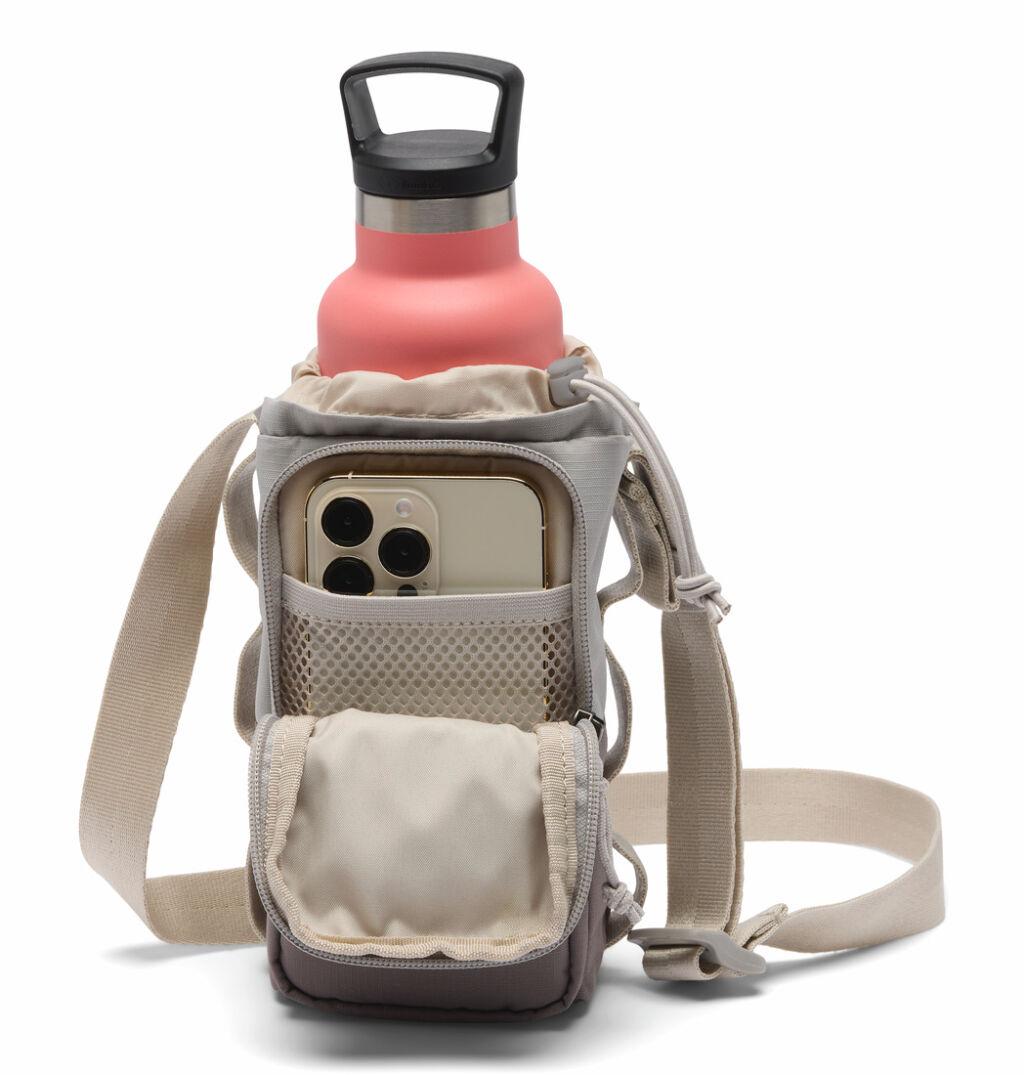
Many shoppers choose water bottle accessories based solely on product photos. But once the product arrives, they may discover problems such as bottles slipping out, uncomfortable carrying, or storage pockets that are too small to be useful.
This checklist covers seven key points to check before placing an order, helping you avoid common purchasing mistakes and choose the right product for your needs.
1. How to Choose the Right water bottle holder Size
Measure the total height of your bottle, including the cap or straw lid, and record its widest diameter. Relying on the stated capacity alone can be misleading. Two bottles with the same capacity can have noticeably different heights and diameters.
Even the best-designed bottle carrier cannot hold your bottle securely if the dimensions do not match. When choosing a water bottle holder, compatibility with your bottle's actual measurements should always come first.
2. Check the Bottom Design of a water bottle holder
A well-made bottle carrier should have a reinforced bottom panel to distribute the weight of the bottle more evenly.
If you need a hiking water bottle holder, look for a design with drainage holes at the bottom. These allow condensation and rainwater to escape instead of collecting inside the bag.
Without proper drainage, standing water can accelerate fabric deterioration and cause unpleasant odors over time.
3. Check the Stitching at Stress Points
The attachment loops and belt connection points on a water bottle holder are high-stress areas. These sections should have reinforced stitching to withstand repeated use and the weight of a full bottle.
For frequent outdoor use, a bottle sleeve without reinforced stitching may develop split seams, potentially causing the bottle to fall and become damaged.
4. Check the Attachment Hardware
When buying a water bottle holder bag, pay close attention to the quality of the carabiners, webbing, and MOLLE attachment points.
Thin webbing can stretch or deform under prolonged loads. For metal carabiners, locking designs are generally a better choice because they help reduce accidental detachment.
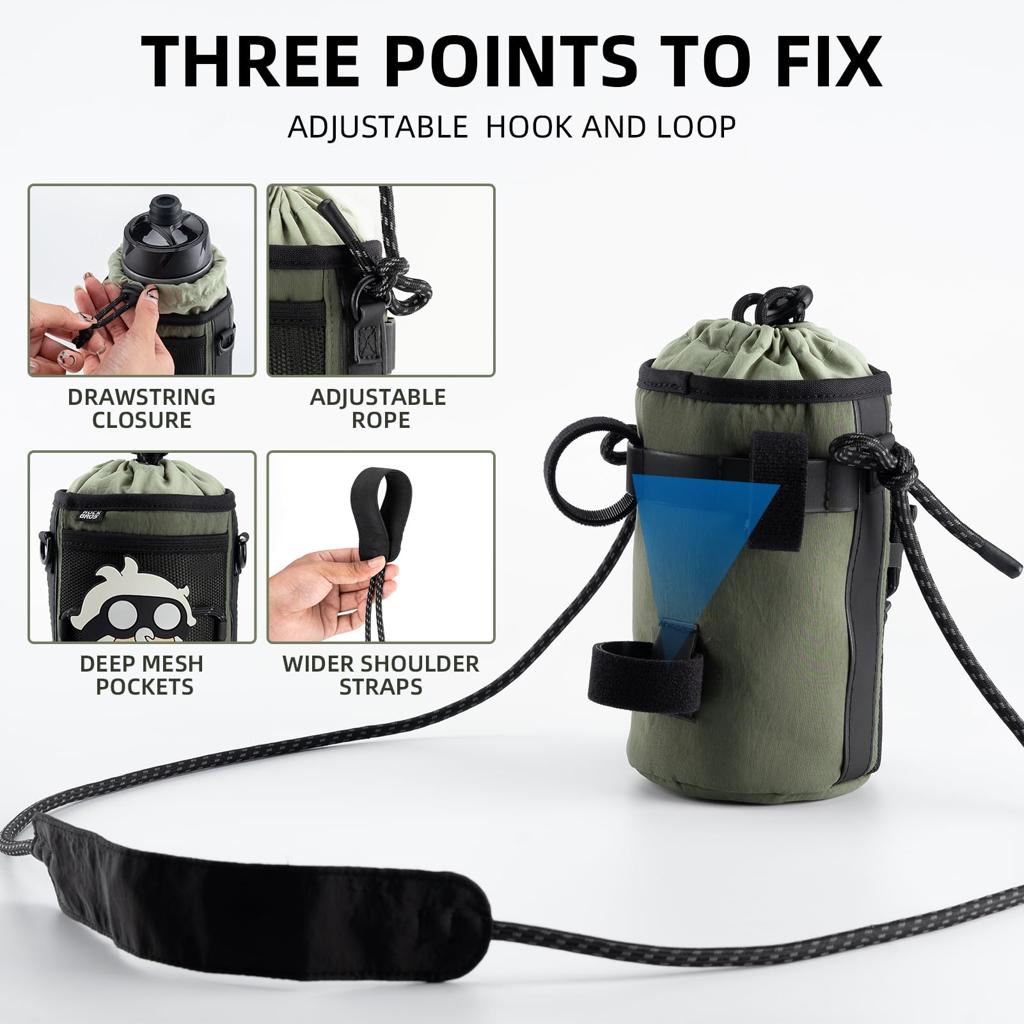
For crossbody styles, check the shoulder strap width as well. Wider straps distribute weight more evenly and reduce pressure during extended wear.
5. Check the Closure Design of a water bottle holder
Three common designs are drawstring closures, hook-and-loop fasteners, and elastic openings.
-
Drawstring closures: Once tightened, the opening should fit snugly around the bottle without allowing excessive movement.
-
Hook-and-loop closures: The fastening area should be large enough to maintain a secure grip, even after repeated opening and closing.
-
Elastic openings: The elastic should accommodate the bottle's widest diameter. If it is too tight, inserting the bottle becomes difficult. If it is too loose, it will not keep the bottle securely in place.
6. Check the Actual Storage Capacity of Extra Pockets
Many bottle carriers include small accessory pockets for keys, cards, energy chews, and other everyday essentials.
Don't judge these pockets by product photos alone. Check their actual width and length measurements. Some secondary pockets are mainly decorative and may not have enough room for even small personal items.
For everyday commuting, the pocket functionality of a water bottle holder bag can make a significant difference to the overall user experience.
7. Choose the Right Fabric for a water bottle holder
Different materials offer different advantages and trade-offs.
-
Neoprene: Provides good cushioning but has limited breathability.
-
Nylon: Lightweight and abrasion-resistant, but offers limited insulation.
-
Mesh: Very lightweight and suitable for minimalist hiking, but generally less resistant to tearing.
Choose the material according to your intended use rather than assuming that thicker fabric is always better.
Once you've completed all seven checks, consider your actual usage scenario before making a final decision.
For short trips around the city, a lightweight crossbody bottle bag is often the most practical choice. For full-day outdoor hikes, focus on the attachment security of a hiking water bottle holder. If you need one product for several different situations, look for a more versatile design with compatible attachment options.
How XINHUI Turns These 7 Checks into Finished Products
These seven points aren't just a list of things to look out for. They are also the practical checkpoints we follow during product development and sampling.
At XINHUI, we manufacture bags and accessories, including bottle carriers and outdoor attachment pouches. The areas covered above—dimensions, bottom construction, stitching, attachments, closures, accessory pockets, and fabric selection—are all details we work with regularly.
Here's how we address them during production.
Accurate Measurements Before Pattern Development
We measure first and develop the pattern afterward.
Our pattern library includes common bottle styles and sizes, including Stanley, Hydro Flask, standard 500 ml bottles, and wide-mouth insulated bottles.
When a customer provides a reference image, we first ask for three measurements:
-
Bottle diameter
-
Total height, including the lid
-
Weight when filled with water
We only begin pattern development once these measurements are confirmed.
For drawstring designs, we allow sufficient room for the bottle's maximum diameter. For rigid retention structures, we follow the specified measurements rather than making unsupported claims of universal compatibility.
Reinforced Bottoms with Built-In Drainage
Reinforced bottom panels and drainage holes are standard features in our outdoor bottle carrier designs and can be selected directly during ordering.
We size the drainage holes according to expected condensation levels. They need to allow water to escape without creating openings large enough for sand and debris to enter.
Double-Stitched Reinforcement at Stress Points
Attachment loops, belt connection points, and shoulder strap bases receive double-stitched reinforcement.
Before shipment, we conduct pull tests using a bottle filled with water to check the strength of these areas.
This is one of the most important checks for reducing repair and return issues.
Shoulder strap widths are also selected according to the intended application, with separate considerations for commuting and hiking designs.
Attachment Hardware Selected for the Intended Use
We select attachment hardware according to the actual application.
This includes locking and non-locking carabiners, webbing thicknesses, and MOLLE attachment construction.
For customers developing private-label retail products, we explain which hardware choices affect production costs and which have the greatest impact on attachment security. The final decision remains with the customer.
Accessory Pockets Tested with Real Items
We don't determine pocket dimensions based on appearance alone.
Instead, we use the actual dimensions of popular smartphones, cards, keys, and energy gels to check the usable internal space. We also verify that there is enough clearance for the zipper to open and close properly.
If a pocket cannot accommodate commonly carried items, we revise the design before delivery.
Fabric Selection Based on Measurable Specifications
We provide actual material specifications rather than relying on vague descriptions.
Available material options include neoprene, 600D canvas, ripstop nylon, and mesh.
Depending on the material, we can provide details such as:
-
Fabric weight (GSM)
-
Thickness
-
Shrinkage range
-
Available printing methods
For customers targeting the European Union market, we can arrange relevant test reports and material composition information according to the requirements of the target market. We do not make unsupported claims about certification contents.
Flexible Customization and Sample Development
Customization is straightforward. Customers can request changes to drawstring closures, shoulder strap widths, accessory pockets, logo printing, or fabric selection.
We can take a project from initial drawings through to a physical sample.
Once the sample arrives, we recommend testing it with your own water bottle for several days. Check whether the strap puts too much pressure on your shoulder, whether the bottle moves around, and whether it is easy to insert and remove.
If anything feels uncomfortable or doesn't work as expected, we make adjustments before moving into mass production.
Real-world testing is more valuable than relying on a specification sheet alone.
Turn These 7 Checks into a Physical Product
If you already have a water bottle that you use regularly and a sketch of the product you want to develop, send us the bottle's diameter and total height, including the lid.
XINHUI can prepare an initial pattern recommendation and material combination for your project.
For retail customers, share your target market and expected selling price, and we can provide an estimated production cost range.
For private-label projects and promotional merchandise, simply send us a reference product. We'll prepare a customization proposal outlining the possible modifications.
Our sample room keeps examples of common product defects, including loose bottle openings, broken stitching around attachment loops, and leaking bottom panels.
These issues tend to occur in the same areas, so we keep the defective samples as references during product development. If your proposed design involves any of these potential problem areas, we'll explain how to address them before production.
If you need a sample, start by sending us one of your regularly used water bottles.
Getting the measurements right on one actual bottle is more useful than looking at a hundred product photos.
FAQ
1. What if I'm still worried about compatibility after measuring my bottle?
Choose a crossbody design with an adjustable drawstring closure. Its flexible construction can accommodate minor differences in bottle dimensions.
Rigid retention designs require a much closer match to the specified diameter.
2. Are bigger drainage holes always better?
No. Drainage holes only need to be large enough to let condensation escape.
Oversized openings can allow sand and debris to enter, increasing the risk of internal fabric wear.
3. How can I identify reinforced stitching from a product listing?
Look closely at detailed product photos, especially around the attachment loops and bottom panel. Check whether these areas feature double-stitched reinforcement.
If the listing doesn't include close-up photos, ask the supplier to provide actual product images showing these details.
4. What do I need before requesting a custom design?
Prepare three things:
-
The diameter of a water bottle you regularly use
-
Its total height, including the lid
-
A reference product image and a description of how you plan to use it
With these details, we can start preparing an initial pattern recommendation.
Choose the Right mesh fabric to Avoid Costly Bag Storage Mistakes
Related Article


