
How to Choose Fabric Crossbody Bags That Last
You turn the bag over and run your fingers along the lining. There's a tiny split in one of the seams.
The outer shell looks perfectly fine. No one would guess that the bag is already close to falling apart.
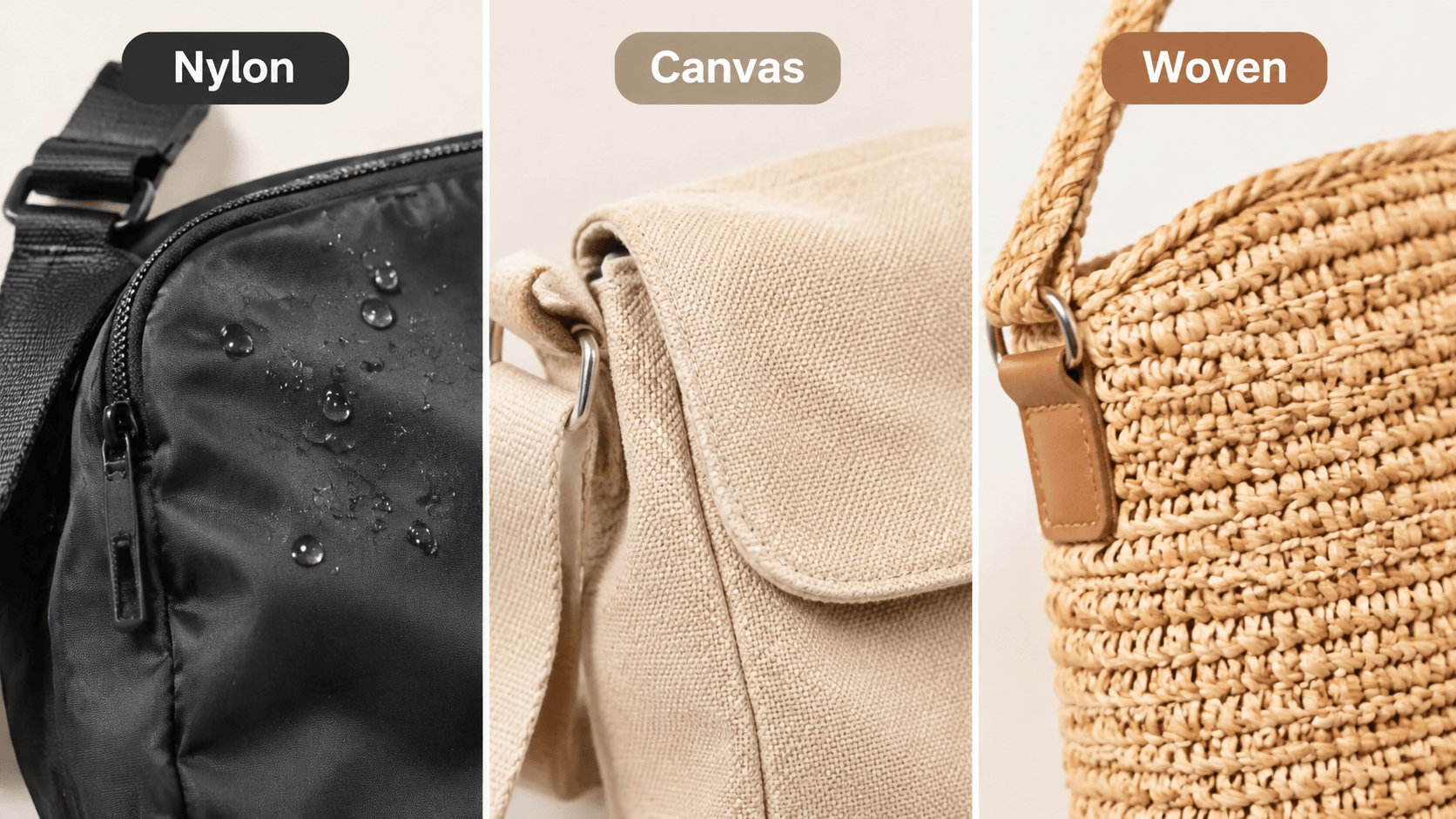
When shopping for fabric crossbody bags, you'll come across three of the most common materials: nylon, canvas, and woven fabric. Each wears out in a different way. Knowing which part is most likely to fail first can save you money and help you make a smarter purchase.
1. Why Choose a Nylon Crossbody Bag?
Let's start with the nylon crossbody bag.
It's probably the easiest of the three to live with. It's lightweight, easy to wipe clean, and light rain tends to roll right off the surface.
That water-repellent finish is called a water-resistant coating, and it doesn't last forever. Every day, your bag rubs against your clothes, chair backs, and car seats. Over time, that friction gradually wears the coating away.
After around 18 months, you may notice that water no longer beads up on the surface. Instead, it starts soaking into the fabric. That doesn't mean the bag is finished. Once the coating wears off, you can simply apply a fresh waterproofing spray to extend its life.
When choosing a nylon crossbody bag, pay attention to two areas.
First, check the stitching where the shoulder strap attaches to the bag. Give it a gentle tug and see if anything feels loose.
Second, turn the bag inside out and feel along the lining seams. The lining often wears out before the outer fabric. It's common to find a perfectly intact exterior with a lining that's already coming apart. This is one of the most frequent reasons bags need repairs.
2. Canvas Crossbody Bag: Durable, but Sensitive to Moisture
Next is the canvas crossbody bag.
Canvas holds its texture and color well over time. In fact, it often becomes softer and more comfortable with use.
Its biggest weakness isn't durability. It's moisture absorption.
Cotton fibers naturally absorb water. If your bag gets caught in heavy rain, gets soaked, or is accidentally left outside on a balcony, it can hold moisture inside and take a long time to dry.
That musty smell you notice afterward is the result of trapped moisture.
There's another thing many buyers don't realize until it's too late: untreated canvas can shrink the first time it gets wet. Sometimes the shrinkage is significant enough to shorten the bag's body and put extra tension on the stitching.
So, if you're buying a dark-colored canvas crossbody bag, don't soak the entire bag the first time you clean it. Start by testing a small, hidden area with a damp cloth to see whether the color runs.
Here's another practical tip: hold the bag up to the light.
Areas with a tight weave will let very little light through, while loosely woven sections will appear slightly translucent.
If the light passes through evenly, the fabric is more likely to have consistent yarn density, which helps it shrink evenly.
If some areas look darker and others lighter, the fabric may shrink unevenly after sewing, leaving certain sections tighter than others.
3. Woven Crossbody Bag: Beautiful, but Watch the Edges
Finally, let's talk about the woven crossbody bag.
It's a great summer accessory. Pair it with a dress or sandals, and it just works.
But its weakest point is usually the finishing along the edges.
With a handwoven bag, if the last few stitches around the opening aren't secured tightly, hanging a metal chain or catching the edge on a table corner can pull out a strand.
If that happens, don't cut it off. Cutting the loose strand can cause the weave to unravel even further.
Instead, carefully seal the loose end with a quick pass of a lighter, holding it about two centimeters away from the strand. This can help secure the end, depending on the fiber material. Then use a needle to repair the affected stitch.
Avoid carrying heavy items in a woven crossbody bag.
Its load-bearing strength depends mainly on how tightly the material is woven. The inner lining can provide some support, but it can't compensate for a loose weave.
Put two bottles of water and an umbrella inside, and you may notice the bottom starting to sag. Leave it that way for too long, and the bag may never return to its original shape.
When choosing one, pinch the two bottom corners. If they feel hollow or too flexible, with large sections easily compressed between your fingers, it's better to keep looking.
4. How to Compare Different Fabric Crossbody Bags
When you compare these three materials side by side, the choice becomes much easier.
-
Nylon: Best if you're always on the go and want something lightweight, easy to clean, and more resistant to light rain.
-
Canvas: Best if you care about texture, color, and a material that develops more character with everyday use.
-
Woven: Best if you want a relaxed summer look, something that photographs well and feels effortless to carry.
The differences between these fabric crossbody bags aren't simply about price. It's about the compromises you're willing to make.
With nylon, you'll eventually need to reapply the protective coating.
With canvas, you'll need to remember to bring it inside when it rains.
With woven bags, you'll need to be careful not to overload them.
There's one more quick check worth doing before you buy. It takes almost no time.
Turn the bag inside out and check whether the stitching on the lining runs in the same direction as the stitching on the bag body.
When both are stitched in the same direction, it's generally a good sign of proper construction.
If the stitching runs in opposite directions or loose threads are sticking out, you may start seeing problems within just a few months.
Here's the honest truth: choose the right bag, and it could last you three years or even longer. You might only need to replace the shoulder strap along the way, not the entire bag.
Choose the wrong one, and you'll probably start getting frustrated after just three months, only to find yourself shopping for another bag.
So, what kind of bag are you carrying right now? Turn it inside out when you get home and feel along the lining seams. If you find something loose, your bag may already be telling you what comes next.
5. How XINHUI Improves Its Fabric Crossbody Bags
We've spent years testing these details in our sample room.
When we look through returned and repaired bags, the damage tends to show up in the same places again and again: lining seams coming apart, shoulder strap attachments loosening, and woven edges unraveling.
That's exactly where XINHUI started improving its production methods.
For our canvas styles, we use pre-shrunk fabric before shipment. We can also provide the actual shrinkage range for each fabric batch, so you don't have to soak a sample bag yourself just to find out.
For woven styles, we reinforce the edge finishing and bottom corners with an additional hidden stitch. This helps distribute the pulling force from hanging chains and everyday contact with hard surfaces.
For nylon styles, we match the coating to your intended use and let you know approximately when it may need to be reapplied, rather than simply labeling the material as "waterproof."
We also use the same-direction stitching method for the lining and outer body as our standard production practice. You don't need to request it separately.
All you need to do is send us your design drawings, reference images, or even an old bag you're currently selling.
We'll make a sample first. Take it out and use it for two weeks. Pack the things you normally carry, wear it in the rain once, and then decide whether you'd like to move forward with an order.
Frequently Asked Questions
Q1: Can I put a fabric crossbody bag directly into the washing machine?
A: We don't recommend it.
The spin cycle can distort the bag's shape because the outer body, shoulder straps, and lining don't all stretch or move in the same way. After washing, one side may end up longer than the other.
If machine washing is absolutely necessary, remove the shoulder strap first and put the bag inside a laundry bag. Use cold water and a gentle cycle.
Once the wash is finished, stuff the bag with tissue paper to help it hold its shape. Then lay it flat and let it air-dry naturally.
Q2: If I carry a woven bag in summer, will sweat cause the color to rub off onto light-colored clothes?
A: It can, especially with woven fabrics made from natural fibers.
Before using the bag for the first time, press and gently rub a piece of white cotton cloth against the inside of the bag. Check whether any color transfers onto the cloth.
If it does, leave the bag to air out separately for a few days before using it.
Also, if you tend to sweat around your underarms, try not to let the bag sit directly against your skin. Wearing an extra layer between your skin and the bag can help prevent color transfer.
Q3: When buying woven and canvas bags wholesale, what should I check first?
A: For woven bags, check the edge finishing first, especially around the bottom corners and handle attachments. These are the areas most likely to unravel.
For canvas bags, check how evenly the fabric lets light through. Then turn the bag inside out and inspect the direction of the stitching along the lining.
If both areas pass inspection, the remaining issues are generally smaller details, such as dye consistency and hardware quality. These are usually easier to discuss and negotiate when placing a wholesale order.
Choose the Right mesh fabric to Avoid Costly Bag Storage Mistakes
How to Avoid Costly Print Mistakes on Custom Printed Plastic Bags
Related Article


