
How to Choose a swim bag That Fits Your Gear and Locker
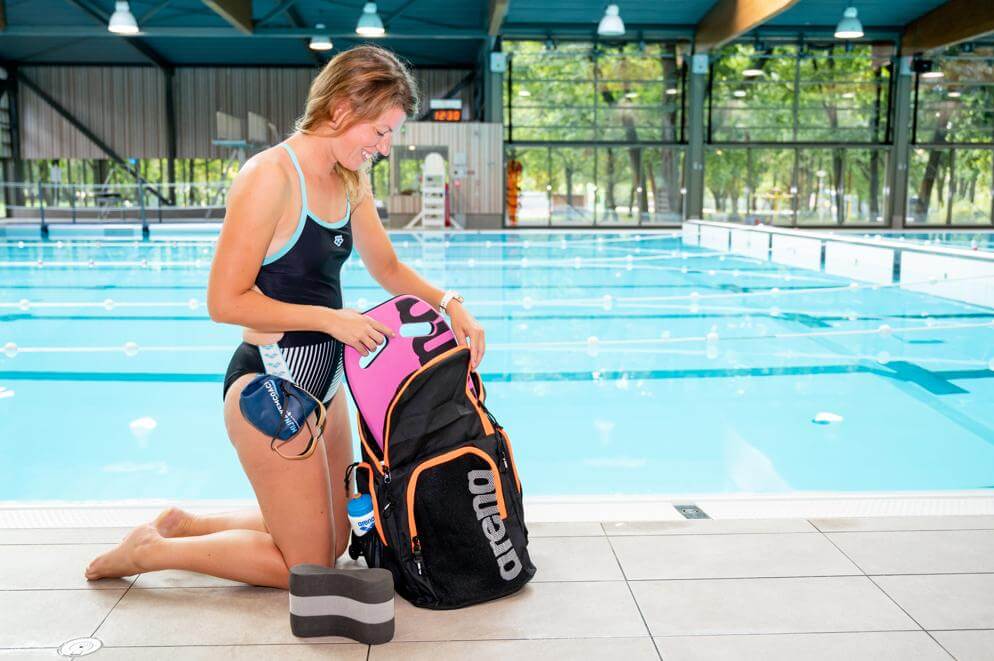
After a swim session, you stuff your wet swimsuit into your bag and head home. When you open it later, your towel is damp, your phone screen is fogged up, and the whole bag smells musty.
Choosing the right swim bag doesn't mean scrolling through endless product rankings. Start by checking the width of your locker and how much gear you need to carry. Once you know what you need to fit, you can choose the right design.
1. Check Three Measurements Before Choosing a swim bag
Most swimming pool lockers have an internal width of around 30–40 cm. Many swim bags advertised as 35 litres won't actually fit inside. Before buying, measure these three things:
-
The internal width of your locker.
-
The longest piece of equipment you carry, such as your fins.
-
The thickness of your towel when folded.
Next, check the bag's empty weight. Bags made with thick coated fabric can weigh over a kilogram before you put anything inside. Once half-loaded, a soft-sided bag may sag, allowing your gear to shift around.
When planning what to carry in your swim gear bag, use these three measurements to work out the capacity you actually need. Don't choose a bag based on its advertised litre capacity alone.
2. Check the Dry-Wet Compartments, Not Just the Label
Most bags claim to have separate wet and dry compartments, but the construction can vary significantly.
There are two common designs:
-
Fabric divider: A simple partition stitched between two sections. Moisture can seep through, leaving your dry clothes damp.
-
Waterproof inner liner: A separate waterproof lining with heat-sealed seams. It offers much better protection against leaks, although it won't prevent odours from developing.
Here's a simple test you can do when your swim bag arrives:
-
Place a dry tissue in the dry compartment.
-
Put a wrung-out wet towel in the wet compartment.
-
Place a heavy object on top.
-
Leave it for two hours.
If the tissue becomes damp, the divider is only suitable for protecting against splashes.
For roll-top waterproof bags, fold the opening three or four times before fastening it. Too few folds can allow water to seep through.
The real difference between swimming bags often comes down to this one detail: how the compartments are constructed.
3. Hardware Often Fails Before the Fabric
Chlorine from swimming pools and salt from seawater can corrode metal hardware. The fabric may still look perfectly fine while the zipper has already started sticking or stopped working.
Check these three details before buying:
-
Does the zipper pull have a protective plastic coating?
-
Is the D-ring welded all the way around?
-
Are there quality markings stamped on the buckles?
After each swim, rinse the zippers with fresh water and let them dry completely before storing the bag. This simple habit can significantly extend its lifespan.
Sand can also get trapped around the zipper seams of mesh pockets. If you've been to the beach, shake out the sand and rinse the bag thoroughly.
4. Choose the Right Material for How Often You Swim
Different materials have different strengths and weaknesses. The best choice depends on how frequently you swim and where you use your bag.
|
Material |
Advantages |
Disadvantages |
|---|---|---|
|
EVA hard shell |
Water-resistant and protective |
Takes up space and can be difficult to fit into lockers |
|
TPU-coated fabric |
Lightweight and foldable |
The coating may peel after prolonged water exposure |
|
Neoprene |
Resistant to chlorine |
Heavy and slow to dry |
|
Coated canvas |
Smart enough for everyday commuting |
Takes longer to dry when wet |
If you swim three or more times a week, prioritise chlorine-resistant materials and quick-drying construction.
For occasional swimming, a lightweight design that's easy to store is usually more practical.
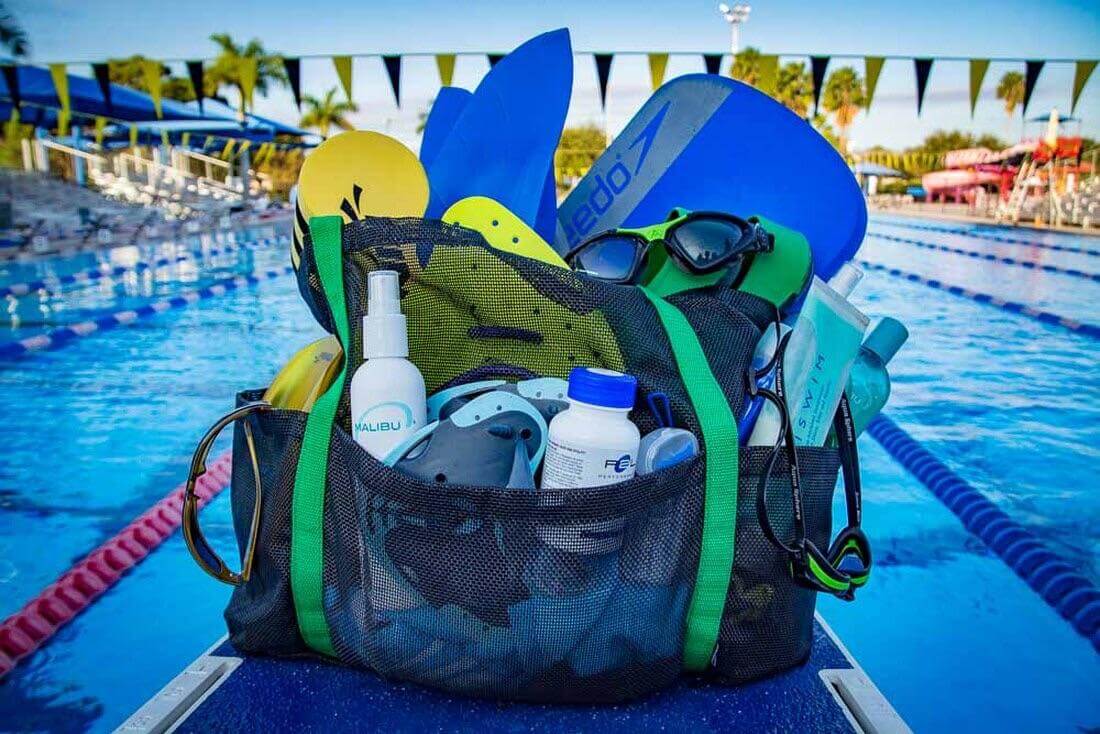
5. Choose a swim backpack for Commuting and Travel
If you cycle or take the bus to the pool, your bag may need to carry a laptop alongside your wet swimsuit.
Look for a swim backpack with:
-
A separate waterproof inner compartment.
-
A back panel that doesn't easily absorb sweat.
-
External attachment points for swimming fins.
-
Padded shoulder straps that stay comfortable and don't slip when you sweat.
For business trips and holidays, focus on two things: whether the empty bag can be compressed to fit inside a suitcase, and whether it has a separate pocket for wet swimwear.
If you're carrying it onto a plane, pack wet items separately rather than mixing them with your clothes.
This type of swim gear bag serves a very different purpose from one designed purely for trips to the local swimming pool.
It's also worth carrying a small, separate waterproof pouch for wet swimwear when travelling. It takes up very little space and helps protect the rest of your luggage.
6. Protect Your Goggles Inside Your swim gear bag
Coated goggle lenses scratch easily. If you throw them into a mesh pocket with keys and fins, they can become scratched after just a few uses.
A small hard-shell compartment is ideal.
If your bag doesn't have one, put your goggles in a soft protective pouch before placing them inside.
It's a small precaution that could save you the cost of replacing your lenses.
7. One Bag Isn't Always Enough
Different swimming activities call for different combinations of storage.
-
Short training sessions: Main bag plus a mesh pouch for separately storing fins.
-
Beach trips: Main bag plus a small waterproof pouch for your phone and keys.
-
Competition days: A transition bag plus mesh pouches to organise equipment for different events.
If you're on a tight budget, buy the main bag first and add accessories as needed.
A small additional pouch is often more useful than buying one oversized bag.
8. Choose Breathable Designs for Humid Climates
If you live in a humid area or a region with long rainy seasons, ventilation matters.
Look for a swim bag with drainage holes, mesh ventilation panels and a lining that doesn't absorb water easily.
Thick, fully enclosed coated bags can develop unpleasant odours if they're not dried properly after use.
In humid climates, your drying routine can matter just as much as the brand you choose.
9. Test Your swim bag with This Five-Step Checklist
Before using your new bag regularly, take a few minutes to check its quality.
-
Load it up: Pack all your usual swimming equipment and walk around with the bag for two minutes.
-
Test the zippers: Open and close them 20 times to check for sticking or resistance.
-
Check the compartments: Repeat the tissue-and-wet-towel test to see whether moisture gets through.
-
Test the fit: Measure the bag and try placing it inside your swimming pool locker.
-
Inspect the stitching: Check whether stress points and load-bearing areas have reinforced seams.
The differences between swim bags for swimmers are rarely obvious in advertising photos. They become clear when you put the bag through these five checks.
Taking ten minutes to inspect your purchase can help a bag last through years of swimming. For regular swimmers, long-term durability matters far more than appearance.
10. Choosing the Right Manufacturer for Custom Swim Bags
The challenge of custom swim bag manufacturing isn't simply making the bag. It's making sure every detail works for its intended use.
Locker dimensions, waterproof liner construction, heat-sealed seams, chlorine-resistant hardware and individual pre-shipment inspections all need careful attention.
XINHUI has years of experience in bag manufacturing, producing swimming bags, waterproof bags, mesh bags and transition bags.
-
Material options: EVA, TPU, neoprene and coated canvas, recommended according to swimming frequency and usage environment.
-
Application-specific hardware: Different hardware configurations for swimming pools and beach use.
-
Custom designs: Adjustable dimensions, compartment layouts and pocket positions to meet different requirements.
-
Small-batch sampling: Samples can be made and approved before mass production begins.
-
Quality inspection: Every bag is checked individually against the customer's inspection checklist before shipment.
-
Third-party testing and factory audits: Support is available according to customer requirements.
-
Domestic and international orders: Export packaging and product labelling can be arranged to meet customer specifications.
For swim teams, clubs and brands looking for custom swim bags for swimmers, simply prepare your locker dimensions, equipment list and typical usage scenarios.
Send us these details, and we'll put together an initial recommendation for the bag's structure and dimensions before discussing samples.
This initial consultation is free and can help avoid repeated design changes later in production.


Frequently Asked Questions
Q1: Can I machine-wash a swim bag?
It depends on the construction.
EVA hard-shell bags and bags with heat-sealed waterproof liners should not be machine-washed. The pressure and movement inside the washing machine can deform the sealed seams.
Hand-washing is usually quicker and safer:
-
Rinse with fresh water.
-
Gently scrub with a soft brush.
-
Leave to air-dry in the shade.
-
Avoid prolonged exposure to direct sunlight.
Q2: Can a peeling waterproof coating be repaired?
Minor peeling may be treated with a specialist coating repair spray, which can help slow further deterioration.
However, if large areas are peeling or the inner liner seams have split, replacing the bag is usually the better option.
Once the waterproof coating fails, you can no longer rely on the dry compartment to keep your belongings dry.
Q3: Can children use an adult-sized swim bag?
It's not recommended.
Adult bags are generally larger and have wider shoulder straps. When a child carries one, the centre of gravity may sit too far back, making the bag uncomfortable and potentially affecting balance while walking.
Choose a children's swim backpack based on the child's height. The bag should be compact enough to fit inside the lockers in children's changing areas.
How to Avoid Costly Mistakes When Customizing a Fany Pack
Related Article


