Laundry Bag Materials That Actually Stand Up to Washing
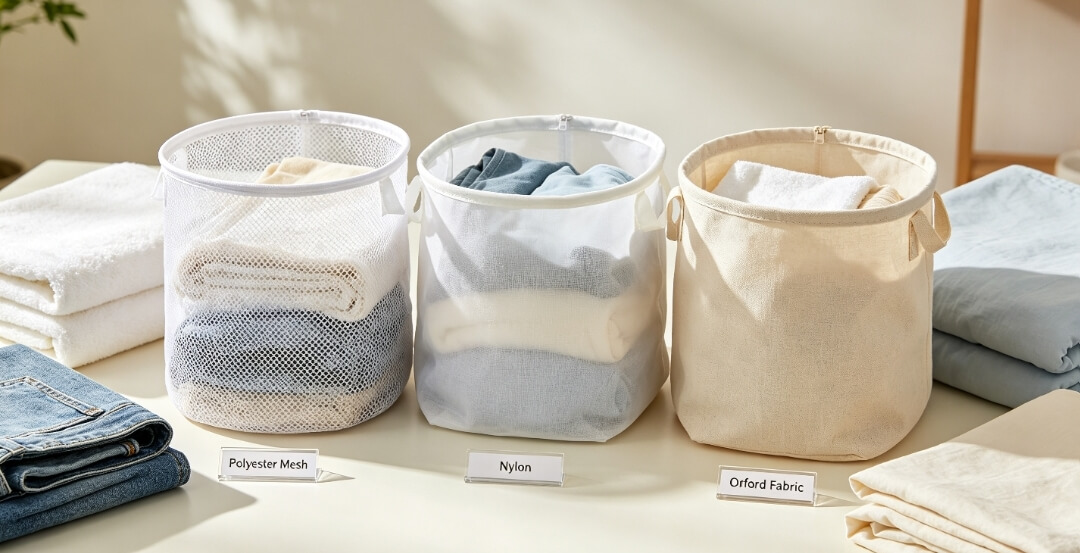
Carrying a bag full of wet clothes to the washing machine only to have the bag split open as soon as you load it in is frustrating. Many people choose a laundry bag based on appearance alone and overlook the fabric itself. A tote bag laundry design needs to handle both dirty-clothes storage and easy carrying. If the fabric is unsuitable, the bag may fail after only a few washes. When choosing a material laundry bag, the priority should not be appearance, but whether the fabric can withstand repeated washing and constant pulling.
Polyester Mesh Laundry Bag
Polyester mesh is one of the most common materials used for a laundry bag. High-density polyester mesh offers low resistance and allows water to pass through easily.
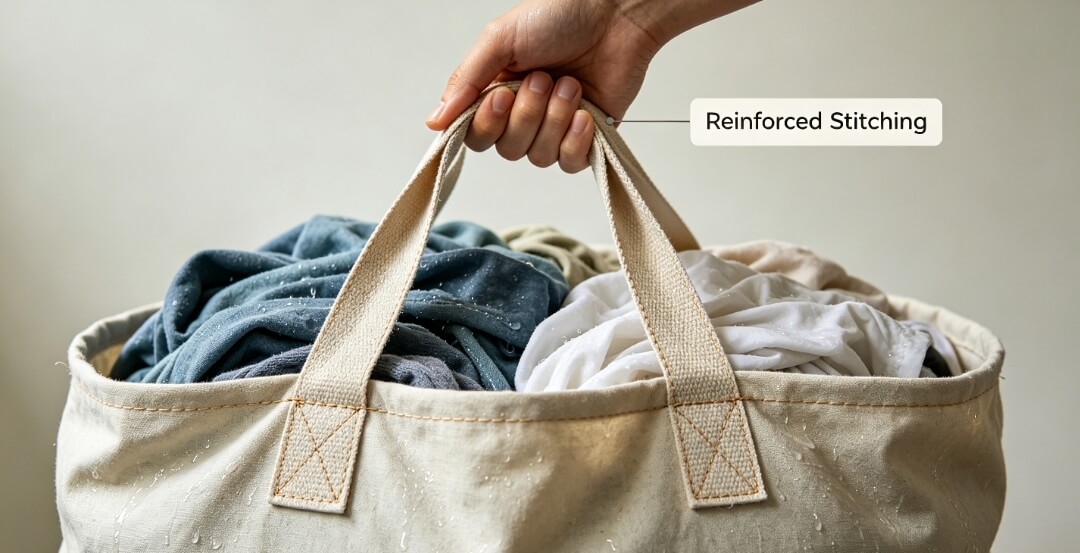
Thin polyester mesh, however, can be easily snagged by the zippers on jeans or metal buttons. When choosing a tote bag laundry design made from polyester mesh, pay close attention to the stitching where the handles are attached. The fabric may still be intact, but weak stitching can come apart when the bag is filled with wet clothes.
XINHUI Bag Factory reinforces the handle-to-body connection when manufacturing this type of laundry tote. Double-stitched seams are used to reduce the risk of thread breakage under heavy loads of wet clothing. The mesh density can also be adjusted according to customer requirements, making it easier to develop the right material laundry bag for different applications.
Nylon Laundry Bag
Nylon laundry bags offer better tear resistance and higher abrasion resistance than polyester. They are well suited to heavier items such as towels, bedding, and other bulky textiles.
Nylon does not perform well under high-temperature drying. Prolonged exposure to high heat can make the fibres brittle and gradually reduce their strength. A nylon tote feels soft and flexible, but its tensile strength can decrease slightly when the fabric becomes wet.
During the sampling stage, XINHUI Bag Factory carries out repeated pulling and washing tests on nylon laundry bags to evaluate the durability of both the fabric and the stitching. This helps ensure that the laundry bag can meet the requirements of large export orders.
Canvas Laundry Bag
A canvas tote bag laundry design looks thick and sturdy, which gives it a highly durable appearance. However, canvas absorbs a significant amount of water. Once wet clothes are placed inside, the overall weight of the bag can increase considerably.
When stored in a damp environment, canvas fibres can retain moisture, creating favourable conditions for mould growth. Once mould penetrates the fibres, it can be difficult to remove and may gradually weaken the fabric. For poorly ventilated dorm rooms and bathrooms, canvas is not the best choice for long-term dirty-clothes storage.
How Long Does a Laundry Bag Last?
The basic durability of a fabric can change significantly depending on how the bag is washed and dried. Two bags made from the same material may perform very differently: one person may use a laundry bag for a year without any major problems, while another may see damage after only two or three months. In many cases, the difference comes down to water temperature and drying practices.
High-density polyester mesh can handle warm-water washing. Repeated exposure to very high temperatures can gradually relax the polyester fibres, causing the mesh openings to deform and reducing resistance to snagging. Polyester can generally be tumble-dried at low temperatures, while high-heat drying will accelerate fabric ageing.
Nylon is especially sensitive to high temperatures. Hot-water washing and high-temperature drying can damage the structure of nylon fibres. After repeated heat exposure, tiny cracks may develop on the surface of the fabric, making it easier for external force to create holes. For everyday care, a nylon material laundry bag should be rinsed in cold water and should not be placed in a dryer.
Canvas also becomes more vulnerable to heat. High temperatures can accelerate fibre hardening. After drying, canvas may become rougher, and areas that are frequently folded or bent are more likely to develop fuzzing and fibre breakage. Because canvas absorbs a lot of water, incomplete drying can also leave behind moisture that encourages mould growth.
Oxford fabric is another commonly used material for laundry bags and is worth mentioning here. Its tightly woven structure provides good abrasion resistance. However, repeated high-temperature drying can damage the surface coating, reducing its water-repellent performance and eventually causing the coating to flake.
Laundry Bag Construction Matters Too
Even with the same fabric, construction quality can determine the actual service life of the bag. A high-quality material laundry bag will still have a lower load capacity if the handles are not reinforced with strong stitching.
Avoid overfilling the bag until it is completely stretched. Excessive loading places continuous tension on the seams and handles, accelerating fabric wear and shortening the service life of the bag.
Choosing the right fabric becomes much easier when you match it to the intended use. For everyday clothing, a high-density polyester mesh laundry bag is usually sufficient. For frequent washing of thick or heavy textiles, nylon is the better choice. For temporary storage of dirty clothes in a dry environment, a canvas tote can be a practical option.
Each material has its own strengths and limitations. There is no single tote bag laundry material that is suitable for every application.
FAQ
Q1: Do reinforced edges on a laundry bag affect water flow through the bag?
No. The reinforced edging is concentrated around the seams and handle attachment points. It does not cover the main body of the bag, so water can still flow freely in and out without affecting washing performance.
Q2: Is a laundry bag made from recycled polyester as durable as one made from conventional polyester?
Under the same fabric density, their basic resistance to pulling is similar. However, recycled polyester may have slightly lower colour fastness, so it can be more prone to fading after repeated long-term washing.
Q3: Is hanging or folding better when storing a laundry bag?
Hanging is generally better. Folding can create fixed creases in the fabric, and repeated bending along the same lines can make the fibres more likely to break. Hanging helps reduce this type of wear.
Related Article