
About "neps" in linen fabric
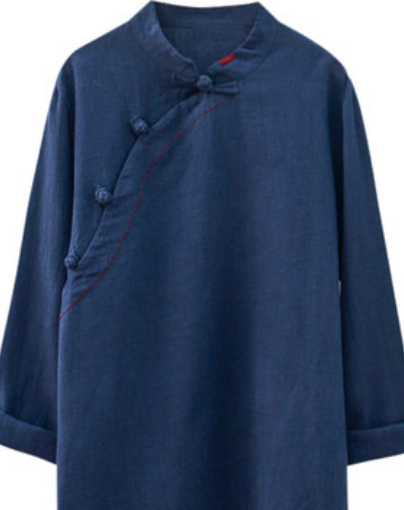
People who have bought linen fabric for the last several times.
They have fallen in love with the charms of linen fabric and have been thinking about buying more linen fabric in the past and in the future, but suddenly discover "neps".
Are they defective or not?
In this article, we will explain what "neps" are in linen fabric.
What is linen fabric?
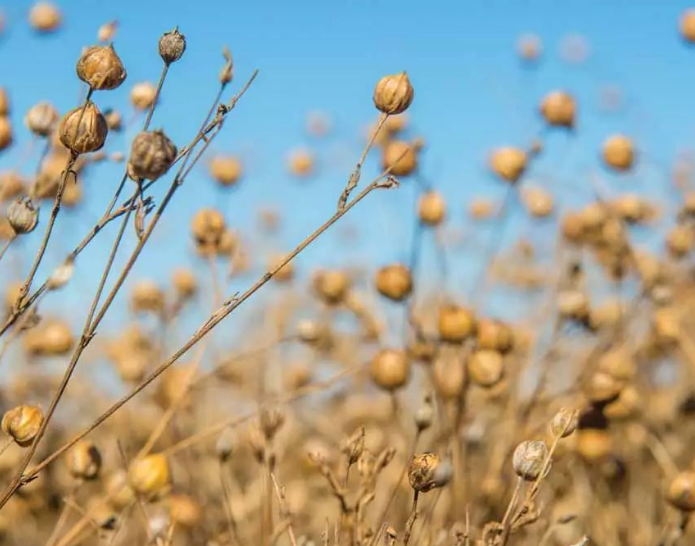
Flax is an annual plant of the flax family, and is mainly cultivated in Europe.
Linen fiber is a hard, durable fiber made by fermenting and drying the fiber of the stems of flax.

The "nep" in linen fabric is in the middle of the image above.
This is something that cannot be avoided with linen fabric.
Flax raw material is spun to make linen yarn, and that linen yarn is then used to arrange the threads as warp and weft to weave.
During the weaving process, clumps of fibers form, and these are called "neps."
Neps range from large to small, but if a nep is larger than the standard and the inspector judges it to be "not good" during inspection, they will devise a way to properly bring it out on the back of the fabric.
Neps that are too large and are judged to be a defect and cannot be turned on the back are called S-drawn, and are deducted from the total length of the roll of fabric.
Neps are inevitable in linen fabric.
Neps are almost always produced during the manufacturing process of linen fabric.
Linen thread fibers are not uniform like synthetic fibers, and have thick and thin parts.
The difference in thickness is a characteristic of linen thread, and it never ends up being "perfect."
We do our best to explain the characteristics of natural materials in our online store.
"Linen fabric has neps," "We want you to experience the neps," and "Conversely, the neps are what give it the unique flavor of natural materials.
We don't like the word "perfect," but we love linen as it is, and in a sense, as "not perfect."
Natural materials have such characteristics that they are not always the same, and the finished product varies depending on the time and timing of the flax harvest.
Not only the finished product, but even if you grow it using the exact same method, time, and timing, you cannot make the same product perfectly.
We want as many people as possible to understand the wonderfulness of linen fabric, a natural material.
The neps in this article's headline, "About neps in linen fabric." Neps are a value unique to natural materials, and do not occur in synthetic fibers.
We believe that the fact that they occur because they are natural materials gives neps a "flavor," "individuality," and "wonderfulness."
Unbleached has the characteristic of having different colors depending on the time of harvest, so if you're interested in that, please see below.
What do you think?
Have you cleared up some of your doubts about neps in linen fabric?
If there are too many or too large neps, they may be counted as a defect, but generally, neps are a part of linen fabric.
Both the factory and we understand that customers who purchase linen fabric understand the neps.
We hope that after reading this article, you will be interested in and attracted to the natural material linen fabric.
We mainly deal with linen and cotton fabrics, and have a wide variety of materials.
You can view the linen fabrics in our online store below.
Thank you very much for coming to the exhibition in Japan Tokyo the other day!
The Perfect Blend of Style and Functionality: Tote Bag Canvas
Related Article


