
Is Your velvet bag Ruined by Wrong Cleaning Methods?
Summary
A velet bag looks luxurious, but it requires careful maintenance. Around 90% of online velvet cleaning tutorials are made for sofas, curtains, and clothing. They ignore the structure of a bag. The body, straps, lining, and hardware often use different materials, so following general cleaning tips can easily ruin it.
This guide focuses on the real cleaning problems of a velet bag and gives practical ways to avoid mistakes. Beginners can follow these steps directly.
Last year, I bought a polyester velvet tote because I loved the look. After spilling half a cup of milk tea on it, I followed a sofa velvet cleaning tutorial and soaked it for ten minutes. The result? The bag body became wrinkled and the glue started coming loose. The cotton logo strap at the opening twisted badly. I had to spend over $200 at a repair shop to fix it.
Later, I asked a leather care specialist and learned that most velvet cleaning content online is written for general fabrics. It does not consider the mixed-material structure of bags. This is why many velvet bag repairs are not caused by poor quality, but by incorrect cleaning methods.
Why General washing velvet fabric Tips Fail for a velvet bag
A bag is different from a sofa or clothing. A typical velvet handbag may include polyester, silk, or cotton velvet on the body. The trim is often cotton webbing, the lining may be satin or polyester, and there are also metal zippers and hardware.
General advice like “soak the whole item” or “scrub with a brush” can be risky. Using washing velvet fabric methods directly on an entire bag may cause polyester velvet to wrinkle or lose its shape, cotton straps to curl, and metal parts to rust.
💡 Always check the care label before cleaning. This is the first rule for velvet care. Many silk-based or cotton-based velvet bags are labeled “dry clean only.” Polyester-based ones may allow gentle hand cleaning.
Who Should Think Twice Before Buying a velvet bag
Velvet is more delicate than leather or canvas at the same price level. If you fall into these categories, consider carefully before buying:
- Daily commuters or frequent travelers: Shoulder straps rub against other clothes, and coffee or milk tea spills are harder to remove from velvet than leather.
- Homes with cats or dogs: Pet hair sticks to velvet, and claws can easily pull the fibers.
- Rainy or humid areas: Velvet absorbs moisture and may develop odors if stored in damp conditions.
- People who throw bags around: Tossing it on car seats or storing it under heavy items can crush the velvet texture. Even professional care may not fully restore it.
Clean Your velvet bag by Area, Not the Whole Bag
A bag is not made from one single material. Treat each part separately to avoid damage.
Bag body
Always check the care label first. Small stains on polyester velvet can sometimes be spot-cleaned. For silk or cotton velvet, avoid water and choose professional dry clean velvet services.
Trim, straps, and hardware
Even if the velvet body can handle water, keep these areas dry. Wet straps may curl, and rusty hardware can leave yellow stains on the fabric.
Emergency care matters more than home care
Many tutorials say to “deal with it when you get home,” but liquids like coffee or lipstick can leave permanent marks quickly.
Keep a small soft brush, blotting paper, and a gentle foam cleaner with you. Press the liquid away first, then clean from the edge of the stain. Never rub back and forth.
The lining can be harder to fix
The lining often causes more trouble than the outside. Dark velvet bags may transfer dye onto light wallets or jewelry, especially with cheaper dyed velvet. Oil stains inside are also difficult because the velvet surface faces inward.
A bag organizer can help prevent contact. If color transfer has already happened, professional treatment is usually the safest option.
When Should You Use dry clean velvet Services?
Safe to handle at home
You can usually deal with:
- Surface dust
- Small water marks
- Dry lipstick or foundation marks
Use a soft brush in the direction of the velvet fibers, or gently dab with a mild detergent mixed with cold water.
Polyester velvet with small stains and no color transfer may tolerate light hand cleaning. Silk or cotton velvet should not be washed at home.
When you must choose professional cleaning
Send it for dry clean velvet treatment if you have:
- Oil stains
- Red wine stains
- Color transfer on the lining
- Full-bag stains on silk or cotton velvet
- Large dirty areas
How Storage Protects Your velvet bag for Longer
Frequent washing often happens because the bag is stored incorrectly. Good storage can reduce trips to the cleaner.
- Do not hang drawstring bags. The weight can stretch the opening.
- Use a breathable dust bag instead of a plastic one.
- For deep-texture velvet like crush velvet, choose a plain fabric dust bag. Avoid textured ones that may leave marks.
- Fill the bag with acid-free paper or a clean light-colored cotton T-shirt. Avoid newspapers because ink may transfer.
- Add a soft layer at the bottom to prevent pressure marks.
For second-hand velvet bags with old closet smells or crushed areas, do not rush to clean them. Put activated charcoal inside and leave the bag in a cool, ventilated place for one or two days.
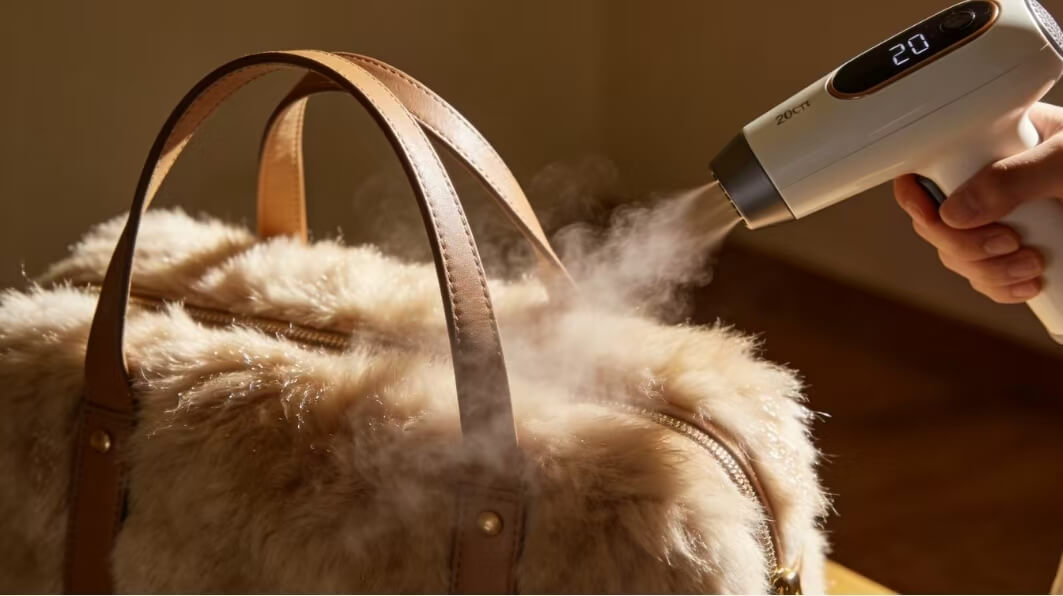
For wrinkles, steam lightly from about 20 cm away with a garment steamer. Gently brush the fibers back into place with your fingers and let it air dry. The velvet texture usually recovers.
FAQ: Common velvet bag Care Questions
Q1: Does a Dusty velvet bag Need Dry Cleaning?
Answer: No. Surface dust can usually be removed with a soft brush following the fiber direction, or with a lint roller. Only oil stains, red wine, or deep color transfer require dry clean velvet service. Sending it for cleaning too often may make cotton straps stiff.
Q2: How to Save a velvet bag After Milk Tea Spills?
Answer: Use a clean plain white tissue and gently press to absorb the liquid. Do not rub, because rubbing spreads the stain.
When you get home, mix a small amount of mild detergent with cold water. Use a cotton swab to press from the outside of the stain toward the center. Remove the foam with a damp cotton pad and let it dry naturally.
This method works well for many polyester velvet bags.
Q3: Can Velvet Dye Transfer on a velvet bag Be Fixed?
Answer: This is dye transfer from dark velvet. It is more common with lower-quality dyed velvet.
First, remove the wallet and test a makeup remover wipe on a hidden corner of the lining. If the color comes off, gently clean the stained area. If not, take it to a care shop. Aggressive cleaning can damage the lining.
A bag organizer can help prevent this problem in the future.
Q4: Does a Second-Hand velvet bag Need Cleaning First?
Answer: Not necessarily. Put activated charcoal inside and keep it in a cool, ventilated place for one or two days. Most smells will fade.
For pressure marks, lightly steam the area from about 20 cm away and gently brush the fibers back. This can restore the texture without professional cleaning.
Q5: How to Protect a velvet bag During Rainy Seasons?
Answer: Try to keep it away from rain. If it gets wet, immediately absorb the water with a dry cloth and let it air dry in the shade.
When storing it, place a moisture absorber in the cabinet. Choose a breathable plain dust bag instead of a sealed plastic bag.
Final Reminder
A velvet bag is beautiful because of its soft texture, but that texture also makes it sensitive. Avoid using random internet cleaning tricks. Check the material first, clean different areas separately, and use the right method for washing velvet fabric instead of treating every velvet item the same.
With proper storage and careful handling, your velvet bag can stay elegant for years.
Elastane Fabric in Bags: How Polyester and Elastane Material Works
Velour Fabric or Velvet? Velour VS Velvet Winter Guide
Related Article


