
Beyond Leather: Understanding What is Vegan Leather
The Evolution of What is Vegan Leather
To understand the future of what is vegan leather, we must first look at its past and present. Traditional answers to what is vegan leather made of fall into two categories: petroleum-based PU/PVC or plant-based fibers like pineapple, apple, and cactus. Their main goal was to “imitate” the look and feel of real leather. The new generation of what is vegan leather material is undergoing a third leap: smart bio-integration.
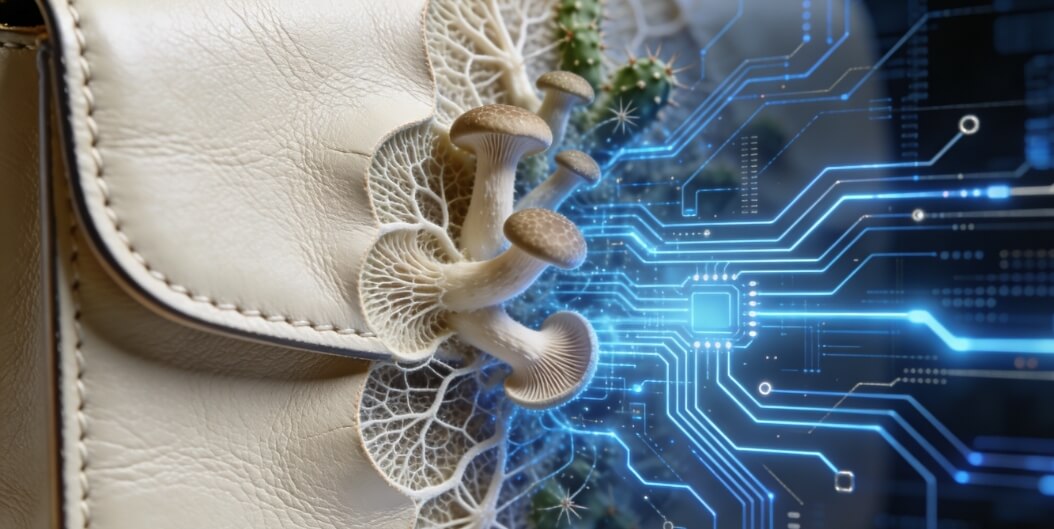
This is no longer science fiction. Research institutions like MIT Media Lab and Finland’s VTT are exploring ways to weave nanosensors and conductive elements into mycelium or plant-based substrates. The result is a “living” material responsive to pressure, temperature, and even biological signals. For instance, experimental smart vegan leather insoles can collect gait data via micro-piezoelectric sensors, aiding sports rehabilitation. Smart automotive interiors can adjust micro-porosity based on passenger body temperature. Here, what is vegan leather made of is no longer just mycelium or plant cellulose—it’s integrated circuits and data algorithms.
Exploring What is Vegan Leather Made Of
When materials gain intelligence, traditional discussions around pro and cons of vegan leather handbags are completely refreshed. Advantages go beyond ethics and basic sustainability, while disadvantages now face technological solutions.
-
Dynamic Functionality: Your handbag may embed environmental sensors, changing color to indicate UV levels, or connecting to an app to alert you if internal humidity threatens valuable items.
-
Personalized Experience: Flexible electronics could allow micro-adjustments of texture or stiffness to match your mood or occasion.
-
Verifiable Sustainability: This addresses “greenwashing” controversies. Brands like Banana Anesthesia collaborate with VeChain to generate a unique blockchain passport for each product. Consumers can scan to trace the full lifecycle—from cactus cultivation, water savings, to carbon footprint—turning eco-promises into verifiable data.
-
Durability and Character: German ZF Group and startup Saneagle have developed self-healing polymers for vegan leather, allowing minor scratches to mend at room temperature. Smart materials can record usage habits, creating unique aging patterns—turning “wear” into “digital patina.”
-
Cost and Mass Production: AI accelerates this process. Dutch company Mycoworks optimizes mycelium growth conditions via artificial intelligence, reducing cultivation cycles and waste. Bain reports that AI-driven biomanufacturing could cut high-end bio-based material costs by 20–30% within three years.
Upgrading the What is Vegan Leather Material Experience

The ultimate goal is for what is vegan leather material to break free from fashion boundaries. Its applications are rapidly expanding into:
-
Healthcare: Smart vegan leather serves as a breathable, comfortable base for wearables monitoring heart rate, skin conductance, and other vital signs.
-
Automotive Interiors: BMW’s iVision Circular concept car demonstrates smart surfaces made entirely from recycled materials. Future smart vegan leather interiors could become interactive “third living spaces.”
-
Home and Architecture: Experimental smart vegan leather wall coverings with air-purifying or humidity-regulating functions are moving from labs into luxury interior design.
Rethinking What is Vegan Leather Material in Lifestyle
The Future of What is Vegan Leather
Vegan Leather: When AI Meets Materials
Are Leather Messenger Bags Worth It?
Related Article


