
tote bag reusable: Why Most People Never Get the Sustainability They Paid For

For most people, the journey looks like this:
Buy one → Use it three or four times → Stuff it in a cabinet → Buy a nicer one.
The truth is, the environmentally friendly tote bag has gradually become a decorative accessory.
Many environmentally friendly tote bag products on the market simply add a logo, a few eco-friendly slogans, and use cheap cotton or canvas that costs only a few dollars to produce. Suddenly, the bag becomes both a walking advertisement and a symbol of virtue.
But the real environmental calculation is not on the tag. It is in your closet.
| What You're Doing | What the Planet Sees |
|---|---|
| Buying a sixth "sustainable" canvas bag because you cannot find the first five | More cotton grown, more fabric dyed, more transportation emissions |
| Forgetting your bag three times a week and taking a plastic bag at checkout | Half the value of both bags wasted |
| Folding up a canvas bag after it carried raw chicken juices and leaving it in the trunk for two weeks | The bag survives, but bacteria throw a party |
| Using a non-woven "eco bag" twice before it pills and tears | Early retirement—essentially another disposable product |
So here is the reality:
The label environmentally friendly tote bag has no magic power.
What is sustainable has never been the bag itself. It is the habit of the person using it.
environmentally friendly tote bag Is Only as Sustainable as Your Habits
If you want your purchase to make a real difference, focus on practical behavior rather than material comparison charts.
Stop Searching for the Perfect Material
Research and media reports repeatedly point to one simple fact:
Most people do not avoid reusable bags because they dislike them. They simply forget to bring them.
A bag sitting at home delivers zero environmental benefit.
The most effective system is not willpower. It is consistency.
- Keep one main bag hanging behind the front door.
- Keep one foldable backup bag in your work bag or next to your car keys.
- After shopping, empty the bag, shake it out or clean it, and immediately return it to its designated spot.
This simple loop does more for sustainability than debating organic cotton versus jute.
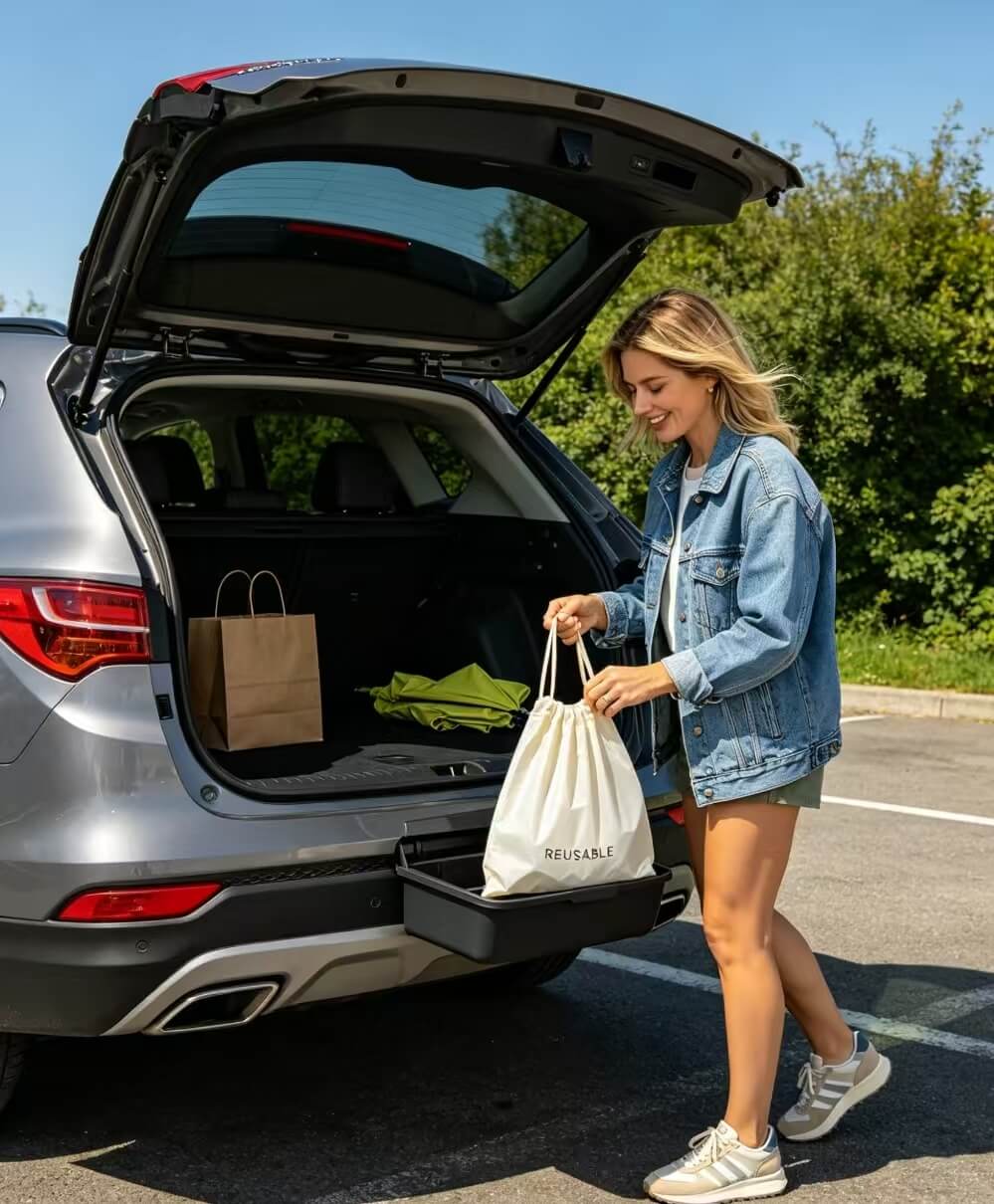
sustainable tote bags Depend on Using What You Already Own
Global textile waste reached approximately 120 million tons per year in 2024. Around 80% ended up in landfills or incinerators, while less than 1% was truly recycled back into new textiles.
Tote bags are only a small part of this problem, but they perfectly illustrate the same pattern:
We do not suffer from a lack of products.
We buy too much, use too little, and replace things too quickly.
That is why the most effective sustainability rule is simple:
If your current bag still works, keep using it.
You do not need a new one simply because it looks better.
Replace a bag only when:
- The handles are beyond repair.
- Mold has penetrated the fabric.
- The structure can no longer support weight.
- The material has worn through.
The most sustainable choice is often not buying anything at all.
When to Buy New sustainable tote bags
This does not mean you should never buy another bag.
Before purchasing, pass three tests.
Is the Old Bag Truly Finished?
Not because you are bored of it.
Because it physically no longer works.
Examples include:
- Handles hanging on by a few threads
- Fabric becoming paper-thin
- Permanent mold and odor that cannot be removed
Are You Buying Construction Instead of Marketing?
Look for:
- Reinforced X-shaped or box stitching at the handles
- Strong seams
- A structured bottom panel
- Durable canvas weight
Buy quality, not slogans.
Will You Use It for Five Years?
If you cannot honestly answer yes, it will probably join the growing pile of forgotten bags in your closet.
The best sustainble tote bags are the ones that stay in service for years.
If all three answers are yes, buy it.
If not, check thrift stores, flea markets, or second-hand marketplaces instead.
A used canvas bag is often the lowest-carbon "new" bag you can get.
FAQ About tote bag reusable
Q1: I heard cotton bags need thousands of uses before they become environmentally friendly. Should I just go back to plastic bags?
A: No.
The widely quoted "7,100 uses" figure comes from a Danish study using one of the strictest possible environmental frameworks. It also assumes that a plastic bag is used only once before disposal.
Many life-cycle assessments suggest that cotton or canvas bags begin outperforming single-use plastic bags after roughly 50 to 150 uses, depending on the environmental indicator being measured.
The real issue is that many people never reach those numbers because their bags are forgotten at home, left in the car, or replaced by newer ones.
Bring it with you. Wash it. Use it until it wears out.
Q2: Can canvas and cotton reusable bags be machine-washed?
A: Absolutely.
The same University of Arizona research found that hand washing or machine washing can reduce bacteria by more than 99.9%.
For most canvas and cotton bags:
- Use warm or hot water.
- Use regular detergent.
- Dry thoroughly before storing.
The resources used for washing are minor compared with the resources required to manufacture a replacement bag.
Q3: Are supermarket non-woven bags considered sustainable tote bags ?
A: Honestly, not usually.
Non-woven polypropylene bags are lightweight, inexpensive, and often attractive.
However, they also tend to:
- Pill easily
- Tear more quickly
- Be difficult to recycle in many cities
If you already have one and it still works, keep using it.
But there is little environmental value in collecting new ones repeatedly.
Q4: I already have several reusable bags. Should I still buy a stronger canvas version?
A: First, sort through what you already own.
- Keep the two strongest bags.
- Donate clean extras.
- Repurpose others for laundry sorting or storage.
Then wait at least a month.
Many people find that rotating just two bags dramatically reduces the desire to buy another one.
The smartest environnmetally friendly tote bag strategy is not owning more bags. It is using fewer bags more often.
Q5: Is keeping one foldable bag in my car enough?
A: It is a good start, but there is a catch.
A hot trunk can become a bacterial incubator, especially if the bag has carried groceries or raw food.
Better storage locations include:
- A backpack
- A handbag
- A door compartment inside the vehicle
After use, bring it home, clean it if needed, and return it to its regular place.
Q6: Where can I find a second-hand canvas bag? Won't it look cheap?
A: Try:
- Thrift stores
- Vintage shops
- Flea markets
- Online second-hand platforms
Older canvas bags are often made with heavier and more durable fabric than many modern budget versions.
And no, it does not look cheap.
In genuine sustainability discussions, extending the life of an existing product carries far more value than buying another brand-new bag with a leaf logo printed on it.
A well-worn canvas tote with years of history has character, not embarrassment.
zero waste gifts: Why Do Eco Bags Fail So Often?
Your grocery tote bag May Be Dirtier Than a Plastic Bag
Related Article


