
Choose a durable tool bag by checking these strap details
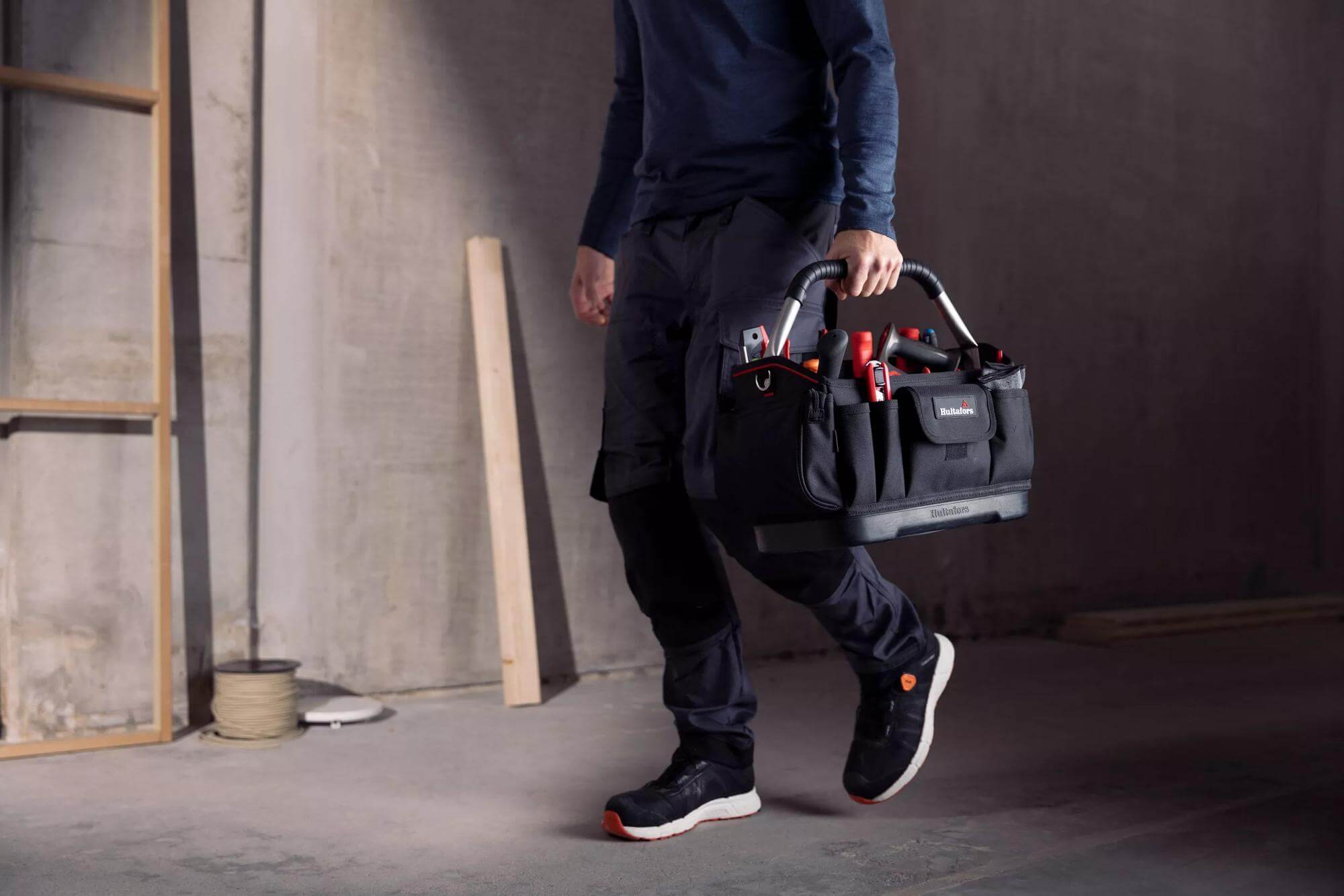
After a busy morning making repair calls at three different homes, repeatedly carrying a heavy toolbox back and forth can leave your arms aching. That is why many technicians choose a tool bag to make transporting their tools easier and reduce the strain of daily work.
Many buyers assume that choosing a bag with a padded shoulder strap is enough. In practice, however, technicians often encounter a different problem: the fabric of a tool bag with shoulder strap still looks fine after just two or three months of use, but the strap attachment tears away. Pliers and cordless drills fall onto concrete, tools get damaged, and the day's work comes to an unexpected stop.
The problem often lies not in the fabric itself, but in the entire shoulder strap attachment system. Many listings for a portable tool bag highlight the thickness of the shoulder padding but say little about critical load-bearing components, such as D-rings, bar-tack reinforcement, and webbing.
What Makes a tool bag with shoulder strap Durable?
When choosing a tool bag with shoulder strap, don't judge it by the padding alone. Padding can make the strap more comfortable against your shoulder, but it cannot support the entire load created by repeated pulling and movement.
The real strength comes from the webbing width, the reinforcement fabric beneath the D-ring base, and the bar-tack stitching at stress points.
Bar-tack stitching is a standard reinforcement technique used in industrial bags. It creates a dense group of short stitches at key stress points, distributing tension and helping prevent the seams from gradually pulling apart. Without bar-tack reinforcement, even thick Oxford fabric can eventually tear around the needle holes after repeated loading and pulling.
When inspecting a tool bag, pay particular attention to where the shoulder strap connects to the main body. There are two common designs.
One has an extra layer of reinforcement fabric beneath the D-ring base, secured with bar-tack stitching. The other attaches the D-ring directly to a single layer of fabric using only standard straight stitching. With heavy tools inside, the second design concentrates the pulling force on a small area of fabric, increasing the risk of the attachment coming loose after relatively little use.
Fixed vs. Detachable Straps on a portable tool bag
It is also important to distinguish between fixed shoulder straps and detachable straps with quick-release buckles.
Detachable straps are convenient to remove and reattach, but plastic quick-release buckles vary in material quality. Standard nylon buckles may become brittle in cold job-site conditions. For heavier loads, POM (polyoxymethylene) acetal buckles are generally a better option because they offer good fatigue resistance and are less prone to cracking in low temperatures.
For light, everyday service calls, a detachable strap can be perfectly adequate. If you regularly carry heavy hand tools and cordless equipment, a fixed webbing attachment is often the more secure choice.
Webbing width also deserves attention. Narrow webbing creates greater pressure over a smaller contact area under the same load. It can dig into your shoulder and is more susceptible to deformation. Don't confuse thick padding with load-bearing capacity. Even a heavily padded strap can cause shoulder discomfort and webbing deformation if the underlying webbing is too narrow.
How to Load a tool bag to Reduce Strap Wear
Even with the same portable storage bag, the way you pack your tools can affect the service life of its shoulder strap components.
Placing all the heavy tools in the upper part of the bag raises its center of gravity. This can increase the impact forces acting on the strap attachment points as you walk, lift, or reposition the bag.
Whenever possible, place heavier tools in the lower compartments and keep frequently used smaller items in the exterior pockets. This simple packing method helps reduce stress on the shoulder strap anchors and lowers the risk of premature damage.
Bulk Buying Tips for a tool bag with shoulder strap
Buyers sourcing a portable tool bag in bulk need to pay attention to manufacturing specifications, not just the product description.
Simply stating "padded shoulder strap included" in a specification sheet is not enough. During mass production, a factory might reduce the webbing width, omit reinforcement fabric, or replace bar-tack stitching with ordinary lockstitch seams.
To reduce the risk of inconsistent quality between production batches, your purchasing documents should clearly specify the webbing width, D-ring base reinforcement, and mandatory bar-tack stitching at stress points. Detailed requirements make it easier to verify whether production matches the approved sample and agreed specifications.
Warning Signs of Wear on a tool bag
Even a well-made single-shoulder tool bag will show signs of wear over time. Watch for fraying webbing or small cracks in the fabric around the D-ring base. These are early warning signs that the strap attachment may be weakening.
Continuing to carry heavy loads can cause small tears to spread rapidly. Minor surface fuzzing on the webbing can be carefully trimmed, provided the structural fibers remain intact. However, if the fabric around the D-ring base is cracking, stop using the bag for heavy loads and replace or properly repair it before returning it to service.
With these checks in mind, you can evaluate a tool bag with shoulder strap based on its actual construction rather than the thickness of its padding. Buyers with larger budgets may also want to verify the product's country of origin, but manufacturing quality and country-of-origin labeling are separate considerations and should be assessed independently.
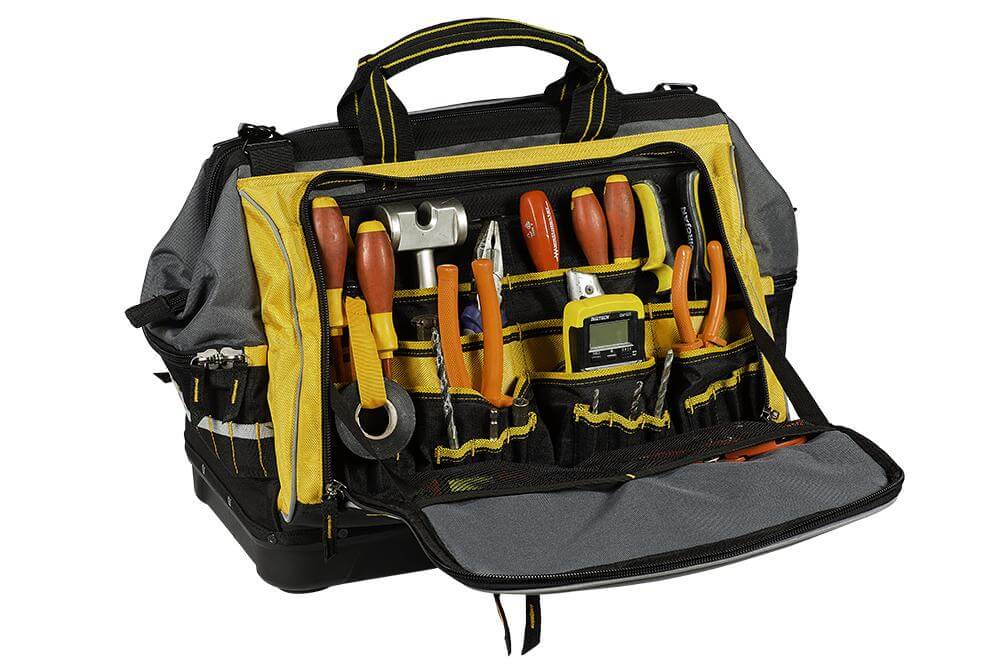
Custom portable tool bag Manufacturing by XINHUI
If you need a custom portable tool bag manufactured to these construction standards, consider XINHUI, a source manufacturer based in Dongguan, China.
The factory has long handled OEM and ODM orders for tool bags and is familiar with the load-bearing requirements of products such as the tool bag with shoulder strap. Its quality-control standards cover D-ring base reinforcement, bar-tack stitching, and webbing selection.
XINHUI can incorporate specific shoulder strap requirements into production specifications based on your purchasing checklist. Random load testing can also be carried out before shipment to help identify potential weaknesses and reduce customer complaints caused by shoulder strap failures across production batches.
The factory has relevant audit credentials, including BSCI-related assessments, and supports both sample-based and drawing-based prototyping. Orders range from small trial runs to full-scale production, with transparent shipment schedules. Photos and videos of the manufacturing process can also be provided for review.
Share your required strap construction details with the team to request a sample and quotation. Testing the sample's durability before committing to mass production can help you verify whether the finished product meets your requirements.
FAQ
Q1: Does thicker shoulder padding always make a bag more comfortable to carry for long periods?
A1: Not necessarily. Padding thickness is only one factor. Excessively thick padding can make the strap stiff and less flexible, reducing the contact area against your shoulder. Webbing width and the bag's center of gravity often have a greater influence on carrying comfort. Even thick padding may not prevent localized pressure if the webbing is too narrow.
Q2: If the D-ring becomes rusty, can I simply remove the rust and continue carrying heavy loads?
A2: No. Sanding can remove surface rust, but it cannot reverse corrosion that has weakened the metal. Continued use under heavy loads is not recommended because corrosion can reduce the hardware's strength and increase the risk of breakage or detachment. Replacing the corroded hardware is the safer option.
Q3: Does carrying the same single-shoulder tool bag crossbody instead of resting it on one shoulder affect strap life?
A3: Yes. When the bag rests on one shoulder, the weight may be concentrated on a single D-ring attachment point, depending on the design. A crossbody configuration can distribute the pulling force across two attachment points. For long-term use with heavy loads, this may reduce wear on the strap anchors, provided the bag is designed to support that carrying method.
Why bicycle bags Need More Than a Visual Inspection
Related Article


