
Don't Just Look at the Outside—Think About What Goes Inside
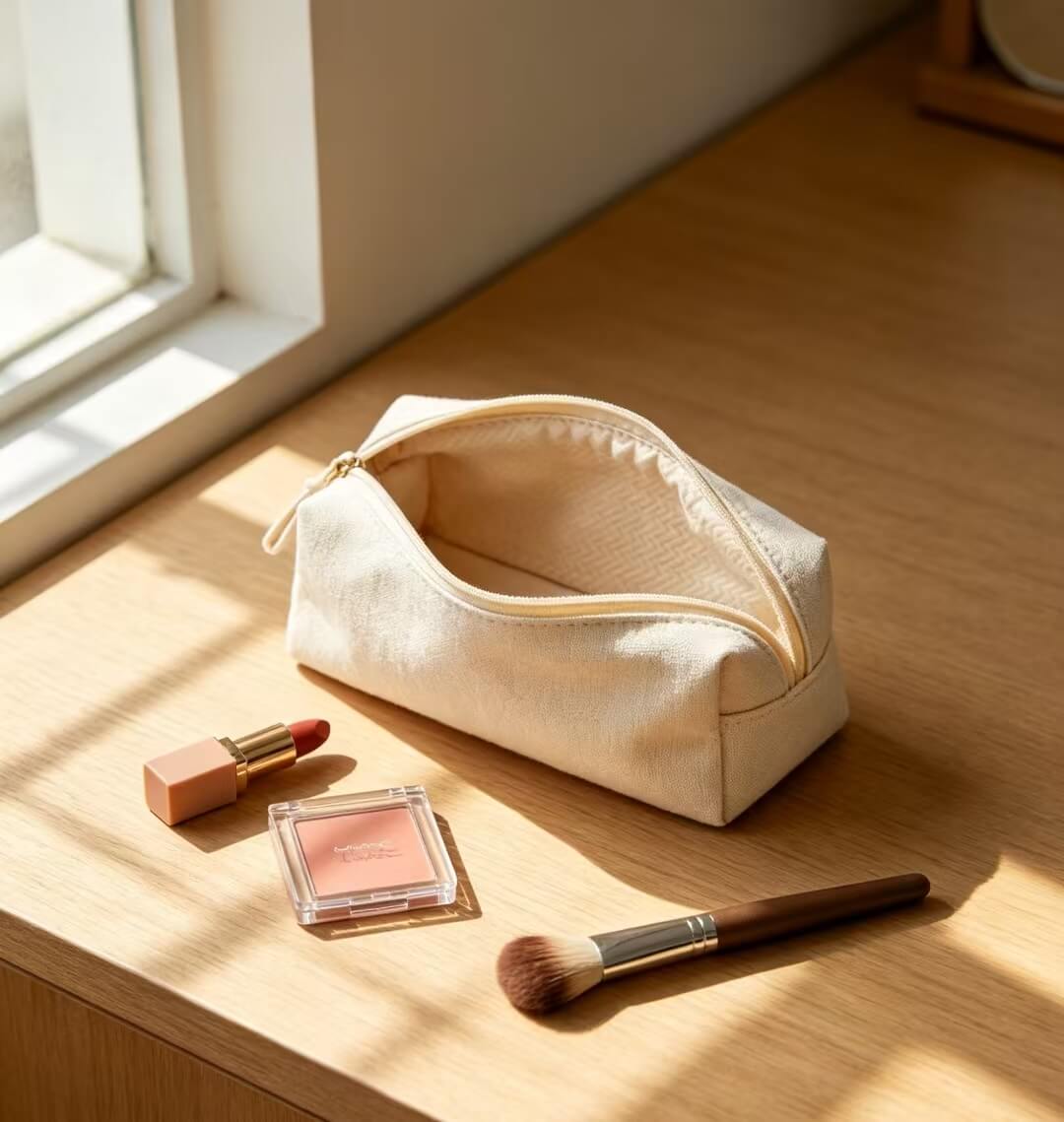
When people search for toiletry bag, material makeup, or fabric for makeup bags, they usually find the same advice repeated everywhere: nylon is water-resistant, canvas is eco-friendly, PVC is transparent, and leather looks premium.
But after using a bag for a few months, many people discover that the real problems don't come from the outer fabric. They come from the lining and the seams.
The outside may still look great, while the inside has already absorbed spilled foundation, developed stains that won't come off, and started to smell.
The outer fabric is only half of the equation.
Toiletry Bag Lining Matters More
Why do some bags labeled "water-resistant" still leak?
Liquids don't usually go through the fabric surface first. They find the weakest points:
- Needle holes from stitching
- Gaps between zipper teeth
- Uncoated linings that absorb liquids
That's why the most important thing to check isn't just the exterior. It's the lining material.
Common Lining Types
| Lining Type | Real-World Performance | Best For |
|---|---|---|
| TPU laminated lining (heat-bonded construction with no stitch-hole leakage) | Wipes clean easily, resists oils and creams, stays flexible in cold weather | Frequent travelers and anyone concerned about leaks |
| PU-coated nylon or polyester | Smooth and wipeable, though the coating may become sticky after long-term use | Everyday commuting and regular cosmetic storage |
| Uncoated cotton or canvas | Absorbs liquid immediately and is difficult to clean | Dry brushes and powder products only |
Simply put, the exterior determines whether you like the bag at first sight.
The lining determines whether you still want to use it three months later.


Toiletry Bag Clear Materials: PVC, TPU, or PEVA
Many people buy a transparent toiletry bag for airport security checks.
This is where material choice can make a big difference.
| Feature | PVC | TPU | PEVA |
| Odor | Lower-quality PVC often has a strong plastic smell | Virtually odor-free | Virtually odor-free |
| Cold Weather Performance | Can become brittle and crack | Remains flexible in low temperatures | Soft but thinner than TPU |
| Price | Lowest cost | 20–40% more expensive | Mid-range |
Don't assume the cheapest PVC option is the best choice.
TSA regulations require a clear, resealable bag. They do not require PVC.
TPU and PEVA meet the same requirements while offering less odor and a better user experience.
Material Makeup Checks Before Buying
When evaluating material makeup compatibility and bag construction, four quick checks can save you trouble later.
Touch the Lining
Open the bag and feel the inside.
- Smooth and slick, like the inside of a raincoat? That's a good sign.
- Fuzzy or woven? It may absorb liquids over time.
Check the Zipper Area
Look behind the zipper teeth.
- A fabric barrier helps prevent leaks.
- No barrier means liquid can travel through the zipper opening.
Smell the Bag
This is especially important for clear bags.
If the bag has a strong chemical odor, put it back.
Squeeze the Bottom Corners
Weak corners are often the first place where leaks occur.
A structured base or reinforced bottom is usually a safer choice.

Fabric for Makeup Bags and Real-Life Use
Choosing fabric for makeup bags isn't only about appearance.
Think about how the bag will actually be used:
- Frequent travel
- Daily commuting
- Brush storage
- Liquid cosmetics
- Airport security requirements
The best fabric for makeup bags depends on your specific needs rather than trends or looks alone.
FAQ About Toiletry Bag Selection
Q1: Should I choose nylon or canvas?
A: Start by thinking about what you'll carry.
Canvas looks attractive and breathes well, but it isn't water-resistant. It's best for dry brushes and powder products.
Nylon, especially coated nylon, is lighter, stronger, and more water-resistant. For most people, nylon is the more practical option.
Q2: If a bag says "water-resistant," does that mean it won't leak?
A: No.
Water-resistant refers to the fabric surface itself. Stitching holes, zipper gaps, and corner seams may still allow liquid to escape. True leak protection depends heavily on the lining construction.
Q3: Why does my makeup bag develop an odor?
A: In most cases, the lining has absorbed oils, moisture, and cosmetic residue.
Choosing non-absorbent materials such as TPU, PEVA, or PU-coated fabrics can help. It's also a good idea to leave the bag open to air out after use.
Q4: Does a clear bag have to be PVC?
A: No.
TPU is odor-free and remains flexible in cold weather. PEVA is lightweight, soft, and odor-free as well. Both can be used for TSA-compliant clear bags.
Q5: I carry a lot of brushes. What kind of lining should I choose?
A: Brush compartments should have some airflow, such as mesh panels or semi-open sections. Areas used for creams and liquids should have a sealed lining. Fully enclosed waterproof interiors can trap moisture around brush bristles.
Q6: What does 600D nylon mean? Is a higher number always better?
A: "D" stands for denier, which measures yarn thickness.
600D offers a good balance of durability and weight for a toiletry bag.
1000D is more abrasion-resistant but heavier and stiffer.
200D is lighter but more likely to be punctured.
The highest number isn't always the best choice.
Q7: Are PU leather makeup bags practical?
A: They offer a premium appearance and are easy to wipe clean.
However, the lining should prevent liquids from reaching the back side of the PU material. Sharp objects pressing against the material for long periods can also cause cracks.
For heavy travel use, nylon is generally more durable.
Q8: Can I machine wash a makeup bag?
A: Sometimes.
Nylon bags with PU-coated linings can usually be washed on a gentle cold cycle and then air-dried.
Avoid machine washing bags that contain TPU inserts, glued seams, or metal frames.
The safest method is to wipe the lining with a damp cloth and mild detergent.
Q9: If I only remember one thing before buying, what should it be?
A: Put your hand inside the bag and touch the lining.
A smooth, continuous, non-absorbent lining will save you problems later.
If you feel fuzzy fabric, exposed stitching, or absorbent textile surfaces, you're looking at a good-looking pouch rather than a reliable leak-resistant system.
Fabric for Makeup Bags Final Answer
The answer to fabric for makeup bags is not simply "nylon is better" or "canvas is better."
Instead, think about the situation your bag is most likely to face.
Then check whether the lining, seams, and construction have been designed to handle that situation.
A bag that performs well months later is usually the one that was designed from the inside out.
Why Your make up bag Smells, Peels, or Zippers Stick Within Three Months
Can Your pull string backpack Stay Safe?
Related Article


