
How to Maintain a rucksack camera and Extend Its Protective Life
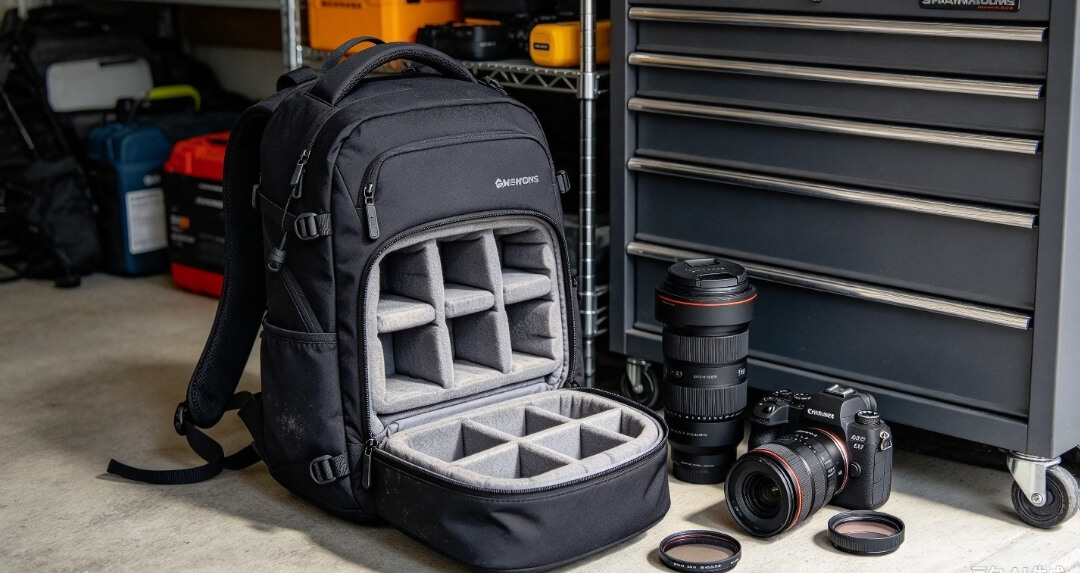
Many photographers buy an expensive rucksack camera, finish an outdoor shoot, and then leave the bag in a storage locker. The exterior may show no visible damage, while the internal protection has already started to fail.
Many camera bags for photographers develop problems after just one or two years, such as crumbling foam padding and worn-out water-repellent finishes. Most product reviews and buying guides do not cover this type of long-term wear.
Some users assume that as long as a camera and lens backpack looks fine on the outside, it will continue to provide the same level of protection indefinitely.
In reality, wear often occurs in the internal padding, stitching, and DWR coating, none of which is necessarily visible to the naked eye. It may only become obvious after a rainy outdoor shoot or an accidental impact reveals that the protection is no longer sufficient.
This guide is based entirely on care instructions published by fabric manufacturers and the long-term experience of many photographers. It does not promote any specific model. It focuses only on practical bag maintenance.
Rucksack Camera Fabric Care
Before cleaning, remove all detachable dividers. Turn the bag upside down and shake or tap it to remove dirt, cookie crumbs, fine sand, and other debris. Particles trapped in seams and gaps can continue to wear down hook-and-loop fasteners and inner lining fabrics.
For ballistic nylon, official fabric care instructions generally advise against machine-washing the entire bag. For stubborn stains, dilute a mild detergent with water and gently spot-clean the affected area with a soft-bristled brush. Do not soak the entire bag.
After cleaning, leave the rucksack camera in a cool, well-ventilated place until it is completely dry. Keep it away from direct sunlight, tumble dryers, and heaters. Excessive heat can damage the water-repellent finish on the fabric and accelerate foam aging inside the bag.
For PU-coated polyester, the outer surface can usually be wiped down with a damp cloth. Once the coating starts peeling or flaking, cleaning cannot restore it. The best approach is to minimize pulling and abrasion to slow further deterioration.
For canvas camera backpacks, avoid aggressive scrubbing. Pay particular attention to mud and dirt around the bottom and other high-friction areas. On models with leather trim, clean the leather only with a dry cloth and do not wash it with water.
DWR Recovery for camera bags for photographers
Many users of camera bags for photographers confuse splash resistance with complete waterproofing. When water no longer forms beads and rolls off the fabric, it usually means the durable water repellent, or DWR, finish has started to wear out.
A worn DWR coating does not necessarily mean the fabric itself is leaking. However, the bag may begin to absorb water more easily during light rain.
Before applying any treatment, make sure the bag is 100% dry inside and out. Use a fabric-compatible DWR restoration spray and apply it evenly to the exterior fabric. Spray only the outside and avoid heavily spraying into the interior compartments.
After application, leave the bag in a well-ventilated area for another 24–48 hours before using it again.
Stitching needle holes and zipper teeth are common water-entry points. Even a properly restored DWR finish cannot completely seal these small gaps, so an outdoor rain cover is still necessary for reliable protection in wet weather.
Foam Divider Wear in a camera and lens backpack
Open the bag and inspect the protective dividers. If the foam no longer springs back after being pressed, produces powdery particles, or shows cracking on the surface, its shock-absorbing performance has already declined.
For minor compression deformation, remove the divider and leave it in a cool, dry environment. Light compression may recover partially on its own. Once the foam starts shedding particles or cracking, however, simply letting it rest will not restore its original performance.
For small tears, use adhesive specifically designed for foam. Make sure the glue does not spread onto the side that comes into contact with your camera equipment.
When large areas of foam have crumbled or collapsed, repair is generally not worthwhile. Replacement hook-and-loop padded dividers in the same thickness are widely available, so there is usually no need to replace an entire set of camera bags for photographers.
Zippers, Hook-and-Loop, and Stitching
When a zipper starts sticking, first use a dry brush to remove sand and dirt from between the teeth. Sand is one of the most common causes of zipper damage. Once the teeth are clean, apply a small amount of zipper-specific silicone lubricant.
Do not use machine oil. It attracts more dust and can damage the surrounding fabric.
When lint and debris build up on the hooks of a hook-and-loop fastener, use a stiff brush to remove them. Once the hooks have become worn and blunt, there is no effective way to restore them, so the hook-and-loop tape needs to be replaced.
During routine maintenance, also inspect high-stress stitching points, especially shoulder-strap attachment points, bottom corners, and tripod mounting points. Broken threads or skipped stitches should be reinforced as soon as possible. Left unattended, stitching can tear rapidly once the bag is carrying a heavy load.
Long-Term Storage for a camera and lens backpack
Remove all cameras and accessories from the camera and lens backpack before storing it for an extended period. Do not leave equipment sealed inside the bag for months at a time.
Choose a cool, well-ventilated storage area. Avoid enclosed, humid cabinets as well as places exposed to strong sunlight, such as windowsills.
Keep the bag partially open rather than storing it with the zippers fully closed. You can place individually packaged desiccant inside the bag, preferably in a breathable pouch and tucked into a corner mesh pocket. Do not allow the desiccant to sit directly against the foam padding, and replace it regularly.
Maintenance can only slow down material deterioration. Any photography backpack used frequently outdoors will experience some level of wear in its padding and fabrics over time. Regular inspection is a much safer approach than waiting until something fails.
For brands and distributors, the material and construction weaknesses revealed through everyday maintenance are also important issues to eliminate during product development. XINHUI bag factory incorporates real-world wear scenarios from photographers into the sampling and quality-control process during camera backpack OEM/ODM development and production.
At the incoming-material stage, the factory checks foam density, DWR performance of the outer fabric, and repeated zipper-opening durability. During pre-production sampling, it simulates long-term wear and humid storage conditions for basic validation, helping reduce problems such as rapid foam crumbling and premature coating failure after the finished product reaches the market.
The factory supports full-process customization, including fabric selection, internal divider construction, and reinforcement of high-stress stitching points. It can also provide test reports and pre-production sample approval, making it suitable for partners developing durable photography backpacks. Project-based solutions and sample lead-time information are available on request.


FAQ
Q1. Can I store a rucksack camera in my car trunk long-term after maintenance?
A: Long-term storage in a car trunk is not recommended. In summer, the enclosed interior of a vehicle can reach high temperatures, accelerating foam deterioration and damaging the DWR water-repellent coating. Short trips are fine, but after a shoot, take the bag out and store it in a room-temperature, well-ventilated environment.
Q2. What should I do if camera oil or lens lubricant gets onto the foam dividers?
A: Gently wipe the surface with a slightly damp soft cloth. Do not saturate the foam with water. Once oil has penetrated the foam cells, it cannot be completely removed. Long-term oil contamination can accelerate foam degradation and transfer residue to other equipment. When the affected area is large, replacing the divider is the better option.
Q3. Do I need to clean camera bags for photographers after using them at the beach if I cannot see any salt on the surface?
A: Yes. Salt crystals from seawater can remain on fabrics, zipper teeth, and stitching gaps even when they are invisible to the naked eye. Over time, they can continue to wear down textiles and metal hardware. After shooting by the sea, wipe the entire outer surface of the bag with a slightly damp soft cloth, then allow it to dry thoroughly in a well-ventilated area.
Q4. How often should I inspect a camera and lens backpack?
A: There is no single interval that works for every user, but frequent outdoor use calls for regular checks. Pay particular attention to foam rebound, stitching, zipper function, hook-and-loop fasteners, and the condition of the DWR finish. Catching small signs of wear early is far more effective than waiting until the bag no longer protects your gear properly.
Can tackle bag fishing Handle a 2 km Hike?
Related Article


