
Why Bucket Bag Designs Don't Always Deliver More Space
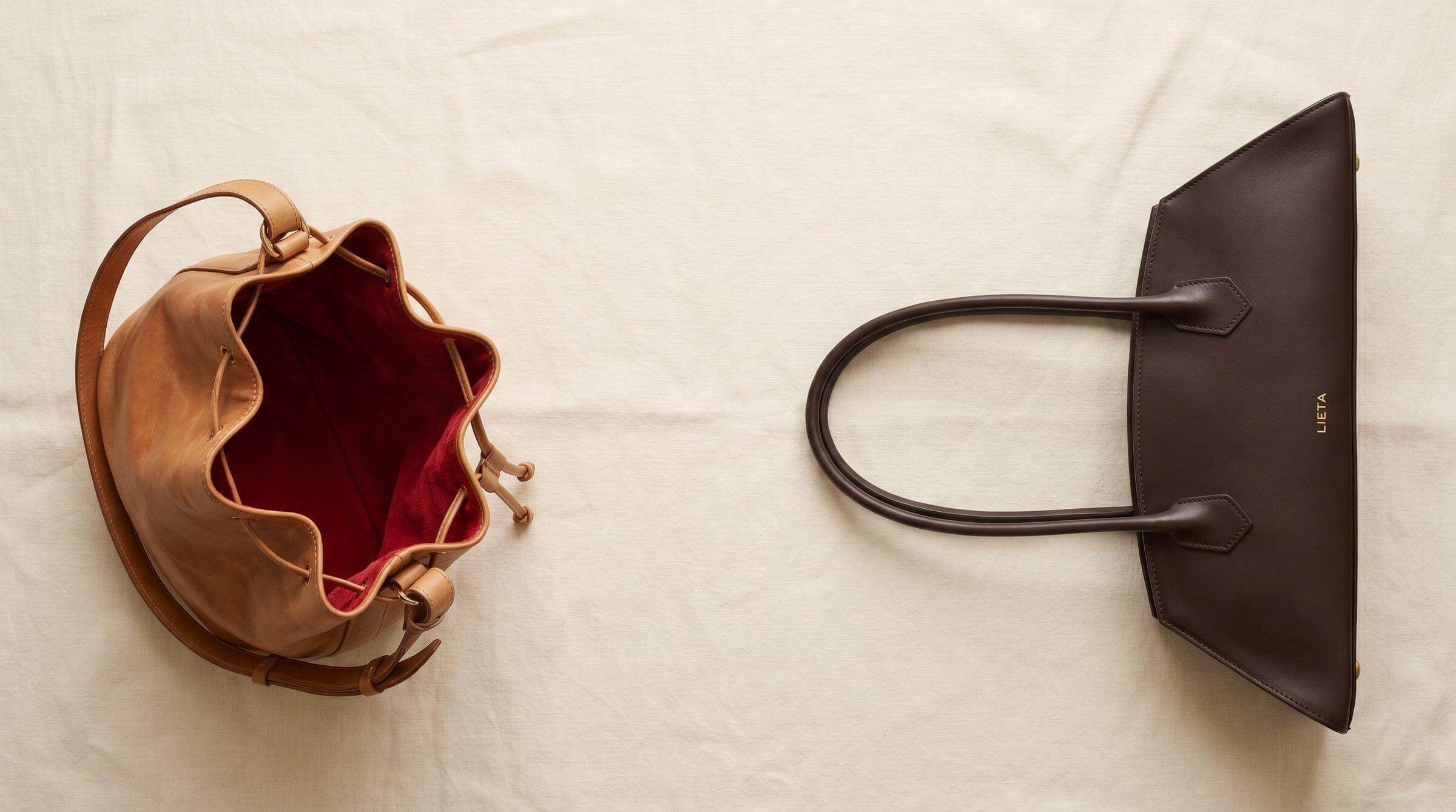
Two bags with identical listed dimensions can have nearly the same theoretical capacity yet feel very different in everyday use. One may comfortably hold all your daily essentials, while the other looks equally spacious but struggles to accommodate frequently used items. The difference isn't necessarily down to workmanship or materials. It often comes from the structural design and the compromises built into each bag style.
Many shoppers confuse three different silhouettes, grouping modified designs into the same category and applying identical buying criteria to all of them. This is one of the most common reasons people end up choosing the wrong bag.
Traditional tote bags use a wide, rectangular base to maximize usable storage space. Most items sit flat inside the bag. Their biggest advantage is the wide opening. On many designs, the opening is almost as wide as the base, making it easy to see and reach most of the contents without digging around. This is particularly useful when you frequently need to take things in and out, such as documents, receipts, makeup, or transit cards.
However, this design also has clear drawbacks. Open-top styles offer little physical protection for their contents. When placed on a desk or in a public area, everything inside is exposed. Even some designs fitted with magnetic snap closures still leave a gap when fastened, so they cannot provide a fully enclosed opening.
Another bag style takes a different approach to storage. Instead of widening the base, it increases capacity by extending the body vertically. This is the bucket bag. A bucket bag usually has a relatively compact front profile but plenty of vertical storage space. Tall items such as water bottles and folding umbrellas can stand upright inside, reducing the risk of pressure and friction damage.
However, the bucket bag also has a built-in structural drawback. While its deeper body improves storage capacity, smaller items such as keys, wireless earbuds, and lipstick can easily slip down to the bottom.
Even when the materials and workmanship meet high standards, a lack of slip pockets near the opening means you may still have to reach deep inside to find what you need. Even a designer bucket bag cannot completely eliminate this structural limitation through better craftsmanship alone. Many designer bucket bag designs rely on a removable inner pouch to make smaller items easier to access and prevent them from getting lost at the bottom.
There is also another modified style on the market that is easy to misidentify: the bucket tote bag. It retains the bucket-shaped vertical side profile but removes the drawstring closure in favor of a wide, open-top handle design. At first glance, many consumers group the bucket tote bag with the traditional bucket bag. In actual use, however, the bucket tote bag feels much closer to a conventional tote.
This hybrid design combines features of both styles. It has the appearance of a bucket bag while offering the easy access of a tote. However, its manufacturing pattern is more complicated. The stitching around the bottom corners is exposed to greater tension, meaning lower-priced versions are more likely to lose their shape or collapse when empty.
How to Choose the Right Bucket Bag
When comparing these styles, the most practical approach is to look at the physical shape of the items you carry every day. There are two straightforward ways to make the right choice without having to understand technical manufacturing specifications.
1. Check Your Everyday Essentials
Start by identifying the larger items you carry most frequently.
If you regularly carry an 11-inch or larger tablet, A5 or A4 documents, or slim folders, a traditional tote bag is usually the better choice.
Even if a bucket-shaped bag has plenty of internal volume, its curved inner walls can make it difficult to fit flat items. The problem is often not the overall capacity but the usable width of the opening. A bag may meet your required external dimensions, yet its opening may taper inward, forcing you to insert a tablet at an angle. Repeatedly doing this can cause wear and damage to the device's corners.
If your daily essentials are mainly vertical items, such as a 750 ml water bottle, a folding umbrella, or a long wallet, and you rarely carry large documents, a bucket-shaped design is generally more suitable. These items can stand upright inside, reducing unnecessary contact and friction.
The bucket-shaped design discussed here refers to the vertical cylindrical style mentioned earlier.
2. Bucket Bag vs. Tote: Which Is Easier to Access?
An open-top tote allows you to reach inside and retrieve items with one hand. This makes it convenient when you're commuting, walking, or frequently taking out cards and tickets. However, it offers relatively limited privacy and protection.
Adding a magnetic closure can provide a basic improvement, but a magnetic fastening system cannot prevent someone from deliberately reaching into your bag.
A vertical bucket-style bag with a drawstring closure offers better protection against items accidentally falling out. However, a drawstring is not a foolproof anti-theft solution. Bags made with soft materials or poorly finished eyelets may still have gaps even when the drawstring is fully tightened. In crowded environments, someone may still be able to reach inside.
Another consideration is convenience. Fully opening and closing a drawstring bag usually requires both hands, which adds extra steps when you're on the move.
Bucket Bag Materials and Shape Retention
You can assess how well a bag holds its shape simply by looking at it. There's no need to take it apart or inspect its internal construction.
A vertical bucket-style bag made from soft materials will often collapse when left empty on a table. It is lightweight and easy to fold away, but it does not maintain a structured silhouette particularly well.
To keep a consistent shape, manufacturers need to add padding or EVA stiffeners. While these materials improve structural stability, they also increase the bag's weight and make it bulkier to fold and store.
Traditional tote bags generally require less structural reinforcement. Even ordinary soft fabrics can maintain a basic shape thanks to their wider base and simpler construction.
Check Usable Capacity, Not Just Dimensions
One common mistake when shopping for bags is assuming that the external dimensions printed on the packaging reflect the actual usable storage capacity.
In reality, seam allowances, lining thickness, and an inward-tapering opening all reduce the available internal space.
During the selection process, focus on two key measurements:
-
The longest side of the larger items you regularly carry.
-
The clear opening width of the bag when it is fully opened.
Make sure the opening is wider than your largest everyday item. Don't rely on the base measurements alone.
Which Bag Style Should You Choose?
Here is a straightforward guide based on everyday use:
-
Frequent access and flat items: Choose a traditional tote if you regularly take out your belongings and carry tablets, documents, or folders.
-
Vertical storage and a structured bucket silhouette: Choose a vertical bucket-style bag if most of your essentials are tall, narrow items and appearance is a priority.
-
A hybrid design: If you're considering a bucket tote bag, check the clear opening width and the stitching around the bottom corners before making a purchase.
There is no universal winner when it comes to appearance versus convenience. The right choice ultimately depends on your personal habits and how you use your bag.
Custom Bucket Bag Manufacturing
If you're considering custom bag development, whether it's a bucket bag, designer bucket bag, or bucket tote bag, the structural details discussed above need to be addressed during the development stage.
Opening width, bottom-corner stitching, weight distribution, and the choice of shape-retaining materials all play an important role in the final product.
Many custom bag projects run into problems because these details are overlooked early in development. The finished products may collapse when empty, make everyday items difficult to access, or have shoulder straps that cannot handle the expected load.
XINHUI Bag Factory has extensive experience in custom bucket bag and tote bag manufacturing. We understand how different fabric and structural reinforcement combinations affect the performance of a finished bag. Our team evaluates opening dimensions and reinforcement points based on the actual items the bag is designed to carry.
We can also assess fabrics and accessories against relevant OEKO-TEX material standards, helping you find the right balance between shape retention, empty-bag weight, and packaging and shipping volume.
Whether you want to reproduce an established design or develop a completely new pattern, you can share your product requirements with us, including:
-
A list of items the bag needs to hold.
-
Your preferred fabrics and materials.
-
Your required order quantity.
-
Your expected delivery schedule.
Our team can then provide a tailored development proposal and sample evaluation to help bring your bag design to life.
Why Does a Custom Canvas Bag Cost More Than You Expect?
Related Article


