
Choosing the Right Eco Friendly Shopping Bags
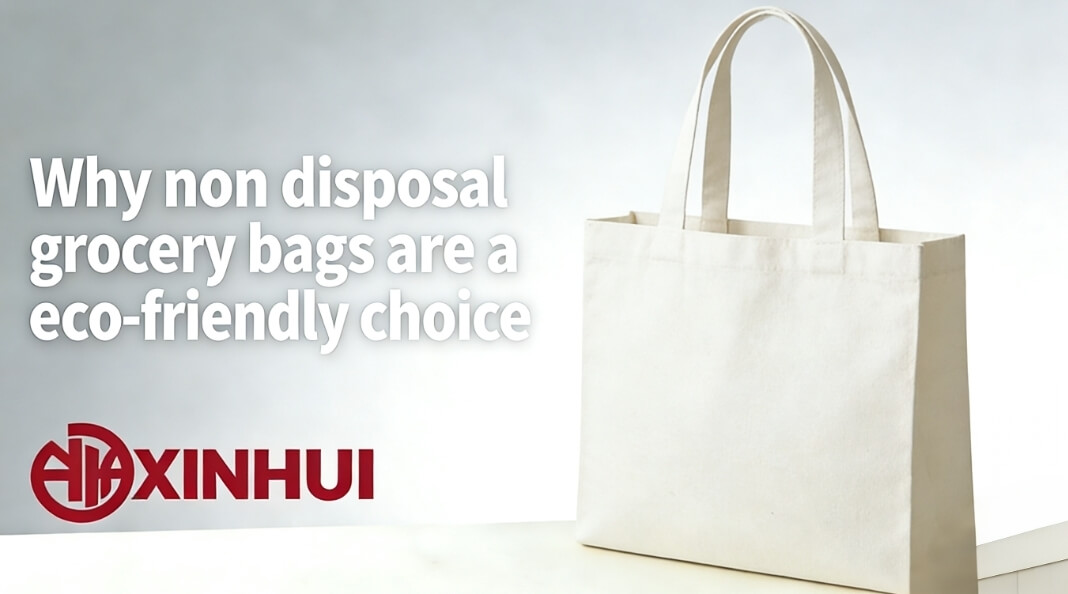
Standing at the supermarket checkout, you see a variety of recyclable bag, eco friendly shopping bags, and non disposable grocery bags. Many people instinctively feel that grabbing one of these is automatically “better” than a plastic bag. We’re surrounded daily by green labels—biodegradable, recyclable—which sound appealing, but the reality is far more complex. The story behind these labels may not be what you think.
Even if a bag is labeled as a recyclable bag , its environmental mission is far from complete. The crucial step is what happens after you throw it away. Data shows that although China’s recycled plastic reached over 21 million tons in 2024, the actual recycling rate was only about 30%. In other words, a large portion of theoretically recyclable items never actually get reused.
Why a Recyclable Bag May Not Be Recycled
Why does this happen? One major reason is material complexity. Take the common non-woven grocery bags: the primary material, polypropylene (PP), is recyclable. But if the bag has handles made of other materials or colorful prints, it becomes a mixed-material product. Current sorting technologies struggle to separate these materials cleanly, making recycling inefficient. Economics also play a role—lightweight plastic packaging, including some bags, has low material value but high processing costs, which discourages recycling companies. For example, Shanghai averages nearly 8,000 tons of recyclable materials recovered daily in 2024, a feat made possible by an efficient municipal system—not every city has this capability.
So, when choosing a true recyclable bag , the first consideration is whether it’s “easy to recycle.” Bags with simple structures, single materials, no composite coatings, and minimal printing (preferably with water-based inks) are best. More importantly, you need to know your city’s specific recycling rules—does your bag go in the right bin? If it ends up in the wrong place, the environmental benefits it promised from production are essentially lost.


How Eco Friendly Shopping Bags Really Reduce Impact
When it comes to eco friendly shopping bags , what comes to mind first? Natural decomposition? The tactile pleasure of cotton or linen? Often overlooked is the core reality: the most critical factor is not what material the bag is made from but how many times you use it after bringing it home.
Here’s a counterintuitive fact: studies show that an ordinary cotton bag needs to be used at least 131 times to offset the carbon footprint of its production and transport compared to a disposable plastic bag. Considering the full lifecycle—from cotton farming and pesticide use to disposal—the break-even number can skyrocket to over 7,000 uses. Even the sturdy non-woven PP bags commonly found in supermarkets need to be used more than 37 times to match a single-use plastic bag’s environmental impact.
The takeaway? Buying several cotton bags and using each only a few times before letting them gather dust—or discarding them because they’re dirty or worn—can create a larger environmental burden than repeatedly using a single ordinary plastic bag. So, what truly defines eco friendly shopping bags? Simply put: the bag you use most often and for the longest time. It could be a durable canvas tote, a tough Oxford cloth bag, or even a thick plastic bag you treat like a “family heirloom.” Maximizing each bag’s lifespan is far more effective than obsessing over “green materials.”
Misconceptions About Biodegradable Bags
Regarding biodegradable plastic bags, there’s another reality to understand. Although these bags can reduce traditional plastic use, they are designed for industrial composting facilities. Thrown into the natural environment without specific temperature, moisture, and microbial conditions, they degrade very slowly, far from the “quickly vanish” ideal. Using them correctly still requires proper disposal channels.
When choosing a lasting non disposable grocery bags , think beyond material: consider longevity. Durability is the true test of a “non-disposable” bag.
Durability Matters for Recyclable Bag and Daily Use
Many bags fail first at the handles. Check if the stitching and reinforcements can handle repeated weight. The bottom matters too—extra lining or thicker material helps prevent wear from bottles or cans. These structural details often dictate lifespan more than whether the bag is cotton or linen.
Suitability for your lifestyle also matters. If you buy a week’s worth of groceries at once, a wide-bottomed canvas or Oxford bag with strong handles works best. If you prefer a bag on-the-go, lightweight nylon or polyester bags that fold into a small square are convenient. Insulated bags are practical for frozen items, easy to clean, and maintain temperature.
Labels help too. For “biodegradable” bags, look for industrial composting certification (e.g., GB/T 38082) and check if your city has proper facilities. “Recycled materials” (like recycled PET) indicate support for circular resource use. Organic cotton or GOTS certification usually means less water and chemical use.
Bringing home the right non disposable grocery bags is just the first step. Studies show nearly 90% of consumers believe in eco packaging, but few consistently practice it. Practical tips: hang a bag by the door, keep one in your backpack or car, and place them where you can easily grab them. Bags aren’t limited to shopping—they work for gym, short trips, and daily commuting.
When bags wear out, don’t throw them away immediately. Small tears can be sewn; if irreparable, recycle appropriately—cotton bags in textile recycling, or repurpose as cleaning cloths or organizers.
Ultimately, among recyclable bag , eco friendly shopping bags, and non disposbale grocery bags , there’s no single right choice. The most sustainable option is often the one you already have—the bag that looks worn but still holds up. Using what you own to its fullest is more meaningful than any material label.
Jute Bag Care Guide: How to Use and Maintain Your Jute Totes
A Complete Guide on How to Add a Zipper to a Tote Bag
Related Article


