
Paper Bags VS Plastic Bags: Your Daily Choice Beyond “Eco-Friendly”
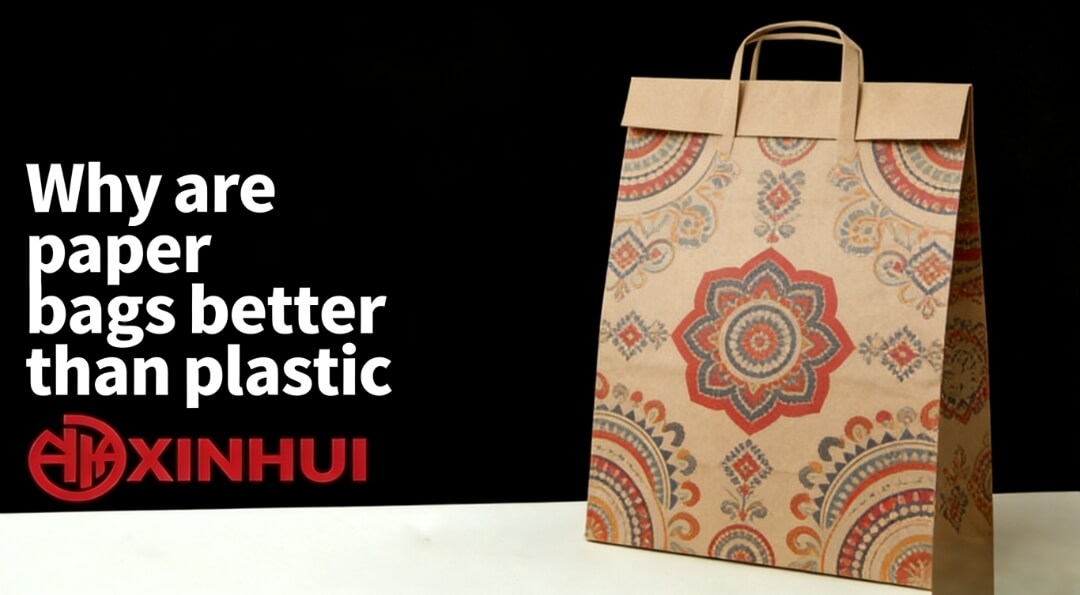
Where Do Paper Bags Come From?
What Are Plastic Bags Made Of?
Paper Bags VS Plastic Bags: Advantages and Disadvantages
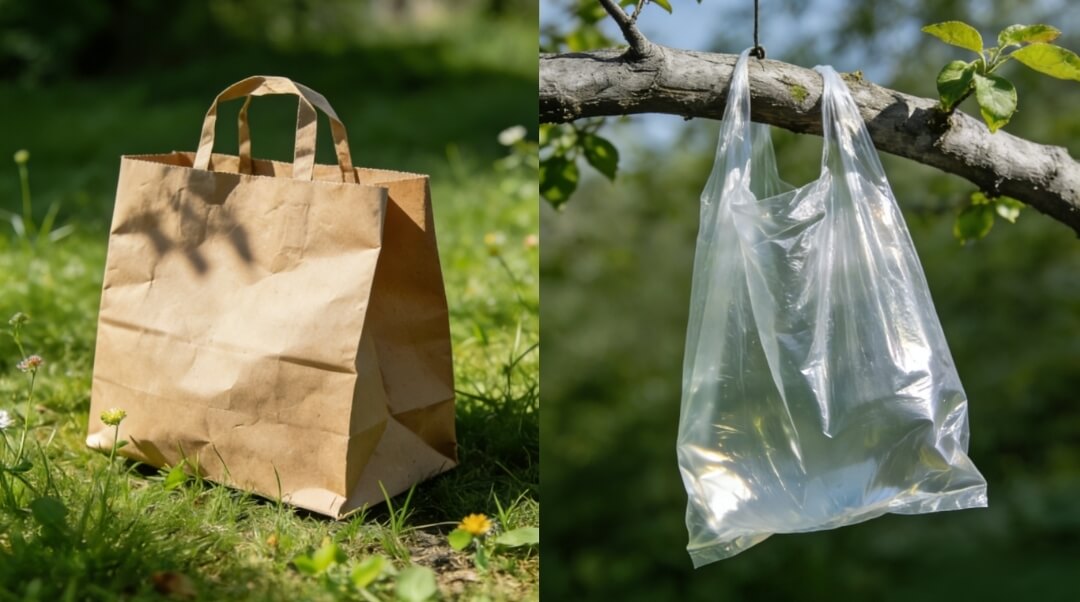
Understanding their origins, let’s look at their performance.
Advantages of Paper Bags
The biggest advantage of paper bags lies in their ‘endgame.’ They are easier to recycle and decompose relatively quickly in nature, avoiding the centuries-long pollution associated with plastic bags . Their raw material, wood, is renewable, giving paper bags the eco-friendly image of “from nature, back to nature.” Additionally, paper bags print beautifully, making them an excellent medium for brands to communicate environmental values.
Disadvantages of Plastic Bags

The most serious drawback of palstic bags is their stubborn persistence and uncontrolled pollution. A 2024 study in Nature revealed that over 50 million tons of large plastic waste still enter the environment annually. These materials not only damage landscapes but break down into microplastics that infiltrate ecosystems. Research from East China Normal University (2024) further highlights how plastic pollution alters wetland soil properties and increases greenhouse gas emissions. Globally, plastic recycling rates remain below 10%, with much waste sent to developing countries, causing severe environmental and health problems.
Paper Bags VS Plastic Bags: Consumer Behavior Insights
Why Don’t We Use Paper Bags Anymore?
Why Is Everyone Using Paper Bags?
Paper Bags VS Plastic Bags: Choosing Wisely
Practical Guide for Everyday Use
Daily Shopping & Commuting
- Best: Bring reusable cloth or non-woven bags—ultimate eco-friendly option.
- Backup: Buy paper bags for small dry items; thick HDPE plastic bags for frozen or wet goods, later reused as trash or storage bags.
Takeout & Food Packaging
- Soupy dishes: Prefer biodegradable plastic containers (confirm industrial composting facilities) or aluminum containers; regular paper bags are unsuitable.
- Dry food/bread: paper bags remain the classic, breathable choice.
Home Storage & Organization
- Moisture protection (clothes, documents): Use zip-lock plastic bags or airtight boxes.
- Dry items (toys, miscellaneous): Sturdy kraft paper bags or cardboard boxes are eco-friendly and visually appealing.
Core Principle: Extreme reuse is the key to offset environmental costs. A plastic bag reused for storage, trash, or shopping may have higher eco-value than a disposable paper bag.
Next time you’re at the checkout, don’t stress over a moral dilemma of “paper or plastic.” Think a step deeper: what protection does your purchase truly need? How many times can this bag be reused? By making choices based on actual needs rather than vague feelings, you become a responsible lifestyle navigator. After all, the most sustainable bag is always the one you keep using again and again.
How to Make Merch: 3 Dimensions to Create Your Signature Bag
How to Waterproof Canvas: Protect Your Waterproof Canvas Bag
Related Article


