
Think You Know Oxford Polyester Think Again
Summary
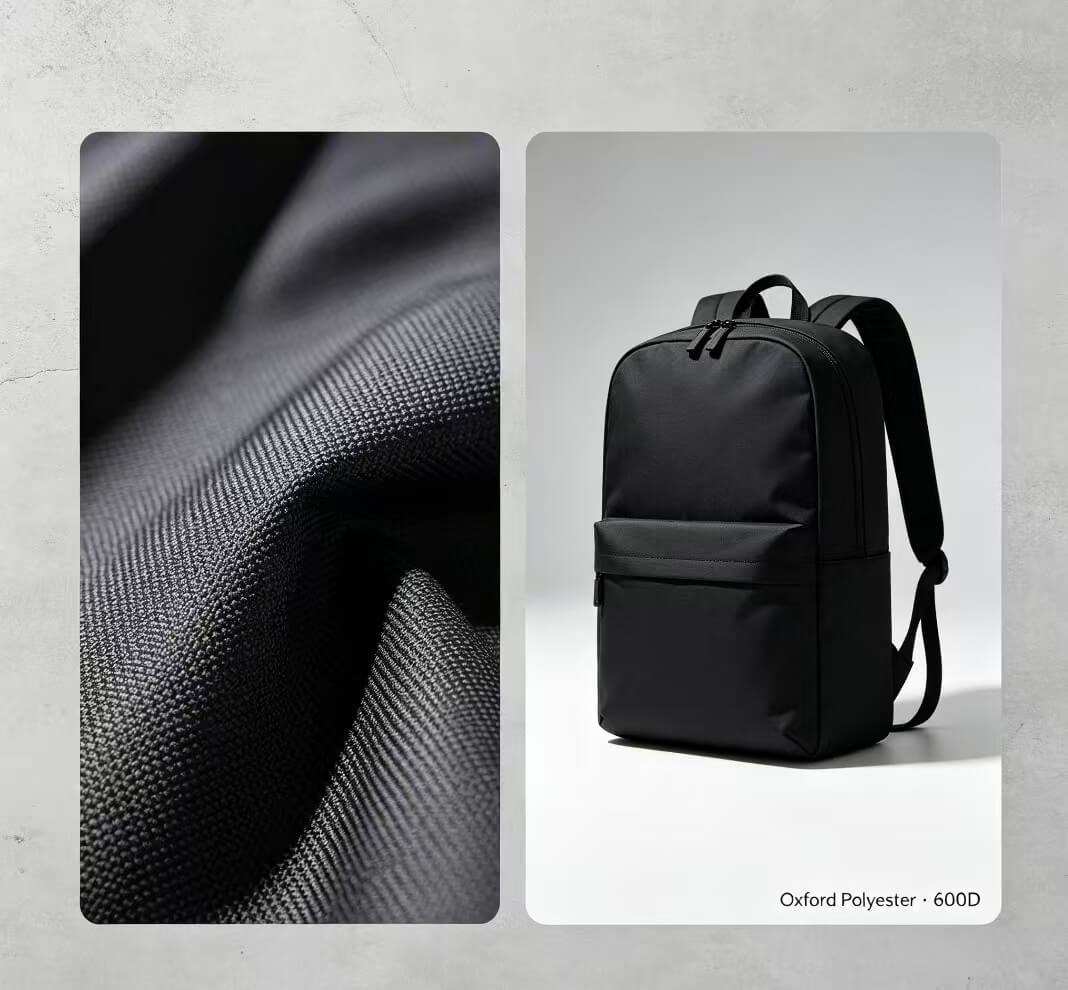
Many businesses struggle with one common question when sourcing custom bags: "Which is better, oxford fabric polyester or oxford polyester?" The truth is that oxford fabric vs polyester is not an either-or comparison. Oxford fabric refers to a weaving pattern, while polyester is the fiber used to make the fabric. In fact, around 90% of the Oxford fabric used in today's bag industry is made from polyester.
This guide explains the real meaning of oxford fabric polyester, the three biggest manufacturing risks when combining different fabrics, when to choose full Oxford construction or mixed materials, and why seam quality should be your top priority during sampling.
What Is oxford polyester?
One of the most common mistakes first-time buyers make is treating oxford fabric polyester as one material and oxford polyester as another, then asking suppliers which one is better.
The reality is much simpler.
- Oxford fabric is a weaving structure, typically using a basket weave.
- Polyester is a synthetic fiber (PET).
- Therefore, comparing oxford fabric vs polyester is actually comparing a weaving method with a fiber type. They are not the same category.
Oxford fabric can be woven from cotton, polyester, nylon, or blended fibers.
Most commercial oxford polyester refers to Oxford fabric woven from polyester yarns. This is also the most widely stocked material worldwide for bags made from 600D fabric and below.
So when buyers ask about oxford fabric polyester, they are usually referring to polyester Oxford fabric rather than a completely different material.
Oxford Fabric vs Polyester in Custom Bag Manufacturing
Once you understand the relationship between Oxford fabric and polyester, your purchasing decision becomes much clearer.
The real questions are these.
Fiber: Polyester or Nylon?
Polyester Oxford fabric
- Lower cost
- Better UV resistance
- Excellent color stability
- Ideal for large-scale production
Nylon Oxford fabric
- Higher tensile and tear strength
- Softer hand feel
- Better for premium outdoor products
- Higher material cost
For most corporate bags, oxford fabric polyester remains the most practical choice.
Choosing the Right Denier
Different bags require different fabric weights.
| Bag Type | Recommended Fabric | Typical Load |
|---|---|---|
| Foldable shopping bag | 190T Polyester / 210D | 5-10 kg |
| Promotional gift bag | 210D-300D | Light duty |
| Everyday backpack | 600D Oxford | 5-12 kg |
| Laptop bag | 420D-600D | Medium protection |
| Gym bag | 420D-600D | Moisture resistance |
| Tool bag | 1000D-1680D | 15-25 kg |
Choosing the Right Coating
PU coating
- Lightweight
- Flexible
- Standard choice for 600D backpacks
- Waterproof up to approximately 2,000 mm hydrostatic pressure
PVC coating
- Heavier
- Excellent waterproof performance
- Suitable for tool bags and cooler bags
TPU coating
- Eco-friendly
- Recyclable
- Preferred for premium products
Common Manufacturing Risks of oxford polyester
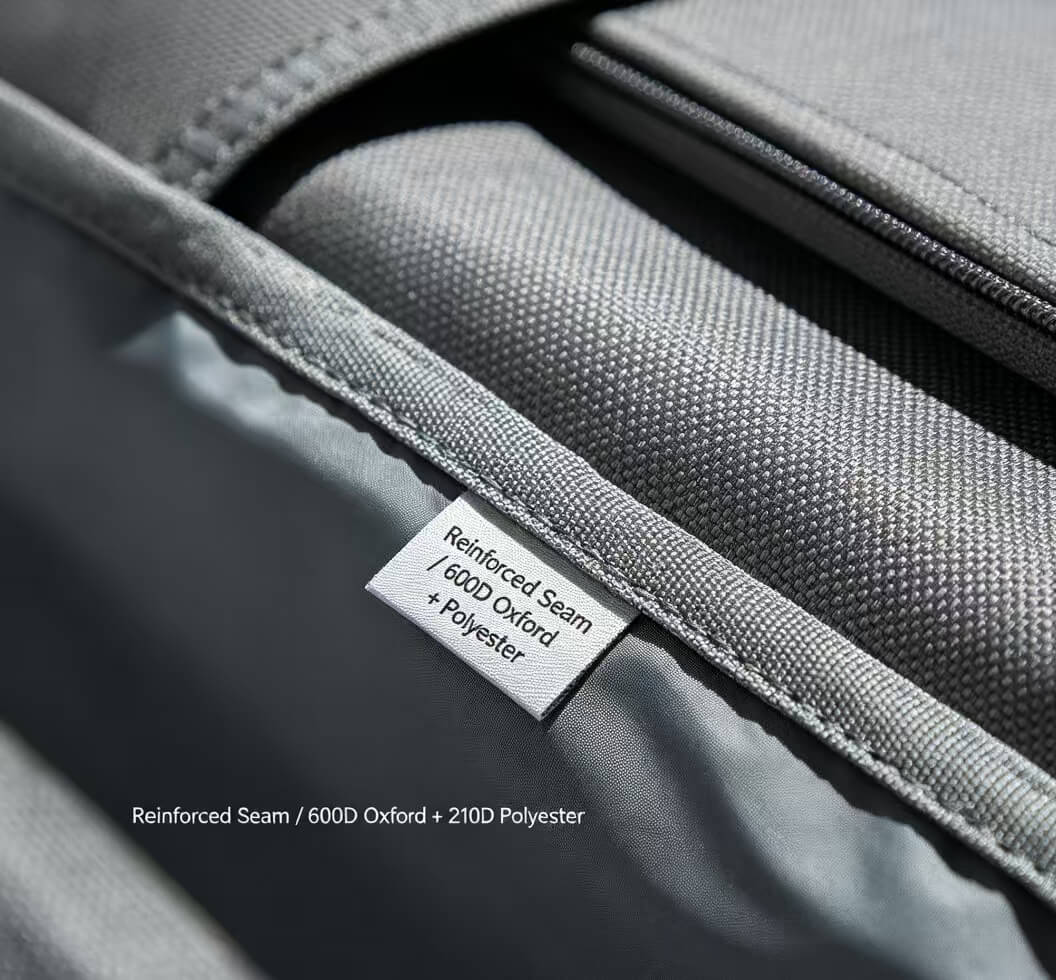
Most custom bags combine 600D polyester Oxford fabric for the exterior with 210D plain polyester for the lining. This mixed-material approach can reduce fabric costs by 18-25%, but it also introduces three important manufacturing risks.
Risk 1: Wrinkled Seams
Problem
The seam becomes wavy after sewing thick Oxford fabric to thin polyester lining.
Why it happens
- Fabric thickness differs by more than 30%.
- Oxford's textured basket weave does not naturally match smooth plain polyester.
Solution
- Keep thickness differences below 20%.
- Use differential-feed sewing machines.
- Adjust presser foot pressure.
- Add matching piping to strengthen and improve appearance.
Ask your supplier:
- How large is the fabric weight difference?
- Which presser foot is used?
- Can piping be added?
Risk 2: Seam Failure
Problem
Seams split after several months of use, especially around shoulder straps and the bag bottom.
Why it happens
Oxford fabric stretches very little, while plain polyester stretches around 8-12%. Repeated stress eventually breaks the stitching.
Solution
- Use high-elongation polyester sewing thread with at least 15% elongation.
- Increase stitch density to 8-10 stitches per inch.
- Reinforce stress points with zigzag stitching or seam tape.
- Use Oxford fabric throughout high-load areas such as strap anchors and bottom panels.
Always perform at least five machine-wash tests before approving mass production.
Risk 3: Color Show-Through
Problem
Dark outer fabric shows through light-colored lining, or colors bleed after washing.
Why it happens
Oxford fabric and plain polyester often use different dyeing processes, resulting in different color fastness.
Solution
- Choose dark linings or matching colors.
- Perform a light-transmission test by placing both fabrics under strong light.
- Add a thin interlining at seams when the budget allows.
When Should You Choose Full Oxford Construction?
Choose full Oxford construction if:
- The bag carries more than 10 kg.
- The bag is designed for long-term outdoor use.
- Your brand promises durability or warranty coverage.
In these situations, oxford fabric polyester provides better long-term reliability than mixed construction.
When Is Mixed Construction the Better Choice?
Mixed materials work well when:
- Producing promotional or corporate gift bags.
- The lining or pockets are non-structural components.
- Lightweight foldable bags are the priority.
For many business projects, combining oxford polyester with plain polyester lining delivers the best balance between appearance, weight, and cost.
What We Offer
As a professional custom bag manufacturer, we provide complete oxford fabric polyester solutions for different industries.
Our capabilities include:
- Full denier range from 300D to 1680D
- Custom dyeing and stocked materials
- PU, PVC, TPU, and DWR coating options
- Cost-optimized mixed-material recommendations
- Sample production within 5-7 days
- Mass production in 20-30 days
- Logo decoration including screen printing, embroidery, heat transfer, sublimation, and reflective printing
Case Study 1: XH-K053 Multi-Function Gym Bag

This black gym bag measures 55.5 × 26 × 25 cm.
The exterior uses coated polyester with the performance of 600D polyester Oxford fabric, while the shoe compartment lining uses high-density plain polyester.
This combination keeps the bag structured, waterproof, and abrasion-resistant while reducing overall weight.
Additional features include:
- Separate shoe compartment
- Ventilation eyelets
- Adjustable padded shoulder strap
- Luggage sleeve
- Anti-theft zipper lock
This is an excellent example of using oxford fabric polyester for medium-duty applications with balanced cost and performance.
Case Study 2: XH-D092 Sports Backpack

Measuring 31 × 15 × 46 cm, this backpack is designed for badminton and hiking.
Unlike many sports bags, it uses high-density plain polyester instead of Oxford fabric.
Features include:
- Dedicated racket compartment
- Independent shoe compartment
- Breathable back panel
- Adjustable removable shoulder strap
Because this bag is intended for lightweight sports equipment rather than heavy-duty use, plain polyester offers excellent value while keeping the bag lighter and easier to clean.
This example also shows that oxford fabric vs polyester is not about which material is universally better. The right choice depends on the intended application.
FAQ
Is 600D Oxford fabric always better than 300D polyester?
No.
600D describes yarn thickness, Oxford describes the weave, and polyester describes the fiber. These are three different specifications and cannot be compared directly.
A bag can simultaneously be 600D, Oxford woven, and polyester.
Will an Oxford exterior with a polyester lining look cheap?
No.
This is the industry standard for many promotional and corporate bags.
The key is choosing matching colors and performing proper color show-through tests during sampling.
Will mixed fabrics cause seams to fail after washing?
Not if the manufacturing process is correct.
Use high-stretch polyester thread, increase stitch density, reinforce stress points, and complete multiple wash tests before production.
My budget is limited, but I still want the premium look of Oxford fabric. What should I do?
Three practical options are available:
- Use 600D Oxford only on the front and bottom panels.
- Combine 600D Oxford exterior with plain polyester lining.
- Choose 420D Oxford instead of 600D to reduce costs while maintaining a similar appearance.
The second option is the most popular for custom business bags.
Should I choose full Oxford construction or mixed materials?
Ask yourself one simple question.
Will the bag weigh more than 500 g when empty and be used every day?
If the answer is yes, choose full Oxford construction for better durability.
If the answer is no, mixed materials usually provide better value, allowing more of your budget to go toward premium logo decoration and branding.
Polyester Tote Bags Fail? Pick the Right Fabric Fast
non woven tote bags Cut Costs While Growing Brand Exposure
Related Article


