
Sensitive Skin and the “Second Skin” Myth: Is Your Modal Fabric Really Safe?
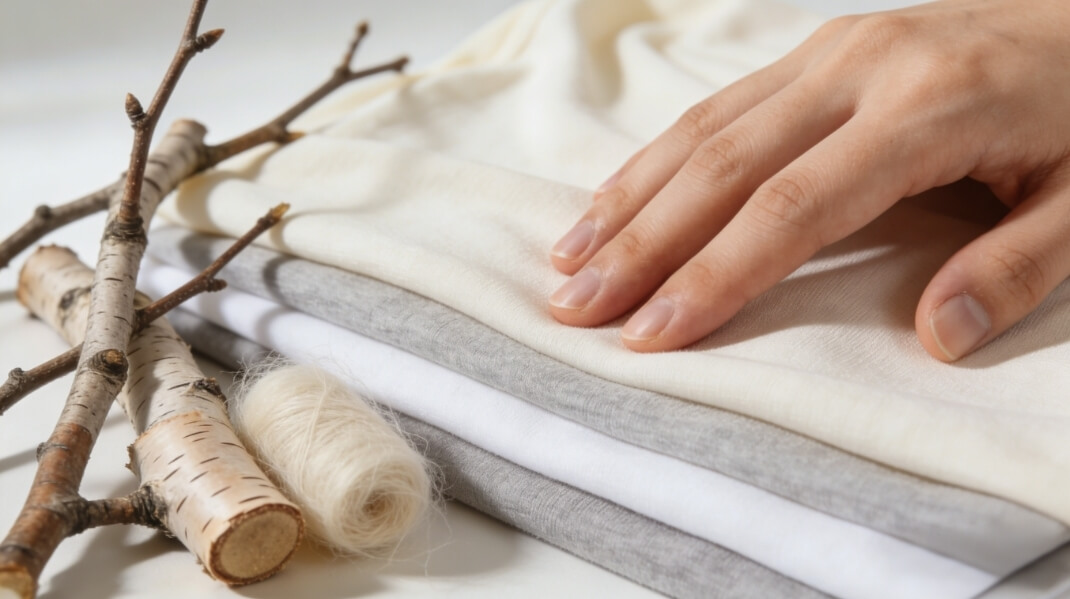
What Is Material Modal? Understanding the Fiber
Hidden Risks in Modal Fabric: Chemicals and Residues
Reading Labels for Modal Fabric: Avoiding “Pseudo-Comfort”

Beyond certifications, reading fabric composition is essential for sensitive skin consumers.
1. Beware “100% Modal Fabric”
Pure modal fabric is extremely soft, but its fiber properties can make it overly delicate, lacking support, and less durable. For some skin types, constant friction against this ultra-smooth surface may cause discomfort.
2. The Smart Choice: What Is Cotton Modal Fabric?
Here, what is cotton modal fabric? comes into play. cotton modal fabric blends the natural breathability and skin-friendliness of cotton with the silky drape of modal. Common ratios like 60% cotton + 40% modal strike a balance between softness and structure, moisture absorption and quick-drying, preserving the advantages of modal fabric while increasing stability and familiarity—making it gentler on sensitive skin.
3. First-Use Safety Tips for Modal Fabric
No matter how safe a fabric claims to be, a “pre-treatment” before first wear is wise for sensitive skin:
-
Soak and wash thoroughly: Immerse new garments in clean water or mild detergent for about 30 minutes, then rinse well. This removes dust, loose dye, and residual processing agents.
-
Use gentle detergents: Avoid strong alkaline products or those with heavy fragrances and optical brighteners.
-
Patch test: For especially sensitive garments, try wearing a small area against the inner arm to check for reactions.
Conclusion: How to Define Modal Fabric Beyond Softness
Bucket Bags: The Ultimate 2026 Guide
From Wilderness to City: Your Water Bag Backpack, More Than Just “Hydration”
Related Article


