
Are Messenger Bags Bad for Your Back?
Summary: The answer to the question “are messenger bags bad for your back” isn’t a simple yes or no. The real issue lies in how you use them. This guide skips vague advice and gives practical, science-backed solutions.
Messenger Bags and Habits That Affect Your Back
Messenger bags themselves are not the enemy of back health. Studies show the risk comes from three common habits:
- Carrying too much weight
- Always using the same shoulder
- Letting the bag swing freely
This uneven load forces the muscles on one side of your spine to work harder, which over time can lead to shoulder and neck pain, as well as posture issues.
So, when asking “are messenger bags bad for your back,” what really matters is whether your usage crosses safe limits.
Safe Use Rules for Messenger Bags
1. Limit the weight:
All items in your bag, including the bag itself, should not exceed 10% of your body weight. For example, if you weigh 70 kg, your bag should be no more than 7 kg. This threshold is widely cited by spinal health organizations.
2. Carry it correctly:
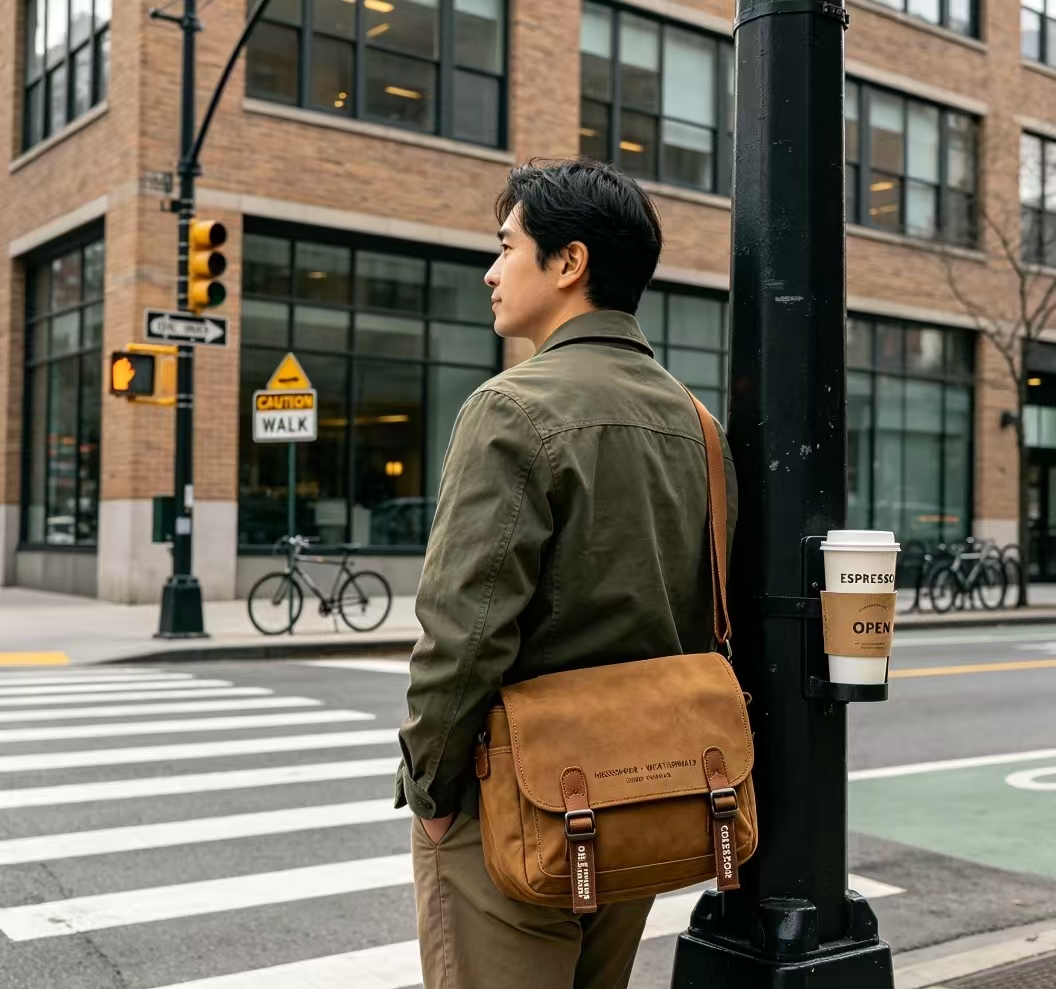
Always wear the bag crossbody, with the strap diagonally across your chest. This distributes weight better than a single shoulder. Adjust the strap so the bag sits snugly above your hips, preventing it from swinging at your lower back.
3. Switch shoulders regularly:
Alternate shoulders consciously to avoid overloading one side. Set a phone reminder or link it to a daily habit, like changing shoulders at each subway stop.
Self-Checks and Optimizing Messenger Bags Use
Check: Is your bag “overloaded”?
Weigh your bag fully packed. If it’s near or over 10% of your weight, remove unnecessary items. Common culprits: “just-in-case” items, finished books, or heavy metal water bottles.
Fix: Stop the swinging
Messenger bags often swing, which stresses your back. Try these:
- Internal reinforcement: Insert a hard folder or thin board along the side that touches your back. This keeps heavy items like laptops closer to your spine.
- External stability: Use a non-slip shoulder pad or a chest clip to prevent the strap from sliding. This reduces unconscious shoulder tension.
When Are Messenger Bags Not Ideal?
If you carry laptops, many documents, or heavy bottles daily and your total load often exceeds safe limits—especially if your commute is long—switching to a backpack is wiser. Its two straps distribute weight evenly, protecting your spine. Save messenger bags for light days and rotate your tools based on load.
FAQ: Messenger Bags and Back Health Questions
Q1: Are messenger bags really bad for your back? Should I avoid them completely?
A: No. Proper use makes them safe. Keep weight in check, wear crossbody, and switch sides regularly. Light daily use is usually fine, and messenger bags are often more convenient than backpacks.
Q2: How do I quickly know if my bag is too heavy?
A: A simple test: walk with it for a few minutes. If your shoulders feel tight, neck tense, or you unconsciously shrug, it’s likely too heavy. Weighing it is the most accurate method.
Q3: How often should I switch shoulders? I keep forgetting.
A: Ideally every 30–40 minutes. Link it to daily activities like sitting down or standing up, or set a phone reminder until it becomes a habit.
Q4: Any free ways to ease discomfort besides switching to a backpack?
A: Yes! ① Repack heavy items close to your back. ② Shorten the strap so the bag sits above your hips. ③ Remove unnecessary items daily.
Q5: My shoulder and neck ache on one side. Is this permanent?
A: Usually it’s muscle fatigue, not permanent damage. Start switching sides, lighten the load, and stretch or heat the area. If pain persists after 1–2 weeks, consult a professional.
Q6: Why is my wide-strap bag still uncomfortable?
A: Width is only part of the issue. Check: ① Does the strap slip? Slippery material makes you unconsciously clamp it. ② Is the empty bag too heavy? It adds extra base weight.
Q7: Simple stretches for post-messenger bag tightness?
A: Try: ① Neck side stretch: tilt your head away from the sore side for 15–30 seconds. ② Shoulder circles: hands on shoulders, slowly rotate forward, up, back, down.
Q8: Can I use a messenger bag with a laptop?
A: Yes, if it has a padded laptop compartment and the laptop sits close to your back. Keep other items light.
Q9: How about choosing a school bag for kids?
A: Be stricter with children. Backpacks are safest. If using a messenger bag, strictly control weight and switch sides frequently. Use only for light, short-term carrying.
Q10: If I follow all these rules, will I never have back pain?
A: These steps minimize risk but don’t guarantee “never.” The safest approach: use messenger bags for light days, backpacks for heavy loads, and rotate to keep your body safe.
mini backpack City Guide: Fit, Packing & Travel Tips
Back-to-School: How to Pick the Right college backpacks
Related Article


