
Lycra Fabric Material: The Key to Everyday Bags

Lycra Fabric Material in Your Morning Commute
In the early morning subway, your commuter bag undergoes a silent test. It needs to swallow a sharp-edged laptop, a bulging gym outfit, an umbrella that could pop out at any moment, and countless little items. The ideal scenario? Carrying everything without looking bulky; flexible yet firm; light as air yet structured. This seemingly contradictory requirement isn’t about style—it’s about the fabric between the seams: lycra fabric material and its perfect partner.
Lycra vs Polyester: Understanding the Difference
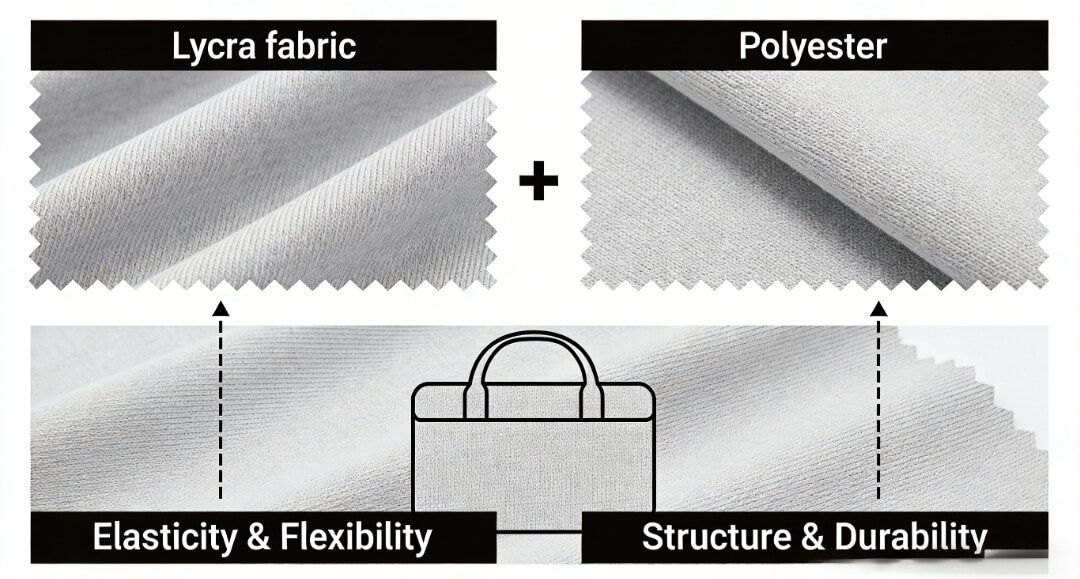
First, let’s debunk a frequent misunderstanding: Is polyester the same as Lycra? Absolutely not. In simple terms, lycra is a brand representing an extraordinary elastic fiber, acting as the "muscle" in fabrics, responsible for stretch and recovery. Polyester, on the other hand, is the "skeleton" of synthetic fibers, known for strength, abrasion resistance, and shape retention. When blended, they create lycra and polyester fabric, a union that balances their strengths.
So when asked, Which material is better, lycra or polyester?—the answer is not a choice between the two. For a bag that faces complex daily scenarios, the smart solution is to combine them.
Lycra Textile: Limitations in Bags
-
Lack of structural support: heavy items cause the bag to sag and lose its clean silhouette.
-
Lower abrasion resistance: areas like the bottom or edges wear out faster.
-
Not waterproof: less ideal for daily commuting in unpredictable weather.
Lycra and Polyester Fabric: The Ideal Fusion
-
Stretch with structure: The main body stays firm thanks to polyester, while lycra fabric material in sides, front pockets, or expandable sections provides just the right stretch. Carry an extra jacket for your commute or a water bottle on a weekend trip—the bag expands without awkward bulges and snaps back into shape effortlessly.
-
Lightweight yet durable: Critical stress points gain abrasion and tear resistance, improving the bag’s lifespan without adding weight.
-
Snug protection: Laptop sleeves or inner linings with lycra textile cushion pressure on your back and protect electronics, while polyester offers sturdy external protection.
Choosing Bags with Lycra and Polyester Fabric
-
Check fabric labels: Look for “polyester and spandex blend” or similar. lycra as a premium spandex brand is often specially highlighted.
-
Touch and stretch test: A good blend feels smooth yet structured. Stretch sideways—does it snap back quickly without wrinkles?
-
Simulate load: Place books or bottles inside. Does the bottom or sides deform irreversibly? A good bag maintains composure even fully loaded.
-
Inspect craftsmanship: Reinforced edges and seams on stretchy sections are crucial for durability.
Daily Bags That Last and Impress Using Cotton Twill Quality
Decoding Lycra: From “Elastic Myth” to a Smart Wardrobe
Related Article


