
Before You Buy a Lightweight golf bag, Know Its Limits

At the driving range on a weekend evening, you’ll often see golfers proudly carrying home a new golf clubs bag, only to leave it gathering dust in a corner of the trunk after a couple of rounds.
Many golfers are drawn in by lightweight designs and buy what they hope are the best Sunday golf bags, expecting to make walking the course less tiring. But once they actually carry one for a full round, practical problems start to surface.
Most reviews focus on who should buy this type of lightweight carry bag. Few explain which golfers should avoid it altogether. Even fewer explain how to arrange the clubs inside a golf bag after purchase.
Many product pages for best Sunday golf bags claim they can hold 10–12 clubs. Technically, the clubs fit. But once the bag is full, the grips tangle together, clubs catch when you try to pull them out, and every change of club becomes a struggle.
If you use oversized or extra-thick grips, the opening on a standard lightweight bag may be too narrow, making clubs noticeably harder to insert and remove. This is a detail that rarely appears in product descriptions.
Who Should Avoid a Lightweight golf bag?
If you usually rely on a push cart to get around the course, a small lightweight bag may not be the best choice. These bags typically have narrow bases and fewer attachment points, making them more likely to tilt or wobble when secured to a push cart. Over time, the bottom fabric may also wear out faster.
If your back and shoulders are easily strained, don’t focus solely on finding the lightest bag available. Some models weighing around 2 pounds have thin shoulder padding and poor weight distribution. The empty bag may look great on the scale, but once it’s loaded with clubs, it can put more strain on your neck and shoulders.
Golfers who regularly carry a thick rain jacket, a spare outer layer, several bottles of water, and multiple pairs of gloves should also think twice. Lightweight bags have a hard limit on pocket capacity, making it difficult to fit all your usual gear at once.
How to Pack Your golf bag for Each Round
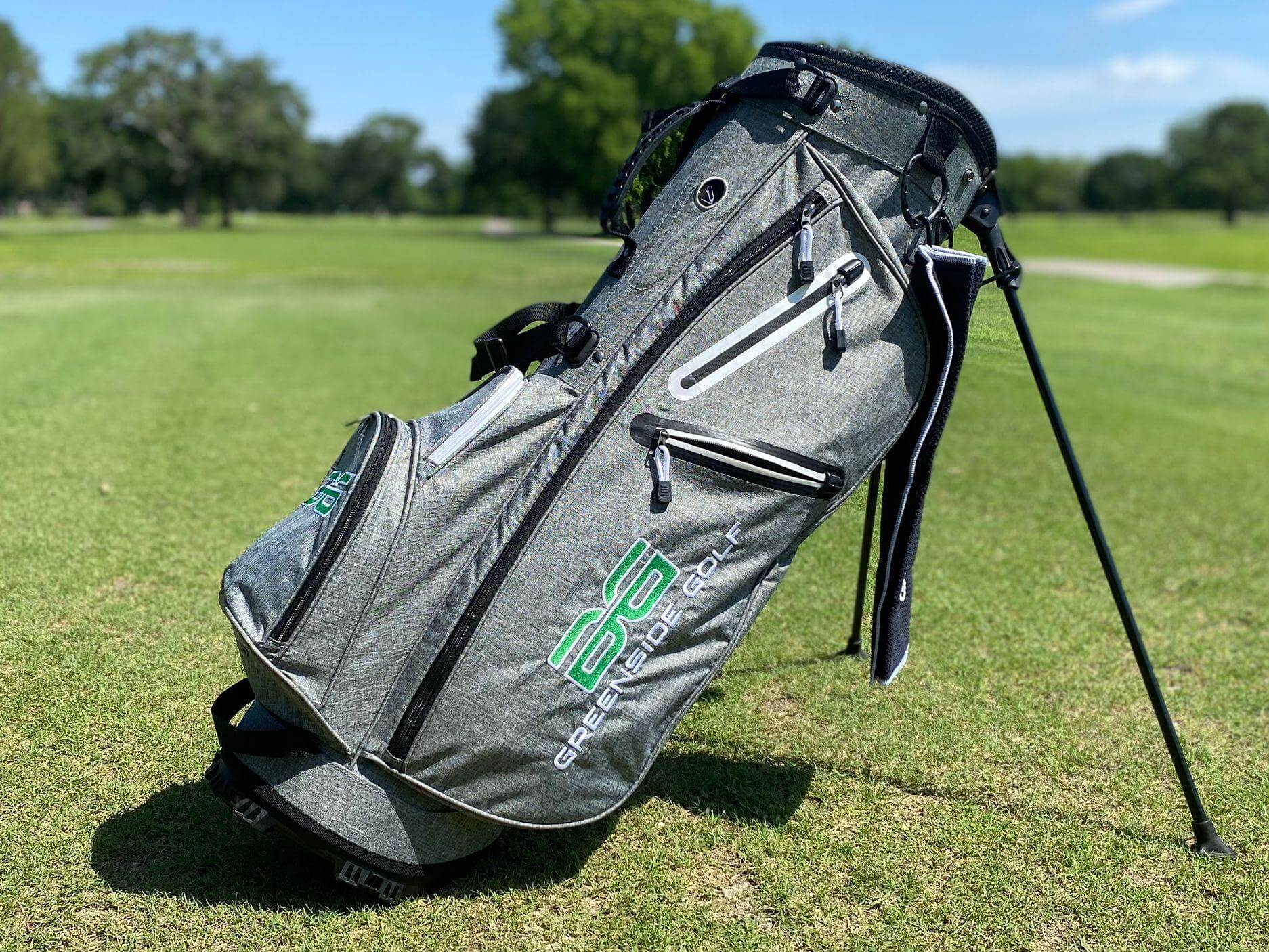
Once you’ve confirmed that a lightweight bag suits your needs, the next step is deciding which clubs to carry. Don’t simply cram an entire half-set into the bag.
For a short par-3 course, start with a putter, two wedges, a 7-iron, and an 8-iron. This combination covers most of the distances you’ll face without overcrowding the bag or tangling the grips.
For a walking nine-hole round, keep a putter, three wedges, your 7-iron through 9-iron, and one hybrid in your golf clubs bag. There’s no need to carry a long club with a lower usage rate, such as a 3-wood.
For a minimalist walking round over 18 holes, limit yourself to around 8–10 clubs. Prioritise the clubs you actually use most on the course, and leave the ones you rarely reach for in your storage cupboard at home.
At the driving range, you don’t need a full set. A putter, a 7-iron, and a wedge are enough for most practice sessions.
There’s a practical order to choosing your setup: first, decide which clubs you’ll actually use on the course. Then select a bag based on the opening diameter and divider layout you need. Don’t do it the other way around by buying the bag first and forcing your club selection to fit.
Choosing best Sunday golf bags based on how you actually play can help you avoid most common buying mistakes. Lightweight carry bags have clear limitations, and their portability only becomes an advantage when you use them in the right situations. Whether one is right for you depends on how often you play, what you carry, and how comfortably you can manage the weight.
Developing a golf clubs bag Line for Your Brand
Brands and golf clubs developing their own lightweight bags often face the same challenges. Ready-made products may have top openings, pocket layouts, and strap systems that don’t match their target golfers’ actual playing habits. Adjusting divider dimensions, fabric choices, or pocket placement requires a reliable manufacturing partner that can turn design requirements into a practical product.
Available material options include 420D–600D ripstop nylon and TPU-coated fabrics. Branding options include embroidery, heat transfer, and other logo application techniques. Sample bags can be tested for carrying comfort and club access before moving into mass production. Small trial orders are also available, allowing brands to validate market demand before scaling up.
If you’re developing your own private-label golf clubs bag line, working directly with the factory can help you get professional advice on construction, materials, and product design.
FAQs
Q1: Are more dividers always better in a lightweight bag?
A1: Not necessarily. More dividers usually require a wider top opening, which increases the bag’s overall weight. If your priority is keeping things as light as possible, a two-way or three-way divider system is often sufficient. Adding more compartments without a clear need can undermine the main advantage of a lightweight design.
Q2: I already own a lightweight bag but need to carry a rain jacket and a thick coat. Is there a practical compromise?
A2: Don’t force everything into the bag’s pockets. Instead, use a separate, compact storage bag and attach it to an external attachment point on your golf bag. This saves interior space and helps prevent the pockets and zippers from being overstretched or damaged.
Q3: What should I keep in mind when storing a lightweight bag?
A3: Avoid stacking heavy items on top of a bag that is stored upright for long periods. When it’s not in use, store it flat in a dry, well-ventilated area. For stand bags, fold the legs back in whenever possible to avoid keeping the stand springs under constant tension and reduce the risk of the mechanism sticking or failing.
Find the Right ski boot bag for Easier Ski Trips
Find a waterproof bag that actually fits your gear
Related Article


