
Large Snorlax Plush: Discover the World's Biggest Stuffed Toy
author: chunli
2026-02-07
Have you ever wondered what it feels like to hug a cloud? For many, embracing a large Snorlax plush or any largest stuffed animal might be the closest experience. When we look up from our everyday 16-inch Squishmallows and cute 30cm plush toys, we discover a world of truly gentle giants—those extraordinary creatures that have broken Guinness World Records. This biggest stuffed toy is not just an exaggeration of size, but a beautiful blend of human emotion, community spirit, and modern engineering. So, what is the world's largest plush toy? Where is it located? And why are we so fascinated by these incredible creatures? Let’s explore.
The Fascination with Large Snorlax Plush and Giant Toys
Standing beneath a teddy bear taller than a house, you experience a unique combination of insignificance and warmth. This feeling is the core of what makes giant plush toys so captivating. The psychological principles behind it are profound:
-
Attachment Theory: A 2022 Harvard study found that interacting with soft giants activates the insular cortex in the brain by 27%, triggering a sense of security akin to being swaddled as a baby (Journal of Consumer Psychology).
-
Sublime Aesthetics: Standing in front of a 19-meter-tall Snorlax, one experiences a "small yet safe" paradox—it’s huge but not threatening, offering psychological comfort in an anxious world.
-
Tactile Therapy: Plush toys like a 30cm plush toy, with their optimal fiber density, stimulate relaxation responses. Tests show that plush toys with a short fur friction coefficient of 0.3-0.5 are ideal for this effect (ASTM F963).
These large Snorlax plush toys and giant stuffed animals evoke the comfort of babyhood, offering a shockingly "approachable awe." That’s why the phenomenon of oversized plush toys is popping up globally, from Japan’s large Snorlax plush sculptures to Mexico's giant teddy bears.
Landmark Examples of the Biggest Stuffed Toy Phenomenon
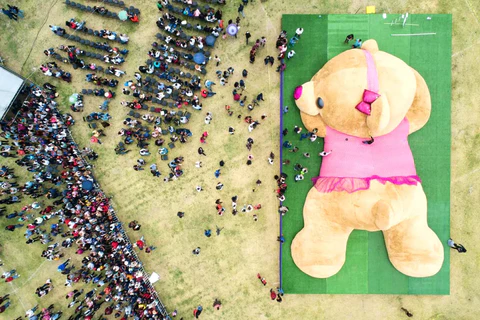
1. Mexico’s Biggest Stuffed Toy: The Giant Xonita
-
Data: The biggest stuffed toy in Mexico, named Xonita, measures 19.41 meters long and weighs 4 tons.
-
Story: Crafted by three local community groups over three months to celebrate Children’s Day, Xonita wasn’t made for commercial gain. Its purpose was to boost tourism and strengthen community bonds. Since its unveiling in 2019, it has significantly increased local visitors.
-
Current Status: Still lying serenely in a soccer field in Jocotepec, it’s open for free viewing.
-
Meaning: It proves that even the largest stuffed animal can serve as a heartfelt symbol for a town, bringing warmth and unity.
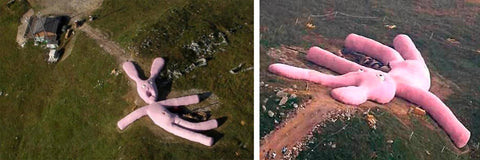
2. Italy’s "Pink Rabbit": A Blend of Art and Decay
-
Data: 55 meters long, made from biodegradable pink wool and hay.
-
Story: The Pink Rabbit, created by the Vienna-based Gelitin group in 2005, was placed on an Italian hillside as a resting spot for hikers. The artists wanted people to feel small, as if entering a giant’s realm.
-
Current Status: The installation naturally degraded as planned and fully returned to nature by 2016, although images of it continue to circulate online.
-
Meaning: It transcended the realm of toys, sparking discussions about public art, ecology, and the life cycle of creations.
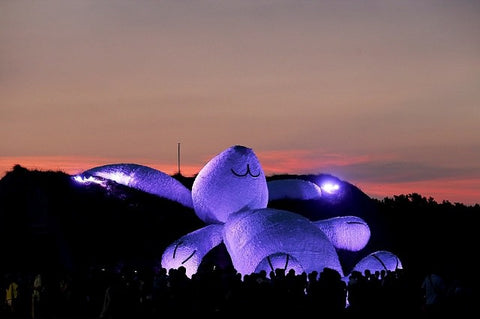
3. China Taiwan’s "Moon Rabbit": A Cultural and Artistic Dialogue
-
Data: 25.3 meters long, constructed from over 12,000 pieces of special materials.
-
Story: Dutch artist Florentijn Hofman created it for the 2014 Taoyuan Landscape Art Festival, inspired by the Chinese legend of the Moon Rabbit. The rabbit lay lazily on an old hangar rooftop, gazing at the sky—an artistic nod to China’s space exploration achievements.
-
Current Status: Sadly destroyed in a fire after the exhibition ended, but its short life added to its legendary status.
-
Meaning: A perfect blend of Eastern mythology and modern public art.
How to Build the Largest Stuffed Animal: The Engineering Challenge
Creating a largest stuffed animal is more than just sewing—it’s an engineering marvel.
-
Material Science: Fabrics must be highly durable and UV-resistant. The stuffing needs to balance softness with support. Some projects are even using eco-friendly fibers made from recycled plastic bottles.
-
Structural Engineering: The biggest challenge is stability against wind and self-supporting structures. Giant plush toys often have a complex steel frame or netting system inside to ensure they stand tall in harsh weather. Modular designs are key—parts are pre-fabricated in factories and assembled like a giant puzzle on-site.
-
Sustainability: Some projects have explored using recycled community clothing as filler, ensuring the toys carry stories and eco-friendly values.
From Amazement to Participation: The Call for Action
-
For City Managers: A successful giant plush toy can become a powerful city landmark. For instance, Xonita in Mexico has brought immense tourism revenue and brand value.
-
For Travel Enthusiasts: We’ve put together a “Giant Plush Toy Landmark Map,” complete with the best photo spots and times to visit.
-
For Environmentalists: Here are three actions to support sustainable plush toys: choose eco-friendly fabric brands, care for your existing toys to extend their life, and donate old toys for new purposes.
-
Interactive Call to Action: Share photos of you with giant plush toys on social media, tell your stories, and keep the warmth alive.
Frequently Asked Questions (FAQs) About Plush Size and More
Q: What’s the average plush size? How to measure plush size?
-
A: The average plush size for toys is typically between 30cm and 50cm, which is perfect for cuddling. Toys like the 16-inch Squishmallows (around 40cm) are becoming increasingly popular for their comfort. To measure plush size, you measure the height from the base to the highest point. For seated plushies, you measure the seat height.
Q: What materials are needed to get a Guinness World Record certification?
-
A: Certification requires meticulous evidence: a notarized measurement report by a professional, a full video recording of the creation process, written testimonies from multiple witnesses, and detailed weight data.
Q: Can abandoned giant plush toys be recycled?
-
A: This remains a challenge. However, designers are exploring ways to repurpose the fabric into cushions or small items like throw pillows, while the internal stuffing can be used as insulation for buildings, helping to recycle resources.
Q: What is the rarest plushie ever?
-
The rarest plushie is Steiff's “Louis Bear” from 1904, with only three ever made. It was sold for $2.1 million in 2019.
Conclusion: The Power of the Biggest Stuffed Toy
The story of the world’s biggest stuffed toy teaches us that the appeal of these massive plush animals goes far beyond their extraordinary size. They represent love, art, engineering ingenuity, and our collective yearning for warmth and beauty. Next time you cuddle your 30cm plush, think about the giant plush animals quietly spreading the same warmth and wonder in some corner of the world.
The Value of Modern Leather Goods and Accessories: Beyond Style
What are the Pros and Cons of a Leather Handbag?
Related Article

Sport bag buyers should check shoe space, lining, ventilation, and load balance. Learn what to inspect before ordering or customizing yours.
Why a sport bag Can Fail When the Shoe Compartment Fills

Quality inspection helps buyers keep repeat canvas tote orders consistent. Learn four checkpoints and practical standards to reduce quality disputes.
Why Repeat Orders Fail Without quality inspection

