
Jute Bag Care Guide: How to Use and Maintain Your Jute Totes
A few days ago, I was rummaging through the garage and found three jute bags I had collected from previous events. One was from a music festival, with a few mud stains; one was used for groceries, and its handle was now a bit wobbly; the last one was brand new, but I had given it to my mom to carry potatoes, and it smelled strongly of earth. Looking at these rough but surprisingly durable jute totes , I couldn’t help but wonder: how exactly do you take care of these? Are they the same as the burlap we usually talk about (what is burlap)? Everyone says they’re eco-friendly, but can they really decompose in the soil (is jute biodegradable )?
If you, like me, are half-confused and hesitant to use them for fear of ruining them, I’ve gathered my experiences over the years into this “ Jute Bag Care Guide”—keep it handy.
Jute Bag Basics and What is Burlap
We often lump all these rough bags together under the term burlap, but jute fabric material has its own specifics.
So, what is jute made of ? In short, it’s the bast fiber extracted from the stalks of the jute plant. This plant grows in hot and humid parts of South Asia. After harvesting, the stalks are soaked in water to ferment (a process called “retting”), then stripped, dried, and combed, eventually becoming the natural fibers we recognize. Pure jute bags have a distinct hay-like smell because of this process.
Here’s a common misconception: are jute and burlap the same thing?
They’re related but definitely not identical. Think of jute as combed cotton, while coarse burlap is made from leftover short fibers—it’s rough, scratchy, and sheds, usually used in gardening or for storing farm produce. The stylish jute totes we carry are made from combed long fibers. Next time you buy a bag, if a seller tries to pass off scratchy burlap as premium material, you’ll know better.
Jute Totes Care: Dealing with Water and Wrinkles
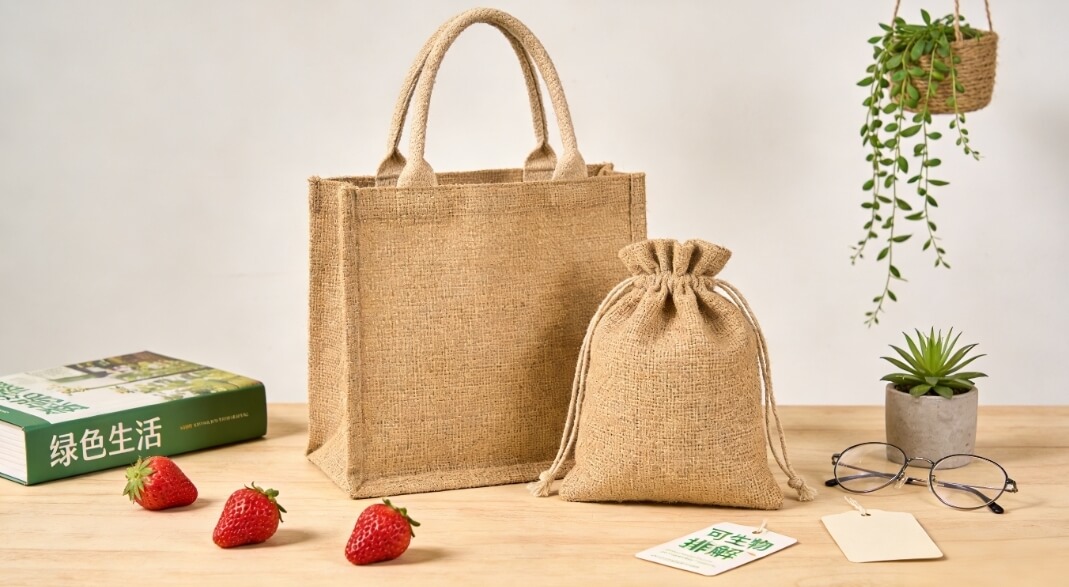
Sellers make jute totes sound indestructible, but in reality, they’re quite delicate. what are the disadvantages of jute bags? In my experience: they fear water, wrinkle easily, and fuzz over time. Don’t worry—you can manage them with a few simple tricks.
1. Protect Jute Bag from Water Damage
The worst scenario is getting caught in a downpour. Never hang a soaked bag directly in the sun. Jute, being a natural plant fiber, softens when wet and wrinkles badly once dried.
✅ Here’s my method: Press out surface water with a dry towel or kitchen paper. Then stuff the bag with old newspapers or dry tissues, making it plump, and leave it in a cool, ventilated place to dry. Once completely dry, the shape returns and wrinkles inside smooth out.

2. Fix Fraying on Jute Bag Handles
After months of use, the handles and seams of your jute bag will fray. Never pull at the fibers—it only makes it worse.
✅ My trick: Use a lighter on low flame, about 2–3 cm from the fraying area, and quickly sweep across. The fibers shrink back instantly. A few passes and the edges lie flat, much sturdier than glue. (Be careful: never hold the flame in one spot for more than a second!)
3. Make Jute Bag Dirt-Resistant with Wax
Jute bags absorb dust easily, and water leaves obvious marks. No need for expensive waterproof sprays.
✅ My solution: Buy a small block of natural white beeswax (very cheap), rub it on the surface like soap, then use a hairdryer on hot to melt the wax into the fibers. Afterward, the bag repels light rain and dirt, perfectly fine for daily use.
Jute Bag Styling and Usage Tips
Besides basic maintenance, there are practical usage tips. jute bags naturally look rugged, which suits a relaxed style. Avoid overloading them—plant fibers, even strong ones, can tear under heavy weight.
Perfect for beach trips with sand, a quick bookstore run, or casual strolls. Pair your jute bag with a cotton-linen shirt or a long skirt—the raw texture complements the look better than flashy leather bags.
If the bag smells, for example from fish or mildew, don’t wash it with water. Dry leftover tea leaves (black or pu-erh work best), place them in a muslin bag, and leave inside the jute bag overnight. The next day, the smell disappears, replaced with a faint tea scent.
Is Jute Biodegradable? How to Dispose Naturally
Eventually, every jute bag will wear out beyond repair or you’ll simply tire of it. Don’t throw it in the trash—it’s too valuable for the soil.
Remember the question: is jute biodegradable?
Absolutely. Among natural fabrics, jute decomposes the fastest. Studies show that with the right moisture and microorganisms, a pure jute piece can fully decompose in just a few months, turning into organic matter.
🌱 For DIY disposal: Cut the bag into palm-sized pieces and toss them into a garden corner or bury them in a pot. In no time, it turns into excellent fertilizer. Just remove any metal or synthetic parts first and recycle them separately.
Using jute bags reminds us to slow down. Learn their quirks, mend them when possible, and if all else fails, return them to the soil. It’s a hands-on, satisfying cycle that plastic and leather bags just can’t match.
Burlap Bags for Favors: Eco-Friendly Wedding Favors and Welcome Bags
Choosing the Right Eco Friendly Shopping Bags
Related Article


