
Why Does a jute bag crochet Go Limp So Fast?

Last weekend, I took my brand-new jute bag crochet to the supermarket. The cashier put two bottles of olive oil inside. I hadn't even walked 100 meters before the bottom of the bag split open.
It wasn't because I crocheted it badly. Jute simply has a counterintuitive weakness: once it gets wet, its strength can drop by half. The moment olive oil seeped into the fibers, this jute tote bag, which could normally carry around 10–15 kg of dry goods, suddenly became more like wet paper that could tear with almost no effort.
No one tells you this.
Sellers love to say things like 'natural, eco-friendly, strong, and biodegradable.' What they don't tell you is that jute has a moisture regain rate of around 13%–14% under standard conditions. In other words, even when the air is simply humid, the fibers are quietly absorbing moisture and swelling.
And they definitely don't tell you that machine washing and tumble drying can shrink jute by 5%–10%. Wash your bag of jute once, and it may come out noticeably smaller.
How Much Can a jute bag crochet Carry?
| Fabric Weight (GSM) | Typical Use | Safe Load | Handle Risk |
|---|---|---|---|
| 160–200 | Basic bags, promotional giveaways | Under 5 kg | Seams can tear easily |
| 220–300 | Everyday shopping, reusable bags | 5–10 kg | Double stitching recommended |
| 280–450 | Premium jute tote bag | 10–15 kg | Triple stitching needed |
| 400+ | Heavy-duty structured totes | 15–20 kg | Padding required |
See the catch?
When people say 'a jute bag can carry a lot,' there are conditions. You want at least 280 GSM fabric and handles that are triple-stitched.
Those thin jute bag crochet styles that sell for a little over 100 yuan may only safely carry around 5 kg. Two bottles of oil or three books can already push them to their limit.
The handles are an even bigger weak point. Manufacturers themselves acknowledge that handles often fail before the fabric does.
So your jute bag didn't necessarily 'wear out.' More often, the handle simply tore away from the stitching.
Why Your jute bag crochet Goes Limp

If you've ever crocheted a jute bag crochet yourself, you've probably experienced this particular frustration: it looks beautifully structured when you finish it, but after carrying a few things a couple of times, it turns soft and floppy.
There are some very specific reasons:
- Jute yarn is naturally stiff, but it's one of the trickiest crochet materials to work with. It can feel rough on your hands, shed fibers, and often requires a smaller hook to create dense stitches.
- If you use a standard hook size with loose stitches, the finished bag will have very little structure.
- Without a firm base, the entire weight of the bag and its contents is concentrated on a few stitches at the bottom. Naturally, it starts to sag.
Four Ways to Make a Crochet Jute Bag Stand Up
These are simple techniques that have been tested by crafters. No high-tech tricks involved.
- Go down one hook size. If the yarn recommends a 5 mm hook, try a 4 mm hook instead. Your stitches will immediately become much tighter and more structured.
- Use single crochet (SC) or waistcoat stitch throughout. These stitches create some of the densest fabric and can make the finished bag feel almost board-like.
- Add a rigid base. Cut a piece of plastic canvas roughly the size of the bottom of the bag. You can find it cheaply at most craft stores. Slide it between the lining and the body of the bag. The difference is immediate—the bag can actually stand on its own.
- Make your own starch stiffener. Mix 1 teaspoon of cornstarch with 1/4 cup of cold water, then add 1/4 cup of boiling water and stir until thickened. Soak the finished bag in the mixture and let it dry. The result can be dramatically stiffer.
⚠️ Don't use a steam iron or hover one over your jute bag crochet to reshape it. Heat can cause jute to shrink, while steam can make the fibers expand unevenly and distort the shape of the bag.
A lot of tutorials online recommend 'steam blocking,' but that's a technique better suited to cotton crochet. Jute is a different story.
How to Clean a jute tote bag Without Washing It
This is the part that most articles about jute bags love to overcomplicate.
Here's the straightforward answer:
Don't machine-wash, soak, tumble-dry, or leave your jute bag baking in direct sunlight.
The safest approach is spot cleaning.
🎯 For ordinary dust: Use a soft, dry brush or a vacuum cleaner with a brush attachment.
🎯 For oil stains: This is the most common problem. Immediately cover the stain with cornstarch or baking soda. Leave it for 30–60 minutes so the powder can absorb the oil, then gently brush it away. This works particularly well on fresh stains. Old oil stains are much harder to remove, so treat them as soon as you notice them.
🎯 For general stains: Mix cool water at around 25–30°C with a neutral-pH detergent at a 1:10 dilution. Dip a soft cloth into the solution and gently wipe across the fibers. Don't scrub aggressively along the length of the fibers, as this can distort the fabric.
🎯 For odors: Sprinkle baking soda inside the bag and leave it for several hours or overnight. Then simply shake or brush it out.
🎯 For drying: Lay the bag flat in the shade. Never hang it up while wet. Wet jute can lose roughly half its strength, and hanging it can cause the bag to stretch and deform under its own weight. Make sure the handles, seams, and bottom are completely dry to prevent mold.
How to Choose a Durable jute tote bag
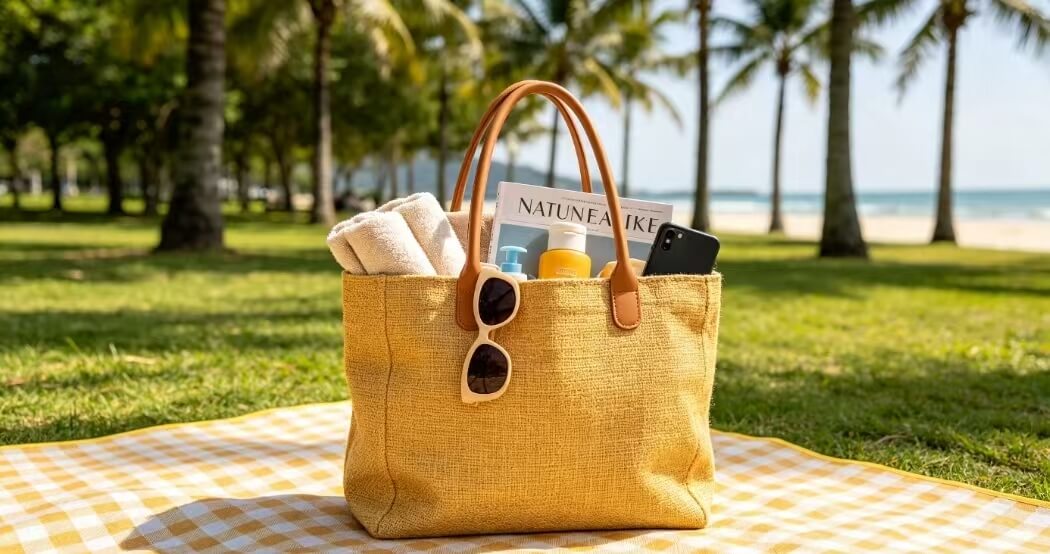
If you want a genuinely durable jute tote bag, don't focus on how pretty it looks. Check these three things instead:
- GSM ≥ 280 — anything below that is more about looks than heavy-duty performance.
- Triple-stitched handles — product listings may specifically say 'triple-stitched handles.'
- A lining or PP lamination — a lining helps prevent leakage, while lamination provides better moisture resistance.
A jute bag that meets all three criteria will usually cost around 80–150 yuan.
Those thin 30–50 yuan bag of jute styles aren't necessarily bad. You just need to understand what you're buying.
They're fashion accessories, not heavy-duty workhorses.
They're perfectly fine for lightweight clothes, books, and dry goods. But fill one with vegetables, liquids, or heavy items, and you're basically using up its lifespan faster than necessary.
How Long Will Your Jute Bag Last?
According to manufacturers, a high-quality jute bag can last 1–2 years with proper care before naturally breaking down. But those five words—'with proper care'—are where most people fall short.
If you can:
- Keep it out of the rain
- Never machine-wash it
- Never carry heavy loads while it's wet
- Stuff it with newspaper when storing it long-term to help maintain its shape, and keep it somewhere well ventilated
- Never seal it inside a plastic bag
- Carry heavy items by hand rather than leaving them hanging from one shoulder for long periods
then your jute bag crochet or jute tote bag can potentially last more than three years.
But if you bought it with the expectation that it would 'carry your entire world,' don't be surprised if it only lasts three to six months.
Beach Scene: XH-G054 Is the Ultimate “Beach Companion”

Last summer, I took the XH2401131 with me to Sanya. It was a disaster.
What does jute hate? Water, sand, and stress when wet. The beach is basically the perfect combination of all three: leaking sunscreen, dripping swimsuits, and fine sand that gets everywhere. With an ordinary jute bag, either the wet swimsuit soaks through the lining, or fine sand works its way through the weave and becomes almost impossible to shake out completely.
That’s where the XH-G054 really proves its value. It’s not just an ordinary bag of jute; it’s a jute tote bag redesigned specifically for the beach:
The waterproof lining is the key. The XH-G054 features a waterproof inner lining, so you can put a wet swimsuit inside without the outer jute layer absorbing water and losing its shape. That’s something ordinary jute bags can’t offer—jute fibers lose strength when wet and are more prone to breaking under stress. The waterproof lining of the XH-G054 keeps the “wet” away from the jute.
The canvas pockets keep everything organized. The canvas pockets are designed for small essentials such as sunglasses, sunscreen, and spare clothes. I’ve tested it myself: sunscreen, lipstick, earrings, and keys can all be kept in separate compartments, instead of rolling around together at the bottom of the bag like they used to.
A sand-resistant outer layer. The XH-G054’s outer layer is designed to resist sand. Just pick it up and give it a shake after leaving the beach, and very little sand gets inside. With ordinary jute bags, the loose weave allows sand to work its way in, making cleanup a pain.
The zipper makes a difference. This is one feature that sets the XH-G054 apart from most jute bag crochet styles and plain jute bags. The zipper keeps your belongings securely inside while cycling or walking quickly, so nothing gets bounced out.
🏖️ Real-life use: I spent a week in Sanya with the XH-G054, carrying a wet swimsuit, sunscreen spray, sunglasses, a change of clothes, a magazine, and a bottle of coconut water. The waterproof lining contained all the moisture, the sunscreen in the canvas pocket didn’t leak, and the zipper never jammed once. When I got back to the hotel, I took out the wet swimsuit and simply wiped the lining dry.
FAQ
Q1: My jute bag crochet was stiff when I finished it, but it became floppy after a few uses. Can I fix it?
Yes.
There are two things you can try.
First, make a simple cornstarch stiffener: mix 1 teaspoon of cornstarch with 1/4 cup of cold water, then add 1/4 cup of boiling water and stir until thick. Soak the bag in the mixture and let it dry. This should noticeably restore some of its stiffness.
Second, if the bottom has completely lost its shape, cut a piece of plastic canvas or stiff cardboard and place it inside the bottom lining. This is one of the most effective ways crafters bring a floppy bag back to life.
Just remember: jute can shrink when exposed to heat. Don't use a steam iron in an attempt to reshape it. You may end up distorting the entire bag instead.
Q2: My jute tote bag got olive oil or hand cream on it, and I didn't treat the stain right away. What can I do now?
Honestly, old oil stains on jute are extremely difficult to remove completely.
You can try repeatedly applying cornstarch or baking soda to absorb the oil. Leave it for 30–60 minutes each time, brush it off, and repeat three to five times. After that, use a neutral detergent and cool water for gentle spot cleaning.
This can fade the stain, but it probably won't make it disappear completely.
That's why people who work with jute often have a saying: 'Oil stains are a death sentence for jute; time is the only real antidote.'
The lesson is simple: treat an oil stain immediately. Once it has been sitting for more than a couple of hours, it's much harder to reverse.
Q3: Some jute bags online say 'machine washable,' while others say 'dry clean only' or 'spot clean.' Which one should I trust?
For an everyday bag of jute, trust the one that says 'spot clean.'
The physical properties of jute make machine washing a poor choice. The agitation and tumbling of a washing machine can damage the fibers and cause fuzzing and 5%–10% shrinkage.
Those labeled 'machine washable' are often industrial jute bags with PP lamination or another inner coating, such as the heavy-duty bags used for coffee beans or grain. They're not the same as the fashion bags you carry every day.
Even for a machine-washable version, you should use cold water, a gentle cycle, wash it separately, skip fabric softener, and lay it flat to dry immediately afterward.
For an everyday fashion bag of jute, simple spot cleaning is still the best way to extend its life.
Do Tote Bags Shrink After Washing?
Why Does a makeup brush cosmetic bag Make Brushes Smell?
Related Article


