
Why Most hot cold bags Secretly Ruin Your Food
I’ve had three insulated bags sitting by my front door for years. One was a thin foldable supermarket tote. Another was a thicker zippered lunch-style cooler with silver foil lining. The third was one of those divided hot cold bags with a Velcro partition designed for hot food on one side and cold food on the other.
After two years of use, I realized something frustrating: most of these bags were not really insulating food. They were trapping moisture and accelerating spoilage.
The food didn’t go bad in the fridge. It went bad during the short trip home, especially in the damp corners inside the bag.
hot cold bags Trap Hidden Moisture
Many people search “how long does insulated bag keep food cold” and see the same advice: use ice packs, avoid opening the zipper, keep the bag out of heat. That advice assumes the bag itself is working properly.
The reality is that many grocery cooler bag designs only slow airflow. They do not manage moisture.
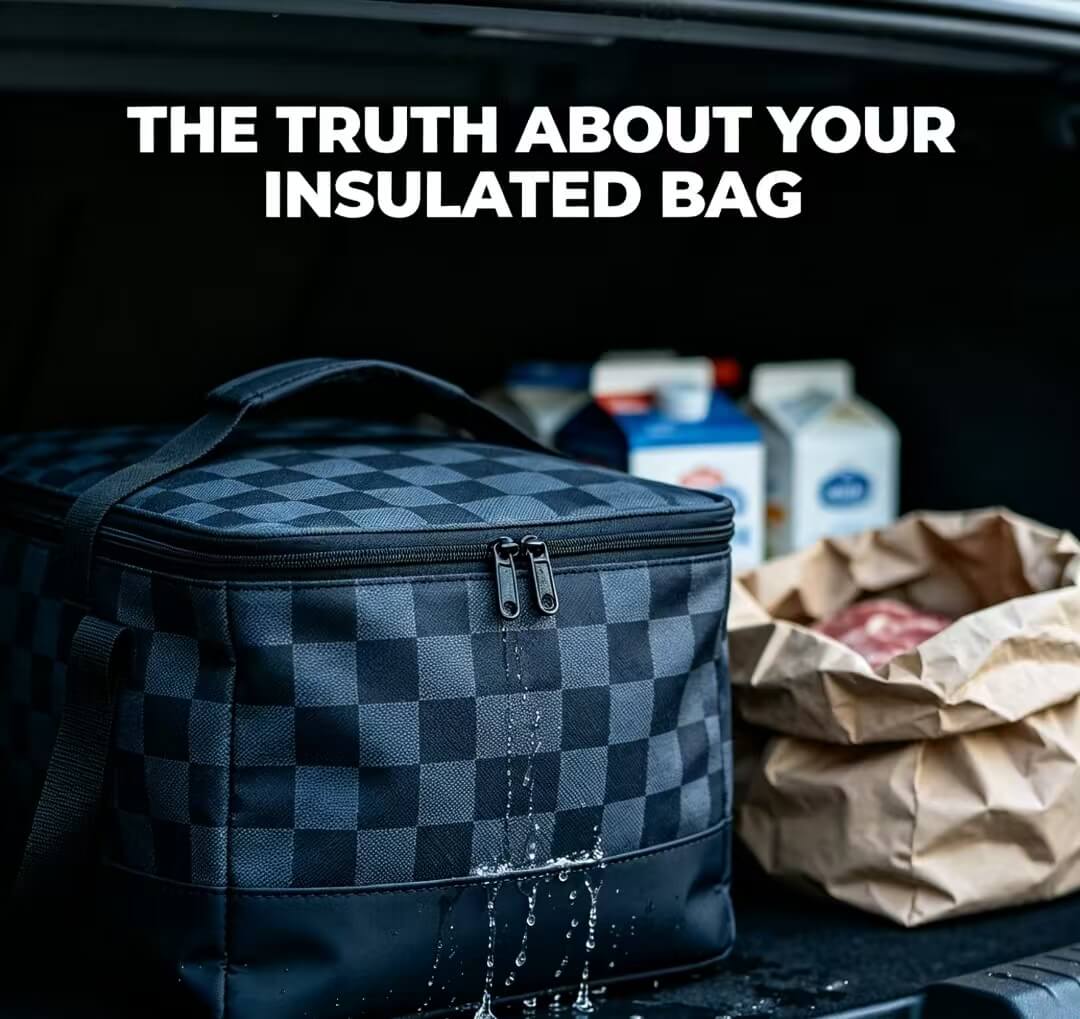
Once frozen food goes inside, condensation quickly forms on the lining. Water vapor in the air touches the cold interior surface and turns into droplets. Because soft insulated bags usually have no drainage system, that moisture stays trapped inside.
The water slowly seeps into seams, zipper corners, and foam insulation. Eventually the bag develops sour smells, discoloration, and mold.
At that point, your insulated bags for food are no longer protecting food temperatures. They are holding moisture and bacteria.
hot cold bags Fail at the Stitching
Most people never inspect the seams.
Traditional stitched insulated bags contain thousands of tiny needle holes around the zipper, handles, and bottom corners. Moisture moves through those holes by capillary action and enters the foam layer inside the bag.
Foil lining does not solve the issue. The foil itself may resist water, but the foam underneath absorbs it easily. Once moisture gets trapped inside the foam, it rarely dries completely.
That’s why wiping the surface clean is not enough.
Many affordable grocery cooler bag models and low-cost hot cold bags still rely on stitched seams with glued edge binding. Once the glue weakens, moisture reaches the insulation even faster.
When buying cooler bags, seam construction matters more than appearance.
hot cold bags Need Moisture Protection
Cleaning alone will not solve trapped moisture problems. Prevention works much better.
Seal Ice Packs First
Ice packs should never sit directly inside the cooler if they can sweat or leak.
Place ice packs inside thick freezer zip bags before putting them into the cooler. This simple step blocks excess moisture from entering the lining.
Keep Water Away From Corners
Condensation usually collects at the bottom corners of the bag.
A folded microfiber cloth or kitchen towel placed inside the base helps absorb small amounts of moisture before it reaches the seams and foam.
Use Hard Food Containers
Thin plastic bags and loosely wrapped containers fail easily inside damp coolers.
Rigid airtight containers protect food better, especially if water builds up at the bottom of the bag.
These steps help insulated bags food avoid the moisture buildup that causes odor and mold.
grocery cooler bag Designs Sacrifice Insulation
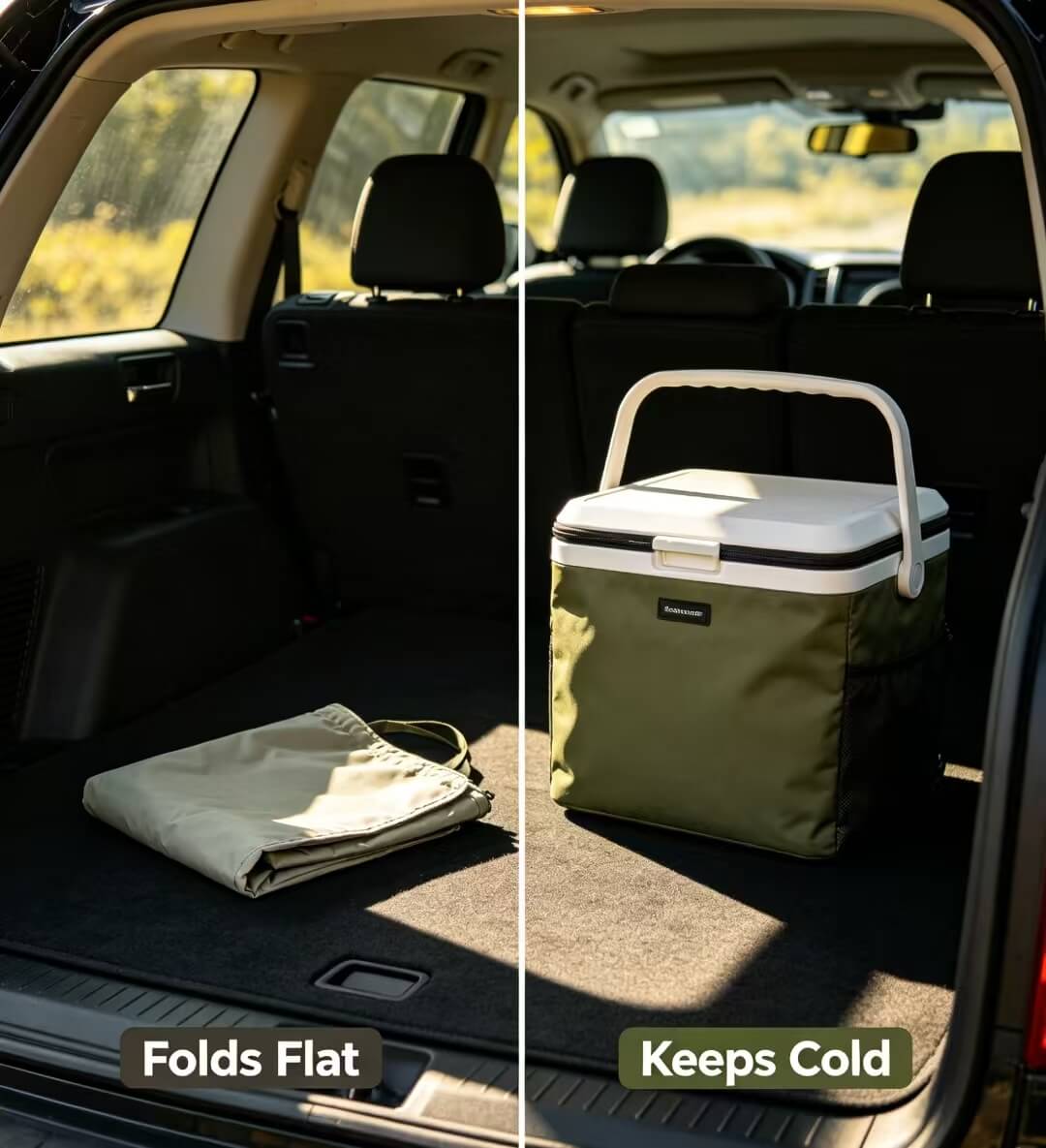
Most foldable cooler bags prioritize storage convenience over real cooling performance.
The silver lining inside a grocery cooler bag is not the main insulation layer. The real insulation comes from the foam core thickness and density.
Thin foldable bags often use foam under 6mm thick so they can collapse flat for storage. That makes them lightweight and convenient, but cooling performance drops quickly, especially in summer heat.
Thicker insulated coolers with 12–20mm foam cores perform much better for frozen food transport, but they take up more space and usually cannot fold flat.
A simple squeeze test reveals the difference. Low-density foam collapses easily like bubble wrap. High-density foam pushes back firmly and retains insulation better.
hot cold bags Cannot Fully Separate Temperatures
Many divided hot cold bags claim they can store hot meals and cold foods together without temperature transfer.
In reality, heat moves through the divider, zipper tracks, stitched seams, and soft walls very quickly.
A hot meal placed on one side gradually warms the cold side, creating additional condensation inside the bag.
If you use hot cold bags, treat the divided design as temporary convenience, not true thermal separation.
Hot foods work best in separate bags. If hot and cold items must share one bag, use sealed hard containers to reduce heat transfer and prevent leaks.
insulated bags for food Have a Lifespan
All insulated bags for food eventually wear out.
The first warning sign is usually odor, not temperature loss.
If the lining smells sour or moldy, inspect the seams and foam carefully. Darkened foam, peeling foil lining, or permanent creases in the insulation layer usually mean the bag is no longer safe to use.
Damaged zipper flaps also reduce cooling performance because cold air escapes easily through the zipper area.
If the bag smells bad immediately after opening, replacement is usually the safest option.
hot cold bags Work Better With Realistic Use
The real answer to “How to use a cooler” is not simply adding ice packs and hoping for the best.
Use foldable bags for dry goods and short trips. Use thick insulated coolers for frozen foods. Control condensation carefully. Seal ice packs properly. Use absorbent liners and hard food containers. Check seams before buying. Use hot cold bags realistically instead of expecting perfect dual-temperature storage.
A grocery cooler bag is not a portable refrigerator. Like all insulated bags for food , it can trap water, develop mold, and lose insulation over time.
Ice packs provide the cooling.
The bag’s job is simply to avoid making things worse.
You Probably Don’t Need an Eighth Tote Bag: An Imperfect Confession About zero waste lifestyle
How a String Backpack Can Hurt Your Shoulders
Related Article


