
Why Do grocery bags reusable Fail Under Normal Loads?
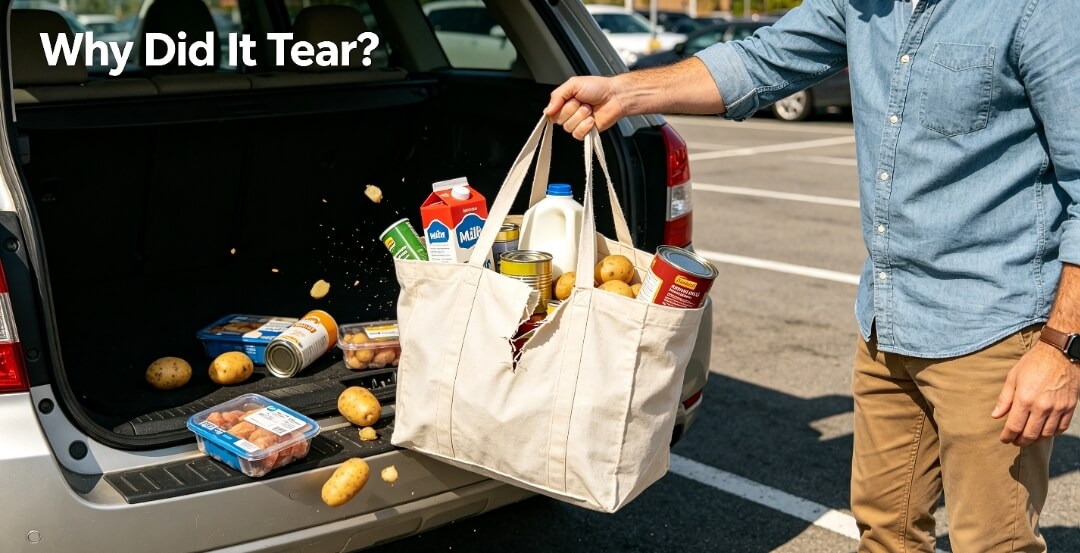
Saturday morning, you head to the supermarket to buy groceries for the week. Two cartons of milk, a bag of potatoes, a few cans of beans, and a pack of frozen chicken wings. You load everything into reusable grocery shopping bags and carry them to the car park. As soon as you put the bag in the boot, the stitching at the base of the handles suddenly gives way. The cans roll out, and the frozen chicken hits the ground.
The label says the bag can hold up to 10 kg. But your groceries weigh less than 7 kg.
The bag wasn’t overloaded, yet it still tore. The problem comes down to two areas: the point where the handles are attached to the bag, and the stitching along the bottom. These two areas take most of the load, but they’re also the parts people rarely check when buying grocery bags reusaable.
Why Do grocery bags reusable Handles Fail First?
The area where the handles meet the bag is only a few centimetres wide. All the weight is concentrated along those few centimetres of stitching.
When factories perform load tests, the bag is usually suspended in one position. Real-life supermarket use is very different. You load the bag into the car, lift it out, put it down, and pick it up again. Every lift and drop puts stress on the stitching. After dozens of repetitions, the fibres in the stitching can start to loosen.
Good grocery bags reusable products use double stitching or cross-stitching around the handle attachments. Cheaper bags may have just one straight line of stitching. A single-stitched bag might pass a static load test, but after weeks of repeated lifting, this is often where it starts to split.
How Water Weakens grocery bags reusable
Frozen food can drip as it defrosts. A leaking carton of milk can soak through the bag.
Once cotton canvas absorbs water, it becomes heavier and the fibres soften. With non-woven fabric, moisture can weaken the bonds between the fibres. Most grocery bags reusable options aren’t treated to be waterproof, so water can soak straight into the material. The same 7 kg of groceries can put more strain on the seams when the bag is wet than when it is dry.
You may have experienced this yourself: the bag works perfectly well when dry, then you carry a pack of leaking frozen meat in it, and the next day the handle breaks. The water is part of the reason.
Sharp Items Can Tear the Fabric
The edge of a tin, a potato with a sharp sprout, or the tough stem of a broccoli head can all damage the fabric. As these items move around inside the bag, they can catch on the material and create tiny cuts.
Small tears are easy to miss at first. The next time you carry something heavy, the pulling force concentrates around the damaged area. The tear gets larger and larger until the whole bag splits open.
When packing reusable grocery shopping bags , place sharp items in the middle and cushion them with softer things such as bread and vegetables. Putting cans directly against the side of the bag is one of the easiest ways to damage it.
How to Check Them Before Buying
Turn shopping bags reusable inside out and inspect the stitching where the handles are attached. Avoid bags with only one line of stitching; look for at least two. Hold the handles and give them a few firm pulls. If the bag stretches or deforms badly, the stitching may not be properly reinforced.
You can also test the bag in the shop by putting a few heavy books inside and carrying it for a short distance. If the handles stretch noticeably or the bottom sags heavily, the bag may not be suitable for heavier loads.
Then check the bottom. A bag with an extra layer of reinforcing fabric is more durable than one made from a single layer. Look at the four corners too. Extra reinforcement stitching at the corners makes them less likely to tear.

How to Make grocery bags reusable Last Longer
Shopping bags reusable aren’t something you can simply throw in the boot after each trip and forget about. How you store them also affects their lifespan.
Don’t leave them stuffed in the boot for long periods. In summer, temperatures inside a car can get very high. Over time, plastic fibres can become brittle. You may not see any visible damage, but the bag’s load-bearing strength may already have declined.
If the bag gets dirty, wipe it with cold water. Cotton canvas bags can be hand-washed in cold water, but avoid hot water and don’t put them in the tumble dryer. Non-woven and woven bags generally shouldn’t go in the washing machine either, as the agitation can loosen the stitching.
If the area around the handles starts to look fuzzy or frayed, stop using the bag for heavy loads. Fraying means some of the fibres have already broken, and continued use could cause the handle to tear without warning.
How Long Can grocery bags reusable Really Last?
Choose well-made reusable grocery shopping bags, and you shouldn’t have to spend your supermarket trip worrying about whether the bag will hold up. But even the strongest bag won’t last if it’s repeatedly overloaded or poorly stored.
How long it lasts depends partly on the quality of its construction — and partly on how you pack, carry and store it.
FAQ
Can I Keep Using a Bag If the Handles Have Stretched?
If the handles have become noticeably longer, the fabric fibres have already stretched and won’t fully return to their original shape. Carrying heavy items will put even more strain on the stitching where the handles are attached.
You can still use the bag for light items such as bread and vegetables, but avoid cans, bottles and other heavy groceries.
Does a Small Hole in the Bottom Matter?
A hole in the centre of the bottom can become much larger when you put heavy items inside. A hole near the edge is less serious, but it should still be repaired.
You can patch a small hole from the inside with a piece of fabric. Avoid putting sharp objects over the repaired area, and don’t load the bag with more than half of its rated capacity.
How Can I Get Rid of an Odour Inside the Bag?
Turn the bag inside out and leave it somewhere well ventilated for a couple of days.
For cotton canvas bags, you can sprinkle a small amount of baking soda inside, leave it overnight, and shake it out the next day. Don’t spray perfume or disinfectant directly onto the fabric, as these products can damage the fibres. Avoid leaving the bag in direct sunlight for long periods too, as excessive exposure can make the material brittle.
How to Choose the Right Bag for Everyday Campus Life
How to Choose the Right Reusable Bags for Shopping
Related Article


