
Why Custom Bread Bags Fail With Nylon Material? Fix It
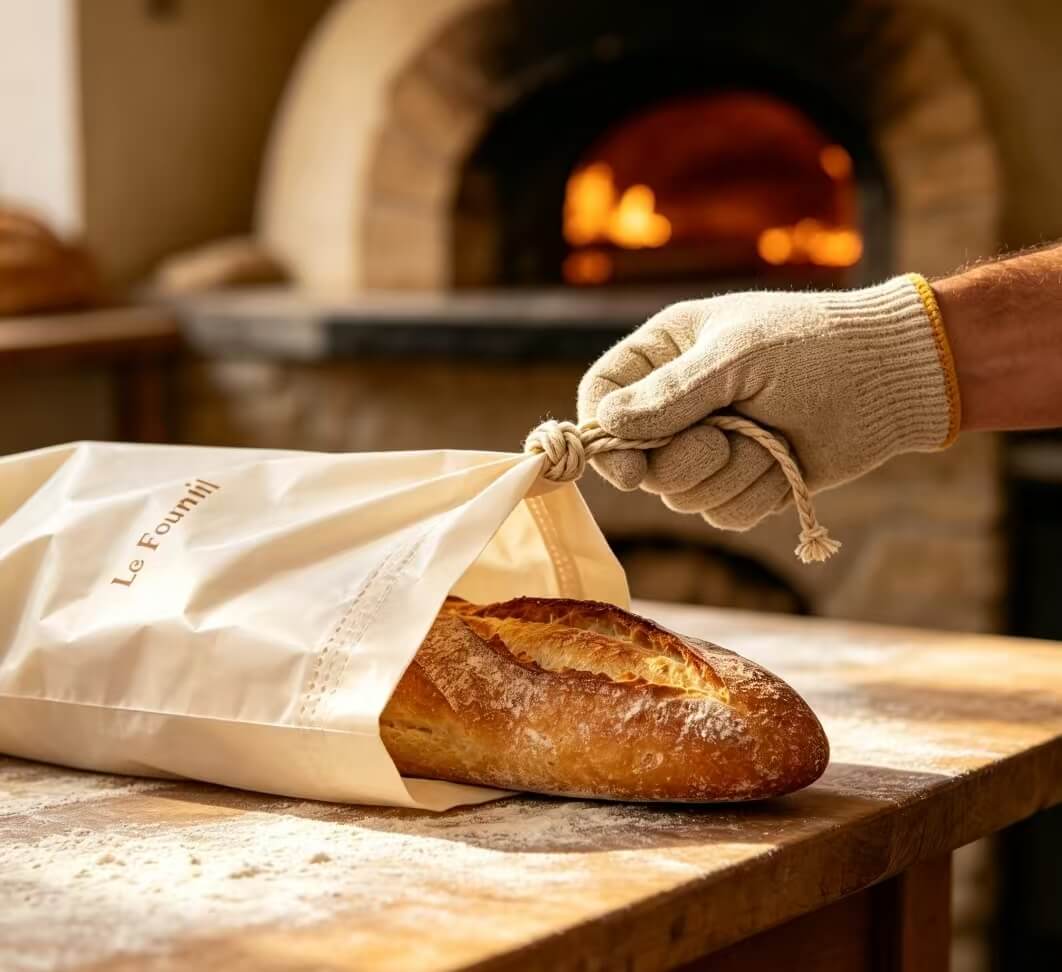
A French client I worked with last year had been running a bakery for three years. He used basic supermarket paper bags for his baguettes. Then he decided to build a brand and switched to custom bread bags.
This time, he changed the material design completely: he asked for nylon-based packaging instead of traditional paper.
The first batch arrived fast. But the result was worse than expected.
Within two hours, the baguette crust went soft. Condensation formed inside the bag. Oil stains appeared at the bottom. The structure looked fine, but the performance failed.
The issue wasn’t the idea of custom bread bags. It was switching to nylon without adjusting breathability and barrier behavior.
At the same time, demand for custom bread bags has grown 37% in Europe, and wholesale bread bags has increased 29% (SimilarWeb 2024). Many factories now offer nylon-based options, but most buyers don’t understand how this material behaves with bread.
Custom bread bags nylon airflow issue
When you switch cuatom bread bags to nylon material, the biggest change is not strength—it’s moisture control.
Nylon is strong, flexible, and grease-resistant. But it traps humidity more than paper. That means crusty bread loses texture faster if ventilation is not redesigned.
Baguettes and ciabatta inside nylon bags soften quickly unless you add engineered micro-venting. Without it, steam stays trapped and destroys crust quality.
A European bakery packaging study (2024) showed that sealed nylon packaging increases crust softening complaints by over 60%.
For sourdough and rustic loaves, nylon must be micro-perforated and slightly oversized (+5–10cm). Otherwise, condensation builds up on the inner wall.
For butter-rich pastries, nylon actually performs better—but only if grease resistance and anti-fog layers are added.
| Bread type | Nylon-based bag type | Key spec | Common mistake |
|---|---|---|---|
| Baguette / ciabatta | Micro-perforated nylon sleeve | 6–8mm vent zones | Fully sealed nylon bag |
| Sourdough / rustic loaf | Breathable nylon film | +5cm length, anti-fog layer | No airflow design |
| Croissant / butter pastry | Grease-resistant nylon laminate | High barrier + anti-fog | No oil/steam separation |
| Toast / frozen dough | Multi-layer nylon pouch | Zip seal + barrier film | No humidity control |
In custom bread bags , nylon improves durability—but only if airflow engineering is correct.
Wholesale bread bags nylon specs matter
When buyers switch to nylon-based wholesale bread bags, they often assume it is an upgrade by default. That’s not always true.
Nylon changes three key variables:
First, humidity retention. Nylon traps steam more than kraft paper. That affects crust texture.
Second, grease resistance. Nylon performs better for butter-rich items, but only when coated correctly.
Third, sealing strength. A fully sealed nylon bag without venting can accelerate spoilage.
So when sourcing wholesale bread bags , you must check:
- Micro-vent size (still critical even in nylon)
- Anti-fog treatment (prevents condensation)
- Barrier layer grade (controls oil + odor transfer)
If suppliers don’t specify these, the batch may look premium but fail in real bakery conditions.
Printing, compliance & nylon custom bread bags
With nylon-based custom bread bags, compliance issues shift slightly but don’t disappear.
Food-contact safety still applies. EU regulation EC 1935/2004 and FDA 21 CFR still require food-grade materials and inks.
Nylon films often require laminated layers. If non-food-safe adhesives are used, migration risk increases when hot bread is packed.
Also, “compostable” claims usually do NOT apply to nylon unless it is certified biodegradable polymer (rare and expensive). Most nylon packaging is recyclable, not compostable.
For export, labels must still include:
- Food-contact statement (“for food contact”)
- Manufacturer details
- Allergen info
A missing label can still result in customs delays, even if the material is nylon-based.
Nylon custom bread bags testing checklist
For nylon-based custom bread bags and wholesale bread bags, testing becomes more focused on condensation and sealing behavior.
Test these five points:
Condensation test: Seal warm bread for 30 minutes. Check inner fog buildup.
Vent efficiency: Observe airflow release after sealing.
Oil migration test: Leave croissant overnight, check laminate resistance.
Seal expansion test: Nylon can expand slightly under heat—check seam stress.
Opening retention: Reopen 3–5 times, ensure zipper or seal still works.
Nylon fails less on strength, more on moisture control.
FAQ
Q1: I switched to nylon custom bread bags, but my baguettes turned soft. Why?
Because nylon traps moisture.
Even if the bag is strong, without proper vent holes or micro-perforation, steam has nowhere to go.
Baguettes need airflow, not just stronger material.
Q2: Are nylon wholesale bread bags better than paper ones?
It depends on the product.
For croissants and butter-heavy items, nylon performs better.
For crusty breads, paper still performs better unless nylon is specially engineered for ventilation.
Q3: Can I use standard nylon bags for custom bread bags without modification?
No.
Standard nylon packaging is designed for general storage, not fresh bakery products.
You need vented or anti-fog versions for bread.
Q4: Do nylon wholesale bread bags reduce oil leakage?
Yes, but only with proper coating.
Basic nylon helps with grease resistance, but KIT-equivalent barrier layers still matter for butter-rich pastries.
Q5: What is the biggest mistake when switching to nylon custom bread bags ?
Assuming “stronger material = better packaging.”
In bakery packaging, airflow and humidity control matter more than material strength.
Can double wine bags Solve Wedding Gifting Pain?
What to Bring to an Interview?
Related Article


