
What are the characteristics of cotton linen fabric? Its texture and comfort
2024-11-13
What is cotton linen fabric?
As the name suggests, cotton linen fabric is a fabric made from a mixture of cotton and linen (such as linen, ramie, and hemp).
I have a vague idea of what it is, but what kind of material is it?
Also, what are the characteristics of cotton linen fabric, and what kind of texture can you feel?
As the name suggests, cotton linen fabric is a fabric made from a mixture of cotton and linen (such as linen, ramie, and hemp).
I have a vague idea of what it is, but what kind of material is it?
Also, what are the characteristics of cotton linen fabric, and what kind of texture can you feel?
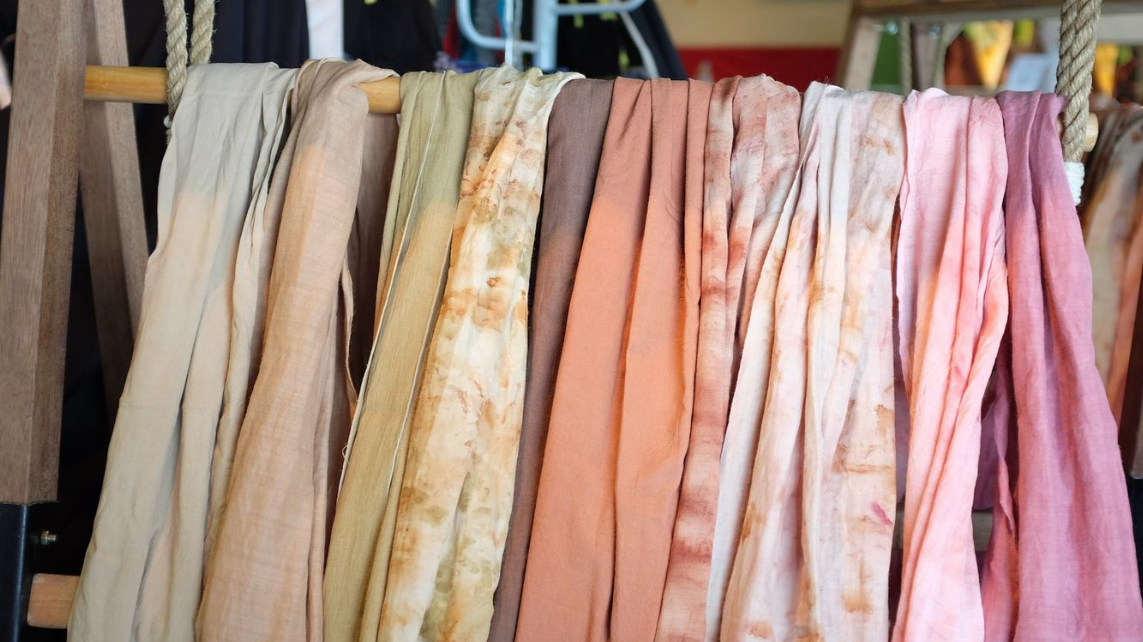
About cotton-linen fabrics
Cotton-linen fabrics are made by mixing cotton and linen (linen, ramie, hemp, etc.), so the functionality and texture vary greatly depending on which material is blended in the ratio.
Compared to cotton, which is characterized by its excellent heat retention and very soft fiber, linen (linen, ramie, hemp, etc.) is characterized by its relatively hard fiber.
Linen is a fiber with excellent moisture absorption, moisture release, and breathability, so by mixing linen, the above characteristics can be mixed with cotton.
Both are natural fibers (plant fibers) made from the blessings of the earth, but the texture that we feel is completely different.
There are many fabrics that are a mixture of cotton and linen, and our store handles many materials.
There are many people who think, "I want a material that is more breathable than cotton," "I don't like the stiff feeling of linen," "Linen is itchy," and "Linen is expensive, so I use cotton-linen," and it is no exaggeration to say that this material is captivating for such people.
Now, to get to the main topic of cotton linen, the most important features are summarized below.
A fabric that perfectly harmonizes the breathability and slight crispness of linen with the softness of cotton.
100% cotton and 100% linen are also very attractive materials, but cotton linen fabric is packed with unique textures and characteristics that only cotton linen can produce.
Further textures that differ through processing
The original texture of fabric can be changed by processing it.
When dyeing, it is possible to wash the fabric with liquid flow dyeing to loosen the fibers of the fabric, or to soften a fabric that has a stiff finish all at once by air tumbler processing.
This change in texture through processing is not limited to cotton linen fabric, but can also be done with 100% linen or 100% cotton.
Many of our cotton linen fabrics are also made with various special processing techniques, so you can enjoy their softness and unique feel.
The original texture of fabric can be changed by processing it.
When dyeing, it is possible to wash the fabric with liquid flow dyeing to loosen the fibers of the fabric, or to soften a fabric that has a stiff finish all at once by air tumbler processing.
This change in texture through processing is not limited to cotton linen fabric, but can also be done with 100% linen or 100% cotton.
Many of our cotton linen fabrics are also made with various special processing techniques, so you can enjoy their softness and unique feel.
The texture differs depending on the thread used.
Cotton-linen fabric is made using both "cotton and linen," but the texture and feel also differ depending on the thread used.
The key point is whether to use blended yarn or to manufacture the fabric by interweaving.
Blended yarn is a yarn in which cotton and linen have already been made into a single thread.
The texture varies depending on the percentage of the cotton and linen blend, but in the case of half linen, a blend of 50% cotton and 50% linen, the texture and characteristics will be different if it is made using blended yarn or interweaving.
Cotton yarn is soft and linen yarn is hard, so in the case of interweaving, 100% yarn of either material is used for the weft or warp.
For example, if the weft is 100% linen and the warp is 100% cotton, the weft will be 100% linen, so it will be more likely to wrinkle horizontally and less likely to wrinkle vertically than horizontally.
In the case of interwoven fabric, the expression and texture are felt separately for each thread, giving it a luxurious feel.
Cotton-linen fabric is made using both "cotton and linen," but the texture and feel also differ depending on the thread used.
The key point is whether to use blended yarn or to manufacture the fabric by interweaving.
Blended yarn is a yarn in which cotton and linen have already been made into a single thread.
The texture varies depending on the percentage of the cotton and linen blend, but in the case of half linen, a blend of 50% cotton and 50% linen, the texture and characteristics will be different if it is made using blended yarn or interweaving.
Cotton yarn is soft and linen yarn is hard, so in the case of interweaving, 100% yarn of either material is used for the weft or warp.
For example, if the weft is 100% linen and the warp is 100% cotton, the weft will be 100% linen, so it will be more likely to wrinkle horizontally and less likely to wrinkle vertically than horizontally.
In the case of interwoven fabric, the expression and texture are felt separately for each thread, giving it a luxurious feel.
We also believe that this weaving method allows you to feel the texture of cotton and linen to the fullest.
Comfortable even in hot weather
Cotton-linen fabric has the characteristic that it is comfortable to wear even on hot summer days and humid, muggy days compared to 100% cotton fabric.
Cotton-linen fabric has the characteristic that it is comfortable to wear even on hot summer days and humid, muggy days compared to 100% cotton fabric.
The reason for this is that it has the added characteristics of linen, such as breathability, moisture absorption, and moisture release.
Of course, it is inferior to 100% linen material, but it is undoubtedly more comfortable than 100% cotton fabric.
Of course, it is inferior to 100% linen material, but it is undoubtedly more comfortable than 100% cotton fabric.
In addition, depending on the processing method and the percentage of the blend, cotton-linen fabric with a crisp feel is also attractive because it has a refreshing feeling.
Refreshing fabrics can make you feel cooler, so they will be useful in Japan's hot summers.
Refreshing fabrics can make you feel cooler, so they will be useful in Japan's hot summers.
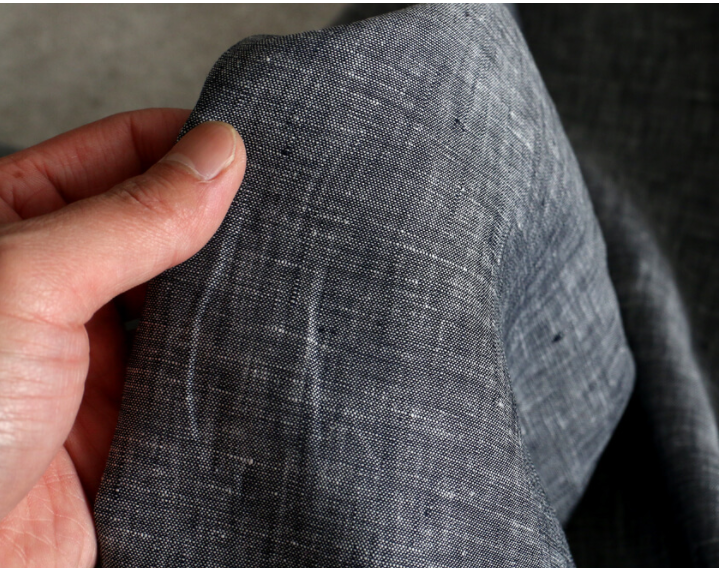
Characteristics of cotton-linen fabric
Now, in the above section "About cotton-linen fabric," we explained that cotton-linen fabric is a fabric that "harmonizes the breathability and slight crispness of linen with the softness of cotton."
If we go deeper, it is difficult to describe it in one word, and there are "cotton-like fabrics" and "linen-like fabrics" among cotton-linen fabrics.
This depends on the blend ratio, the yarn (blended yarn or interwoven), and even the processing.
Now, in the above section "About cotton-linen fabric," we explained that cotton-linen fabric is a fabric that "harmonizes the breathability and slight crispness of linen with the softness of cotton."
If we go deeper, it is difficult to describe it in one word, and there are "cotton-like fabrics" and "linen-like fabrics" among cotton-linen fabrics.
This depends on the blend ratio, the yarn (blended yarn or interwoven), and even the processing.
Cotton-linen can be broadly divided into the following three characteristics.
Higher breathability than cotton
Slightly cooler than cotton
More crisp than cotton
Softer than linen
Considering these characteristics, we can see that it is more comfortable than cotton in hot seasons.
It is also relatively softer to the touch than linen, so even those who do not like hard fabrics will like it.
Slightly cooler than cotton
More crisp than cotton
Softer than linen
Considering these characteristics, we can see that it is more comfortable than cotton in hot seasons.
It is also relatively softer to the touch than linen, so even those who do not like hard fabrics will like it.
Summary
We learned that adding linen to cotton can change the texture and characteristics so much.
In Japan, where it is cold in the winter and hot and humid in the summer, it is necessary to use materials that suit the season well.
Cotton-linen fabric can be used all year round, but it is best used from spring through to autumn.
Our store carries a wide range of cotton-linen fabrics, so please come and take a look.
We learned that adding linen to cotton can change the texture and characteristics so much.
In Japan, where it is cold in the winter and hot and humid in the summer, it is necessary to use materials that suit the season well.
Cotton-linen fabric can be used all year round, but it is best used from spring through to autumn.
Our store carries a wide range of cotton-linen fabrics, so please come and take a look.
Luggage fabric, technology, accessories At Xinhui, you can create your own custom bag fabrics, technologies, hardware and accessories to enhance your designs.
Unveil the Versatility of Canvas Drawstring Bags: Design, Uses, and XINHUI Customization
Related Article

Sport bag buyers should check shoe space, lining, ventilation, and load balance. Learn what to inspect before ordering or customizing yours.
Why a sport bag Can Fail When the Shoe Compartment Fills

Quality inspection helps buyers keep repeat canvas tote orders consistent. Learn four checkpoints and practical standards to reduce quality disputes.
Why Repeat Orders Fail Without quality inspection

