
Why Your bulk order Can Fail Despite Perfect Samples
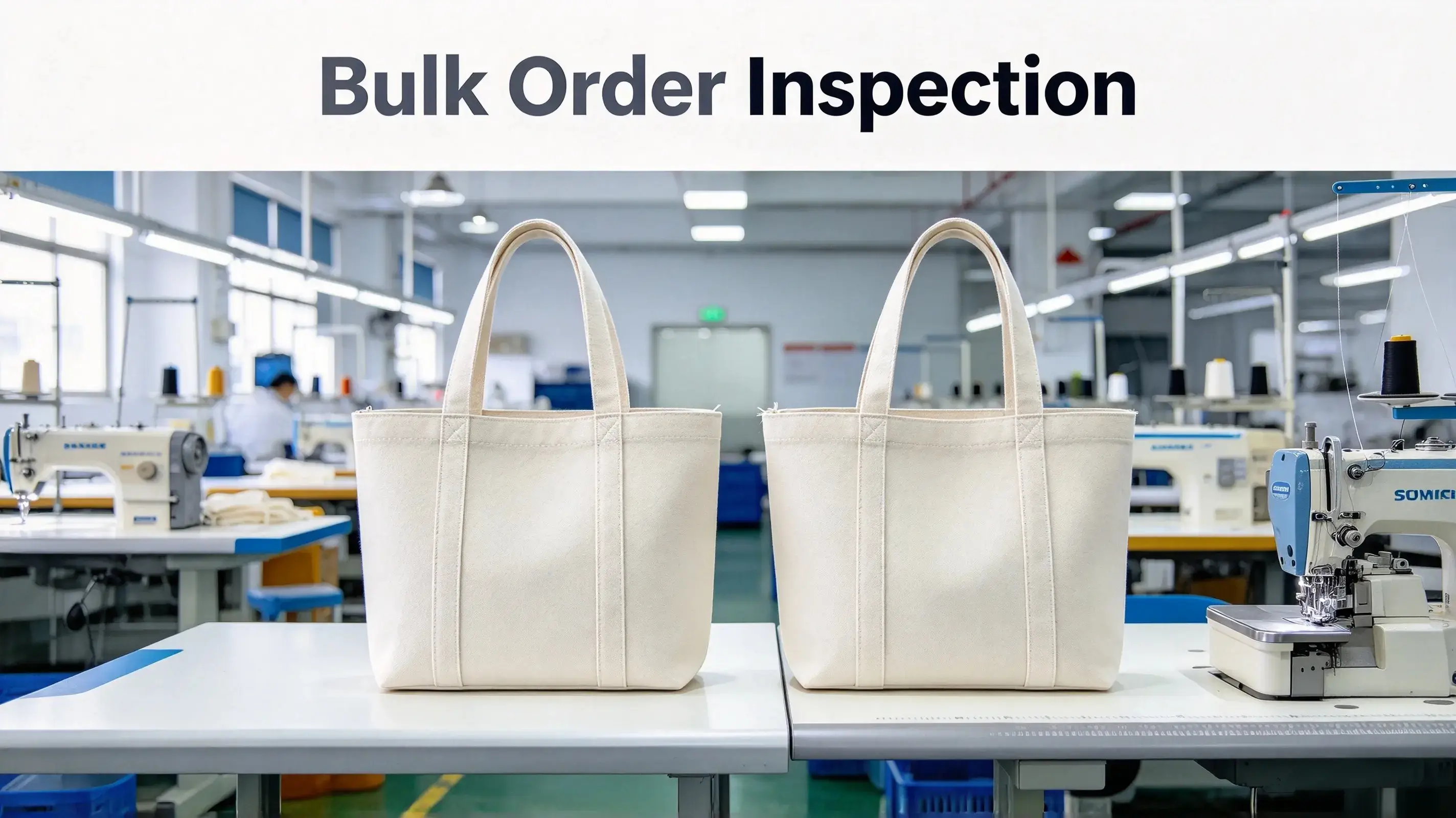
You send the same technical drawing to two factories and prepare to place a bulk order for custom canvas bags. Both factories confirm that they understand the drawing, and the finished samples look virtually identical. But once the bulk order arrives and the cartons are opened, you may find that one batch has seams that come apart easily at stress points, while the other can consistently handle the expected load. The drawings are identical, yet the durability of the finished bags is noticeably different. Many buyers assume the factory must have used cheaper materials, but the real issue is often quality control in manufacturing.
A drawing usually shows the overall shape and basic length and width dimensions. It does not specify the warp and weft direction for fabric cutting, the exact seam allowance, the stitch count, or the bartack reinforcement method used at corners and other stress points. Each factory's sewing operators may make their own decisions based on their workshop practices. Even when the fabric weight is exactly the same, different cutting directions can significantly affect the tear resistance of a canvas bag.
Why custom canvas bags Can Vary
quality control in manufacturing does not mean waiting until the entire production run is finished before conducting random inspections. A reliable factory starts with fabric checks when raw materials arrive, including weave density and color consistency. Once production reaches around 20% of the planned quantity, in-line inspections can be carried out to check each batch of cut panels, sewing thread tension, and reinforcement points.
XINHUI has specialized in bag manufacturing for years and holds ISO 9001 and BSCI certifications. Its workshop has standardized these processes into documented operating guidelines. Before each order starts, the technical team distributes the production parameters linked to the drawing to all sewing operators, ensuring consistent operating standards and reducing variations caused by individual working habits.
Without this kind of process control, even factories working from the same drawing can produce custom canvas bags with significant differences in quality from one batch to another. The drawing may be the same, but the way the work is carried out on the production line can lead to very different results.
Bulk order and quality control in manufacturing
For buyers sourcing custom canvas bags, it is useful to attach a process specification sheet to the drawing before placing a bulk order. The sheet can define the number of stitches per inch, the reinforcement method for load-bearing points, fabric pre-shrinking requirements, and an approved physical production sample for reference.
During the order-taking stage, XINHUI's sales team helps buyers complete this process documentation. This locks down the details that may not be clear from the drawing alone. Production operators can then work directly from the agreed specifications instead of relying on verbal instructions, reducing misunderstandings and inconsistent execution.
This is where quality control in manufacturing makes a practical difference. Instead of trying to identify problems after thousands of bags have already been produced, the factory can catch process deviations while production is still underway.
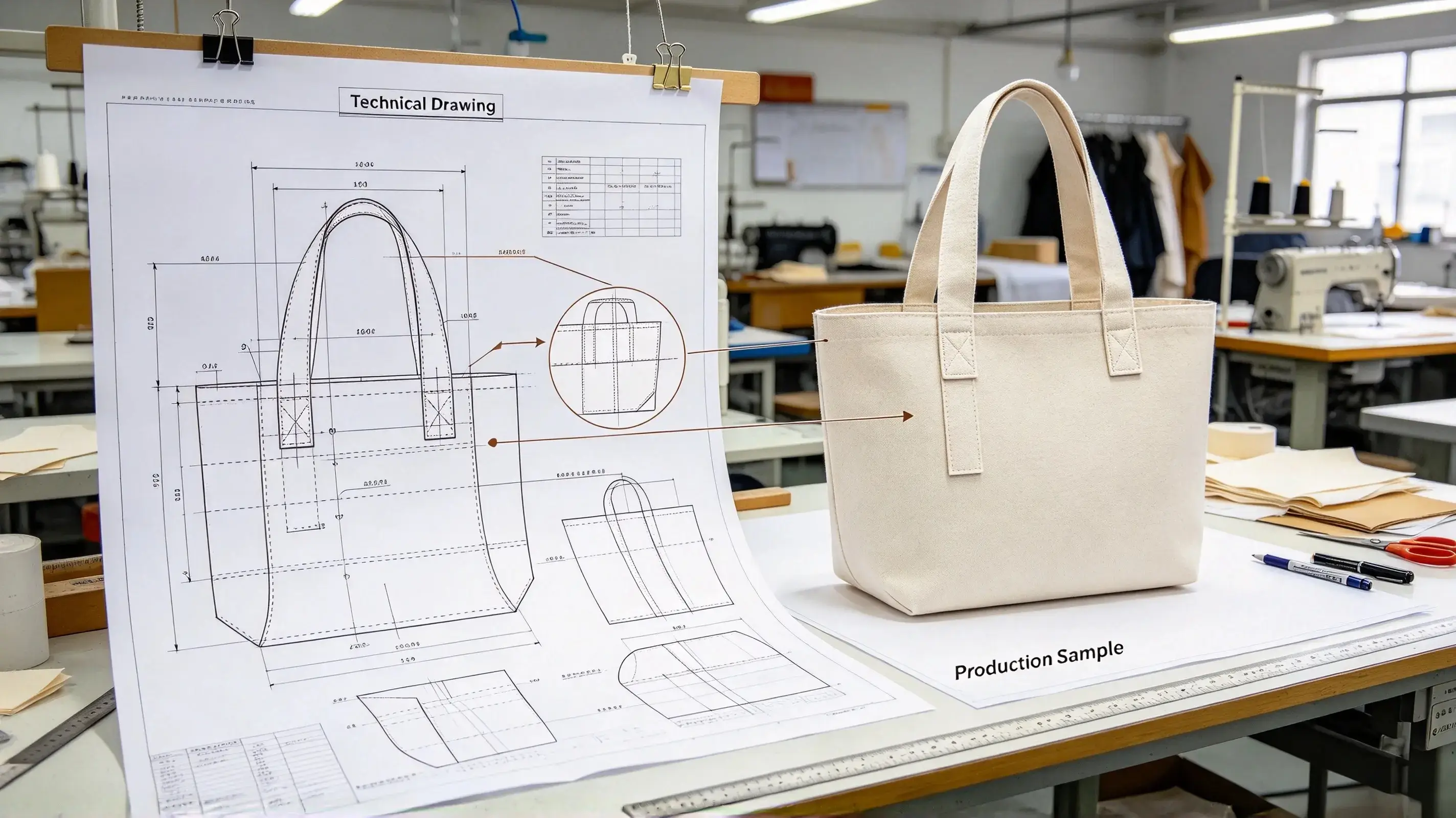
What to Check Before a bulk order
Final inspection can only identify defects that have already occurred. In-line quality control can stop non-conforming semi-finished products during production, preventing losses that may be difficult or impossible to recover after the entire batch is completed.
Many buyers focus heavily on sample approval but do not establish clear requirements for production-line inspections. The result is that the delivered canvas bags may not match the agreed standard.
This approach cannot completely eliminate every minor color variation, but quality control in manufacturing can significantly reduce the quality gap between factories working from the same drawing. Buyers with ongoing international trade orders can use this process as a practical reference when evaluating potential bag manufacturing partners.
FAQ
Q1: What basic information should a bulk order inspection record include for traceability?
The inspection record should include the inspection time, current production progress, and the bag numbers selected for inspection. It should also record the fabric batch number and the actual measured stitch count. On-site photos should be attached as well. When a quality issue occurs, this makes it easier to determine whether the problem came from the fabric or from sewing operations.
Q2: Besides color differences, how can fabric from different dye lots affect custom canvas bags?
Fabric processed in different dye lots may have different washing shrinkage rates and different levels of softness or stiffness. After being made into bags, these differences can affect the shape of the bag body and the flatness of the opening during long-term storage or after washing.
Q3: What clause can be added when a factory accepts only written specifications and does not accept a physical sample?
Add a first-piece approval clause to the order contract. After the first piece is approved, one bag should be selected from every 500 units and compared with the approved first piece. If any process deviation is found, production should be stopped immediately, the issue corrected, and sewing resumed only after the adjustment is approved.
For buyers placing a bulk order, this provides a clearer control point and makes the agreed production standard easier to maintain throughout the run.
Why a sport bag Can Fail When the Shoe Compartment Fills
Related Article


