
Say Goodbye to Choice Paralysis: Does Your Next Bag Need Composite Leather?

When picking your next bag, have you ever hesitated between the texture of real leather and its price? That’s when a name often catches your eye: composite leather. But what is composite leather? Simply put, it’s an innovative material made by combining natural leather fibers with high-performance synthetic components like polyurethane, layered over a fabric base. On the market, it may also appear as leather composite, bonded leather, or reconstituted leather. Its emergence seems to offer a new option for those of us who want style without overspending. Yet the key questions remain: Is composite leather good? and How long does composite leather last?
Understanding the Value of Composite Leather
Choosing Your Bag: When Composite Leather Fits Your Needs
-
For daily commuters carrying laptops, a bag’s durability, load-bearing capacity, and structural stability are paramount. High-quality composite leather bags often reinforce stress points like shoulder straps and the base, and their consistent texture and scratch resistance may even outperform delicate lambskin for this purpose.
-
For fashion-conscious students or trendsetters, composite leather provides abundant colors and textures at a more accessible price. It allows you to experiment with styles without breaking the bank. Here, “good” is reflected in versatility and affordability.
-
Need durability and strength? Check stitch density, lining stability, and hardware quality.
-
Need style and versatility? Look for timeless designs that span seasons.
-
Need lightness and easy care? Evaluate waterproof coatings and overall weight.
How Long Does Composite Leather Last? Lifecycle Insights
-
A real leather bag costing $300, expected to last 10 years → $30/year
-
A well-designed composite leather bag costing $60, used fully for 3 years → $20/year
Choosing Quality: 7 Signs of Good Composite Leather
-
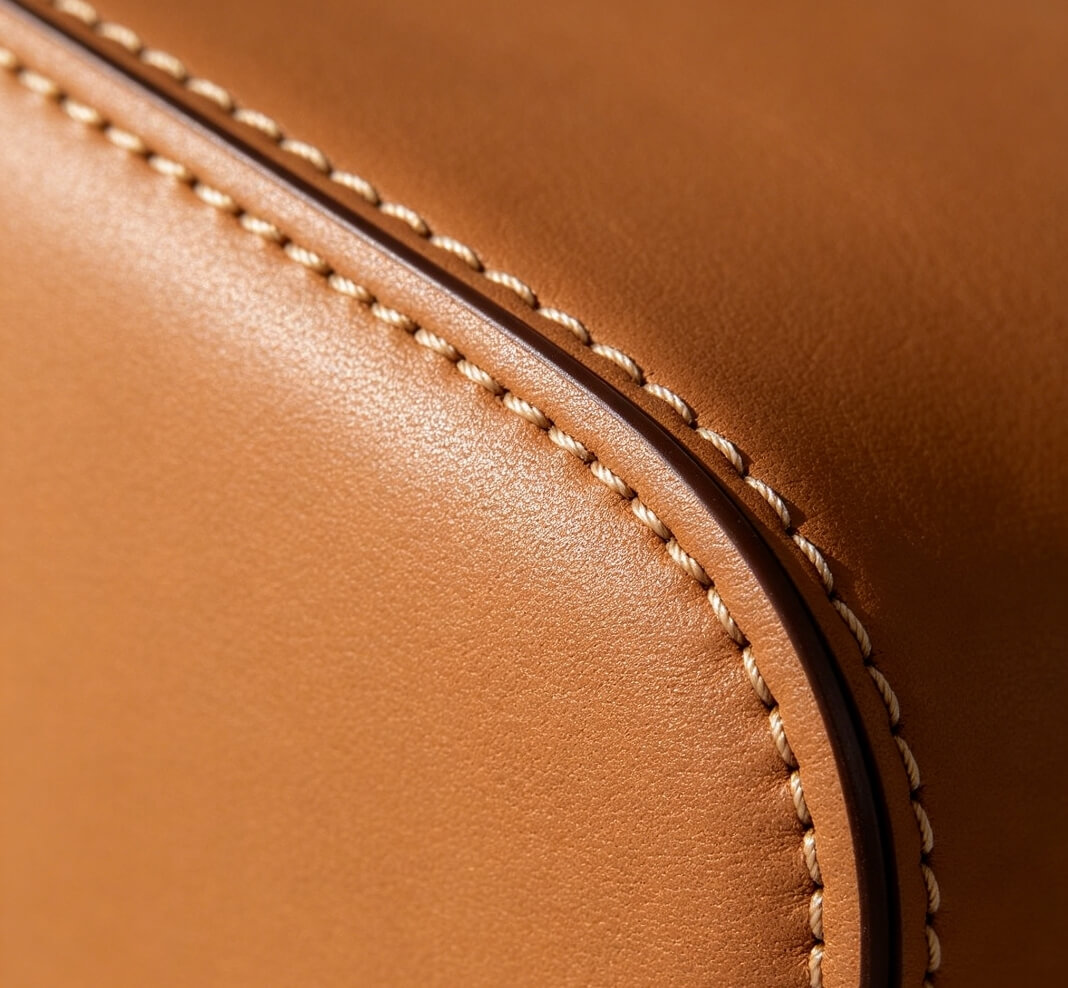
Edges and linings – Good products seal or bind cut edges to prevent delamination. Strong canvas linings support structure and distribute stress.
-
Hardware and connections – Smooth zippers, solid clasps, and secure strap rings are crucial. Hardware quality directly affects the bag’s “breaking point.”
-
Stitching craftsmanship – Even, tight, straight lines, reinforced at stress points, reflect true workmanship.
-
Texture and coating – High-quality composite leather has uniform coatings, natural-looking textures, and a soft hand feel, avoiding a rigid plastic sensation.
-
Brand transparency – Responsible brands clearly label the material as composite leather and provide care instructions, showing confidence in performance.
-
Structural design – Look for internal support boards, functional compartments, or protective layers that compensate for material limits.
-
After-sales policy – Reasonable warranties reflect brand confidence. Brands offering one year or more often trust their product quality.
Sustainability with Leather Composite
Conclusion: Mastering Composite Leather Choices
From “Made in China” to “China Choice”: How a Handbag Tells the New Era China luxury Story
Understanding Suede Leather: A Complete Guide
Related Article


