Think private labeling Is Just Adding a Logo?
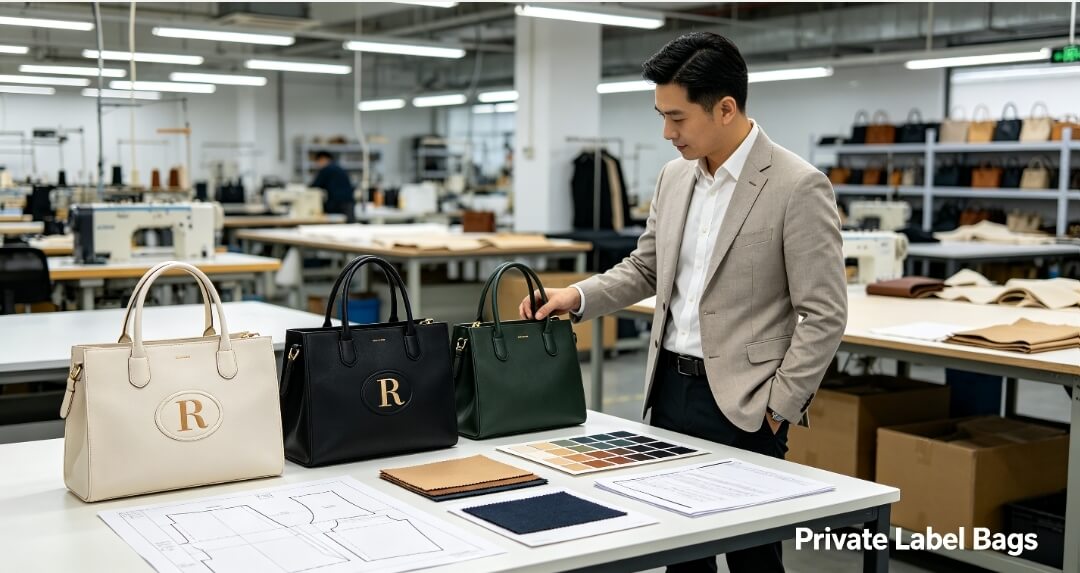
You get an industry report and decide to expand into bags, so you start private labeling. You assume that finding a factory and printing your brand logo on an existing bag is the complete development process described by what is private label. Then the shipment arrives, and you discover that the same bag pattern is also being supplied by the factory to your competitors. Your first batch becomes dead stock.
PLMA published 2025 U.S. market data showing that sales of private label products reached $282.8 billion, while private-label brands accounted for 21.3% of U.S. dollar sales. Private-label categories also grew faster than national brands. Many beauty brands, mass retailers, and DTC retailers are now adding bags to their private labeling programs. Bags can be sold as standalone products or used as gift-set components and loyalty-program gifts.
Many first-time buyers confuse relabeling an existing product with full private-label development, which can lead directly to wasted budget. Some suppliers can handle only basic logo printing and relabeling and lack the project-management capabilities needed for the full process. Gaps can appear between sampling, pattern approval, and export packaging. XINHUI, a bag factory with more than 20 years of soft-goods manufacturing experience, helps buyers determine early on whether a project calls for light or deep development, reducing losses caused by misunderstandings at the planning stage.
What is private label for Bags
When buyers ask ‘what is private label,’ the simple answer is that a retail brand commissions a factory to manufacture private label products to the brand’s specifications. The brand controls the key commercial decisions, including materials, appearance, packaging, pricing, and sales channels. The factory is responsible for manufacturing the products according to those requirements. The finished products belong to the retail brand that commissioned them and carry only that brand’s identity, not the manufacturer’s brand.
private labeling does not necessarily mean developing everything from scratch. A brand can completely redesign a product, or it can use an existing, proven factory pattern and make brand-specific modifications. Both approaches fall within private labeling. This distinction is especially important for bags because many buyers assume that a product only qualifies as private label if the entire pattern is newly developed. That assumption can lead to inaccurate estimates for both budget and lead time.
The market generally uses two approaches: light private-label development and deep private-label development.
Light private labeling
Light private labeling uses a bag pattern that the factory has already tested and proven. The brand changes only selected elements, such as fabric color, woven labels, printed graphics, hangtags, and outer packaging. The bag dimensions, compartment layout, and handle structure remain unchanged.
This model has a lower minimum order threshold and is suitable for small and midsize retail teams that have not yet validated market demand. It can produce private label products under your own brand, but the underlying bag pattern and pattern pieces still belong to the factory. Without a written agreement, the factory may continue supplying the same base pattern to other buyers.
Deep Private-Label Development
With deep private-label development, the brand provides a complete specification covering bag dimensions, inner compartments, hardware, and material requirements. The bag structure is then sampled and adjusted to match the brand’s requirements.
With a written intellectual-property agreement, the brand can buy out the pattern and pattern-piece rights and restrict the factory from supplying the same structure to other customers. This model requires more upfront investment in samples and usually a higher minimum order quantity. It is better suited to established retailers that have already validated market demand and need long-term product differentiation.
XINHUI has a dedicated pattern room and sample-making team. The factory handles the full process in-house, from sketches and physical samples to PP pre-production samples and bulk-production approval samples, without outsourcing. This makes it easier for brands to iterate on bag construction, hardware, and inner-compartment details throughout a deep-customization project.
Costs for private label products
When budgeting for private label products, buyers should not compare factories based only on the ex-factory unit price. The full landed cost includes sample revision fees, outer packaging materials, cross-border duties, ocean or air freight, and a contingency for issues such as batch-to-batch color variation and return losses.
Many buyers calculate only the factory price and discover after the project ends that the actual gross margin is far below the original estimate. Some factory quotes cover sewing and assembly only. Hangtags, Amazon FBA labels, export cartons, and material testing reports may be charged separately.
XINHUI provides itemized quotations that list packaging, sampling, testing, and other optional costs separately. This helps buyers calculate the total landed cost accurately and avoid hidden expenses.
Private labeling for Bags
Bags are well suited to private-label programs for several practical reasons. They are highly visible in everyday use: consumers carry shopping bags, storage pouches, and cosmetic bags when they go out, creating repeated brand exposure.
A common material and hardware specification can often be extended across multiple SKUs, such as tote bags, storage pouches, and cosmetic bags. This keeps the cost of testing new products under control while expanding the product line.
Bags also work with different sales strategies. They can be sold as standalone products for direct revenue or used as set components and loyalty benefits to improve the overall customer experience.
When private labeling Makes Sense
Not every retail brand is ready to launch a private-label bag program. A short-term, one-off marketing campaign, limited cash flow that cannot absorb minimum-order inventory, or an unclear brand direction can all increase the risk of slow-moving stock. Assess your current situation first, then choose between light and deep development.
Even with a light model, buyers should confirm two key points before placing an order. First, check whether the base pattern is also supplied to other brands. If exclusivity is required, put that requirement into a written contract.
Second, confirm the trademark status. For bags, the relevant trademark class matters. An unregistered trademark does not prevent the factory from producing the goods, but it can limit your ability to protect and enforce the brand when listing products on marketplaces later.
Launching private label products Step by Step
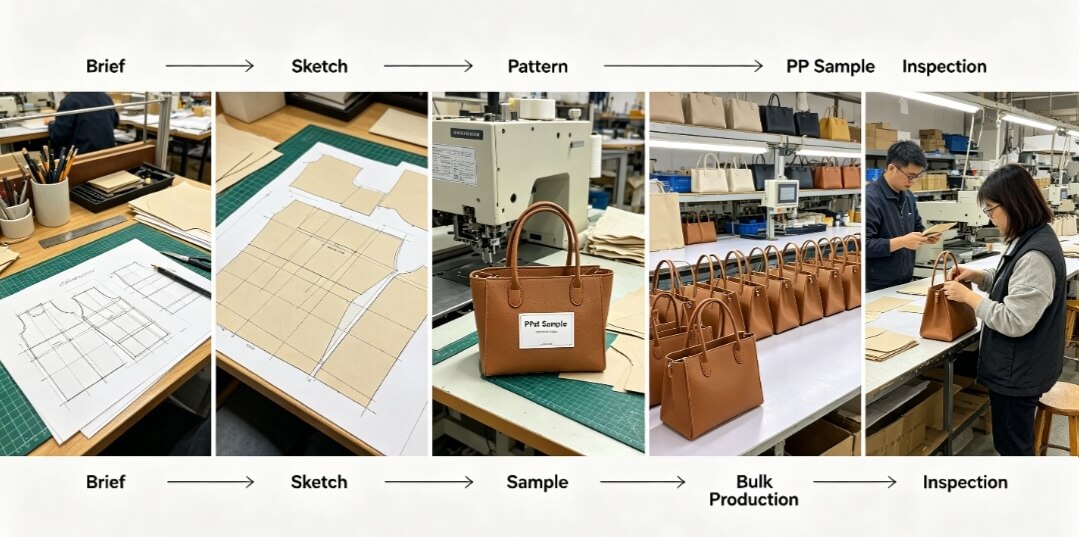
Private-label soft goods do not need to begin with a complete bag range. Start with a single SKU and a small trial run, collect feedback from end customers, and then gradually expand into new colors and related styles.
Once market acceptance has been validated, you can move into deeper customization. This approach can reduce financial risk, but the final result still depends on whether the specifications, sample approvals, and quality-control procedures are clearly defined and fully executed from the start.
Key Takeaways for private label products
A private-label bag program can expand a retail brand’s product portfolio and create products that are differentiated from competitors, but it does not automatically generate profit.
The outcome depends on your budget, sales channels, target customers, and the execution of details such as contracts, samples, and cost calculations.
FAQ
Q1: What information does a factory need to quote private label products accurately?
At minimum, provide the intended use, finished length, width, and height, preferred material direction, logo application method, order quantity, destination country or market, and packaging format.
Without these basics, different factories may calculate costs using different default standards, making price comparisons unreliable.
Q2: How can buyers protect a base pattern during private labeling?
You can sign an exclusive supply agreement stating that the specified pattern cannot be supplied to other brands for an agreed period.
Some factories also allow buyers to pay a pattern buyout fee and transfer the intellectual-property rights to the pattern and pattern pieces. Without a written agreement, verbal promises alone cannot effectively prevent a factory from supplying the same base bag pattern to other buyers.
Q3: When should the AQL standard be confirmed for private-label bags?
The AQL quality acceptance standard should be written into the purchase contract before mass production begins. It defines acceptable limits for stitching defects, printing deviations, and hardware defects.
After production is completed, both sides inspect samples according to the agreed standard. This reduces disputes caused by different interpretations of what qualifies as acceptable goods after the shipment arrives.
How to Reuse Leftover promo bag Stock After Trade Shows
Related Article